
Between jet lag and the comprehensive conference proceedings and activities here in Shanghai, it’s all I can do to stay awake to finish this post . . . . But I am not complaining. Shanghai is a wonderful city, and the 7th International Conference on Innovative Trends Emerging in Microfinance (ITEM 7 Conference) has been a super experience so far.
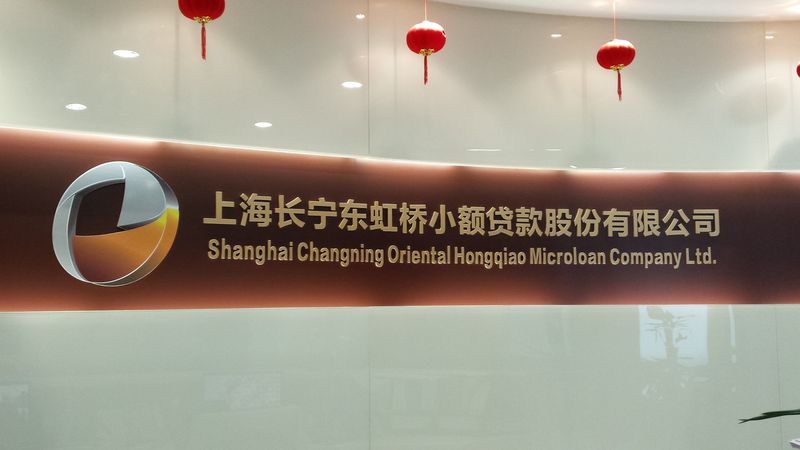
Given my sleep-deprived state, I will just share with you here today a few key outtakes from the presentations we had yesterday (at a pre-conference site visit to the largest microfinance lender in Shanghai) and earlier today (at the conference itself) on microfinance in China. Here goes.
- Chinese microfinance is not really microfinance, in major part. It is SME (small and medium enterprise) lending. MSE loans are loans up to 30,000,000 Yuan RMB (about $4,600,000), and the average single loan amount for MSE lending is about 5,000,000 Yuan RMB (just under $770,000).
- Unlike those in archetypal microfinance and those involved in actual micro-credit lending transactions in many other countries, borrowers in Chinese microfinance lending (such as it is) are largely men rather than women.
- Despite these and other marked differences between Chinese microfinance and global microfinance, Chinese microfinance data does not affect global studies of microfinance in a statistically significant way. However, Chinese microfinance data does influence study results for the East Asia and Pacific region to a statistically significant degree.
Most of this was “new news” to me, given that Chinese microfinance is not at the center of my work. I am sure that I will know even more about it by the end of the conference tomorrow. In the mean time, however, I also enjoyed presentations today about:
- the willingness of rural Ethiopian farmers to pay for insurance to cover the risks of their business (given by an Italian scholar, for which I was an assigned discussant);
- a rural microfinance program in Nigeria (given by a research fellow affiliated with the Central Bank of Nigeria);
- gender-based microfinance lending in Canada (given by a faculty member/Ph.D. student at the University of New Brunswick in Canada);
- the utility of employing joint use of credit scoring and profit scoring in microfinance (given by a Ph.D. student currently serving as the research associate of the Microfinance Chair at the Burgundy School of Business in Dijon, France);
- the relationship between financial and social objectives of microfinance (given by a Ph.D. student from the Centre for European Research in Microfinance at the Université de Mons in Belgium); and
- Participants’ perceptions of two separate microlending programs in Australia, one involving no-interest microloans and the other offering matched savings (given by a Ph.D. student from the University of Queensland in Australia).
I speak tomorrow on crowdfunding intermediation and litigation risk and comment on a paper on crowdfunding and corporate governance. Fingers crossed that I can stay awake long enough to give my presentation . . . . :>)