
In running circles, Nike has been in the news quite a lot this year.
In May, Nike was criticized for its maternity policy (of lack thereof) for sponsored runners (See “Nike Told Me to Dream Big, Until I Wanted a Baby”).
In September, Nike’s running coach, Alberto Salazar, was suspended for 4 years for facilitating doping. (See “Nike’s Elite Running Group Folded After Suspension of Coach Alberto Salazar”)
In October, Nike’s sponsored runner, Eliud Kipchoge, ran the first sub-2 hour marathon, wearing the much-hyped Nike Vaporfly shoes. (See “Eliud Kipchoge runs first ever sub-two hour marathon in INEOS 1:59 challenge”) (See also, “Achieving the Seemingly Impossible: A Tribute to Eliud Kipchoge” by our own Colleen Baker)
In November, former Nike-sponsored runner Mary Cain’s allegations of verbal abuse and weight shaming went viral. (See “I Was the Fastest Girl in America, Until I Joined Nike: Mary Cain’s male coaches were convinced she had to get “thinner, and thinner, and thinner.” Then her body started breaking down.”) (See also, “Mary Cain Speaks Out Against Nike and Coach Alberto Salazar Over Emotional, Physical Abuse”)
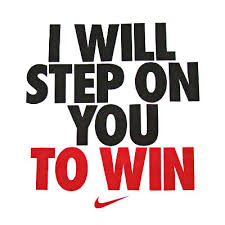
I think Robert Johnson of Let’s Run gets it right – Don’t Believe The Spin, Nike’s Treatment Of Mary Cain Is Very Much In Line With Its #1 Core Value: Win At All Costs. And, at least based on what I see among my serious running friends, the negative press is not hurting Nike’s sales. The Nike Vaporfly shoes are the best running shoes on the market, and the negative press appears to be rationalized or ignored by consumers. Even the author of the Mary Cain story for Sports Illustrated (which was extremely critical of Nike) donned a Nike kit and the Nike Vaporflies in his recent marathon.
So here is the perennial business law question: is Nike’s “ruthless winning” strategy proper, or even required? As we all know, the business judgment rule allows Nike’s board of directors a great deal of flexibility in their decision-making. But the pull of the shareholder maximization norm—and the fact that shareholders hold many more accountability tools than other stakeholders—makes the results above pretty unsurprising.
Former Chief Justice of the Delaware Supreme Court has posted a paper with some ideas for encouraging more prosocial behavior by U.S. corporations, but there are no easy solutions and still much academic work to be done in this area.