Photo of Benjamin P. Edwards

Benjamin Edwards joined the faculty of the William S. Boyd School of Law in 2017. He researches and writes about business and securities law, corporate governance, arbitration, and consumer protection.

Prior to teaching, Professor Edwards practiced as a securities litigator in the New York office of Skadden, Arps, Slate, Meagher & Flom LLP. At Skadden, he represented clients in complex civil litigation, including securities class actions arising out of the Madoff Ponzi scheme and litigation arising out of the 2008 financial crisis. Read More

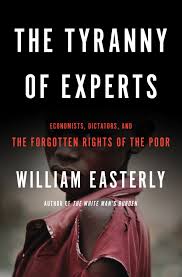
On Steve Bradford’s recommendation, I chose William Easterly’s (NYU) The Tyranny of Experts: Economists, Dictators, and the Forgotten Rights of the Poor (2014) as the book for my annual beach trip with the in-laws and cousins. (Last year was Daniel Kahneman’s (Princeton) Thinking, Fast and Slow – and yes, my wife’s side of the family makes fun of my beach reading material).  Easterly is an author I have wanted to read for a while now, and I still need to read some of his earlier books. 
Easterly

More after the break.

I’ve recently returned from taking a course on negotiation at Harvard Law School.  This was an in-person course where I was a student, which gives me something to compare my MOOC experiences to as I address the topic of online v. in-person classes.  I provide a few of my thoughts on the topic after the break.

My former colleague, Scott Pryor (Regent), recently posted an interesting article entitled Municipal Bankruptcy: When Doing Less is Best. In 2013 Professor Pryor was the Resident Scholar of the American Bankruptcy Institute.  His paper’s abstract is below.  

The bankruptcy process takes as a given the pre-bankruptcy allocation of economic risk. Yet, the Bankruptcy Code permits this risk to be reallocated through the adjustment process so long as that reallocation is “fair and equitable,” does not “discriminate unfairly,” and is in the “best interests” of creditors. The first two look to bankruptcy law for their definitions; the third derives from state law.

Chapter 9 of the Bankruptcy Code does not resolve any conflicts among these requirements. This uncertain state of affairs generates a powerful incentive among most parties to settle. So long as the court retains the power to dismiss the case and remit the conflicts to the vagaries of state adjudication, Chapter 9 functions to create an institutional game of Chicken driving stakeholders to consensus.

Today, Delaware governor Jack Markell announced his nomination of Skadden partner Karen Valihura for the open Delaware Supreme Court position.

Delaware Public Media reports:

Gov. Jack Markell is tapping Karen Valihura for a spot on the Delaware Supreme Court.

Markell announced his choice of the corporate lawyer Friday afternoon.

If confirmed by the state Senate, the 51-year old Valihura will become only the second woman to serve on Delaware’s highest court and will replace retiring Justice Jack Jacobs, who is set to step down June 24th.

Valihura is a partner at Skadden, Arps, Slate, Meagher and Flom, LLP, a private Wilmington law firm, where she’s practiced since 1989, dealing with corporate mergers, acquisitions and fraud claims.

In a statement, Markell touted Valihura’s record of community service and called her an attorney of “uncommon skill, intelligence and integrity.” 

Read the remainder of the article here.

ALSB

For those interested in the Academy of Legal Studies in Business (“ALSB”) conference in Seattle (August 4-7), the deadline to upload papers is June 29, and early-bird conference registration ends on July 1. 

More information is available at the ALSB website.  The ALSB conference is the national conference for legal studies professors in business schools, though I believe that interested practitioners and law professors would also be welcome. 

Hope to see some of our readers in Seattle. 

If you were designing a massive open online course (a “MOOC”), how would you make it as effective as possible? 

This week I am not looking at how MOOCs compare to in-person courses, but rather I am looking at how various MOOCs compare to one another. 

A few of my thoughts are below. 

Studio Filming.  Some of the earlier MOOCs, like Ben Polak’s Game Theory class at Yale, simply set a camera in the room and recorded the class.  Even with a dynamic professor like Polak, this strategy did not seem to fit the medium well.  Later MOOCs, like Northwestern University’s Law & Entrepreneurship course, were filmed specially for the MOOC, in what appears to be a studio of sorts.  The studio, edited versions of a course seem to produce a much more efficient and engaging experience.  To increase engagement even further, some have asked whether celebrities like Matt Damon should teach MOOCs (presumably from a script prepared by professors in the field)…or maybe professors should take acting classes.

Deadlines and Certificates.  It is well-known that the completion rate for MOOCs is miserable.  The completion rate has been reported as less than 7%.  I imagine

Last year, Harvard Business School Professor Clayton Christensen said “15 years from now half of US universities may be in bankruptcy.”  

So, I guess half of our schools have about 14 more years to go, according to Christensen.

At least part of the reason for Clayton Christensen’s prediction is the rise of online education, including so-called “massive open online courses” or “MOOCs.”

Recently, I completed a few MOOCs, mostly because I wanted to learn about MOOCs first-hand.  I also picked subjects that interested me.

The courses I took were:

Yale – Game Theory (Ben Polak)

MIT – The Challenges of Global Poverty (Abhijit Banerjee and Esther Duflo)

Northwestern – Law and the Entrepreneur (Esther Barron and Steve Reed)

I will share some of my thoughts on MOOCs during my normal Friday posting slot, in three installments: (1) Effective MOOCs? (2) MOOCs v. In-Person Courses, and (3) MOOCs and the Future of Higher Education.