
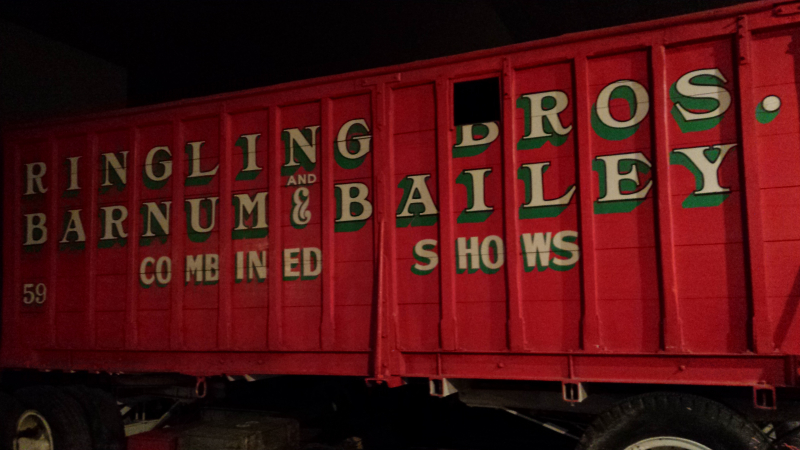
No. This is not a travelogue. Rather, it’s a brief additional bit of background on a case that business associations law professors tend to enjoy teaching (or at least this one does).
In Ringling Bros. Inc. v. Ringling, 29 Del. Ch. 610 (Del. Ch. 1947), the Delaware Chancery Court addresses the validity of a voting agreement between two Ringling family members, Edith Conway Ringling (the plaintiff) and Aubrey B. Ringling Haley (the defendant). The fact statement in the court’s opinion notes that John Ringling North is the third shareholder of the Ringling Brothers corporation.
I spent two days in Sarasota Florida at the end of Spring Break last week. While there, I spent a few hours at The Ringling Circus Museum. It was fascinating for many reasons. But today I will focus on just one. I noted this summary in one of the exhibits, that seems to directly relate to the Ringling case:

Interestingly, 1938 is the year in which the plaintiff and defendant in the Ringling case created their original voting trust (having earlier entered into a joint action agreement in 1934). The agreement at issue was entered into in 1941. Could it be that, perhaps, the two women entered into this arrangement as a reaction to John Ringling North’s desire to acquire–or successful acquisition of–management control of the firm? I want to do some more digging here, if I can. But I admit that the related history raised some new questions in my mind. John Ringling North was all but forgotten in my memory and teaching of the case, until the other day . . . . The case takes on new interest in my mind (more broadly as a close corporation case) because of my museum visit and discovery.
[Postscript – March 21, 2017: Since posting this, I have been blessed by wonderful, helpful email messages offering general support, PowerPoint slides (thanks, Frank Snyder), a video link (thanks, Frances Fendler), and referrals to/copies of Mark Ramseyer’s article on the Ringling case, Ringling Bros.-Barnum & Bailey Combined Shows v. Ringling: Bad Appointments and Empty-Core Cycling at the Circus, which offers all the detail I could want (thanks, again, Frances, and thanks, Jim Hayes) to help fill in the gaps–while still creating a bit of mystery . . . . I am a much better informed instructor as a result of all this! Many thanks to all who wrote.]