
I was incredibly honored to be selected by Marquette Law School to deliver this year’s Boden Lecture. The title of my talk was Of Chameleons and ESG, and it is now available for your viewing pleasure on YouTube:
2023 Corporate Governance Summit
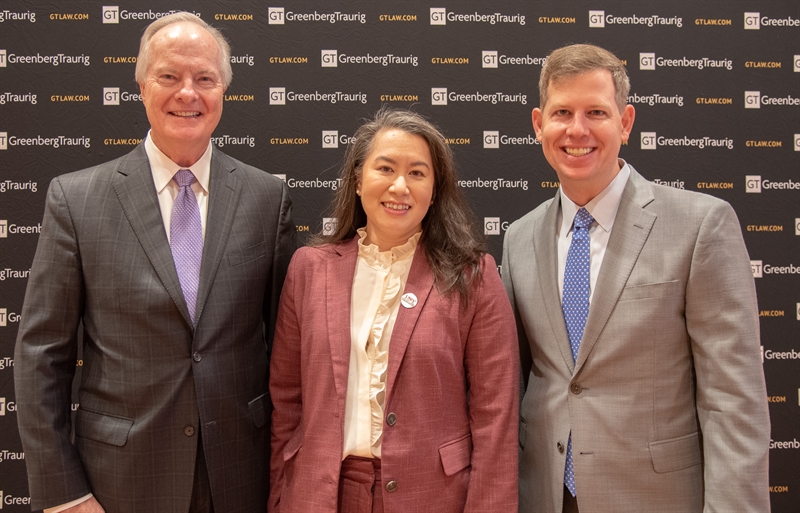
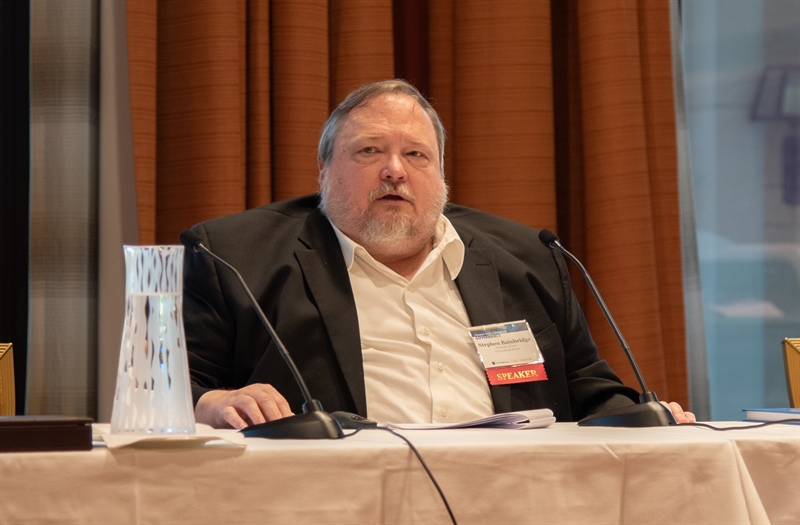
Last week, we hosted the Fourth Annual Corporate Governance Summit at the Wynn in Las Vegas. You can see the program here. Stephen Bainbridge came in to give our keynote address in a talk focused on his new book, The Profit Motive. We ended up drawing about 130 participants. I’m incredibly grateful to Mike Bonner at Greenberg Traurig and the rest of the Greenberg team that helped put the event together. We were also fortunate to have some great sponsors for the event: Joele Frank, Connor Group, Deloitte, J.P. Morgan Chase & Co., and Whittier Trust.

Fellow in Networks, Platforms & Utilities – Vanderbilt
Dear BLPB Readers:
“The Vanderbilt Policy Accelerator (VPA) seeks applications for a fellow in the field of networks, platforms, and utilities (NPUs). The two-year NPU fellowship is designed to support individuals who are interested in becoming law professors in the field of networks, platforms, and utilities, defined broadly as including transportation, communications, energy, banking, and tech platforms, and cross-cutting issues and themes across these sectors. The NPU fellow is expected to write academic articles for publication in legal journals, participate in the NPU workshop and annual NPU conference, and go on the academic job market in the second year of the fellowship. The NPU fellow will receive mentoring and guidance from Vanderbilt law faculty.
Criteria: Fellows must, by the time of the start of the fellowship, be a graduate of an accredited law school.
Salary and Benefits: Fellows receive a salary and benefits.
Location: Relocation to Nashville is preferred and encouraged, but remote work with occasional travel may be possible.
Application details: Please send cover letter, CV (including references), law school transcript, and a research agenda to policyaccelerator@vanderbilt.edu.”
Additional information is here.
Teaching the Core of the Securities Act of 1933
It was so much find to have our business law prof colleague Erik Gerding and two fabulous key members of his staff here in Knoxville yesterday. I had posted on this visit last week. Our visitors regaled us on the role of the U.S. Securities and Exchange Commission (“SEC”) Division of Corporation Finance, the registration requirements and exemptions under the Securities Act of 1933, as amended (“1933 Act”), and the rule-making part of the Division’s (and SEC’s) mission.
Erik explained how, when he is teaching Securities Regulation, he spends two classes at the beginning of the semester putting the “fear of God” into his students about the registration requirement in Section 5 of the 1933 Act. (His point is to make the dangers clear up front, since students tend to drop the class who should take it, given that they plan to practice business law in one way or another.) Erik’s colleague, Jennifer Zepralka, Chief of the SEC’s Office of Small Business Policy, similarly noted in her remarks that there are only three kinds of securities offerings: registered, exempt from registration, and illegal. Erik’s Counsel, Jeb Byrne, echoed this. And in the session at lunch time, one of my
Yeah, sorry, still talking Caremark
I previously blogged about the shareholder derivative claims against Fox Corp, alleging that it violated its Caremark/Massey duties by defaming Dominion. And then I had a few follow ups on Caremark generally here and here.
This week, sorry, still more, because two additional shareholder plaintiffs filed complaints in Fox. One group is led by the New York City Employees’ Retirement System and includes the Oregon Public Employees Retirement Fund; the other is led by Tredje AP-Fonden. These complaints differ from the ones filed earlier in that the plaintiffs sought books and records under 220, and incorporated the results into their pleadings.
VC Laster has scheduled a hearing on November 9 to choose the leadership structure for the action – in other words, all the cases will be combined, some plaintiff(s) will be lead, and some counsel will be lead. If the parties don’t work that out amongst themselves (and they’ve had plenty of time so far), VC Laster will select one plaintiff/counsel group to control the action.
Under Delaware law, these decisions are made according to what are known as the Hirt factors, which evaluate which group can best represent the shareholders, based on size of stake, absence
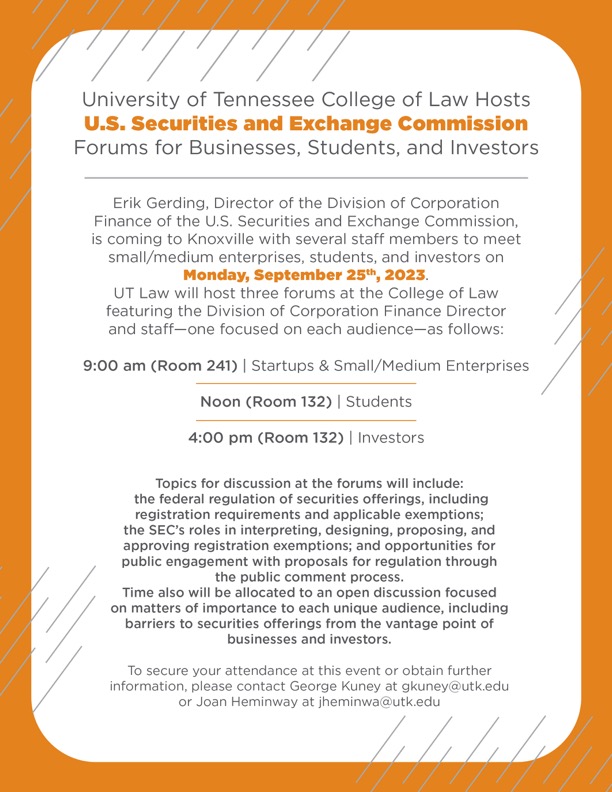
Tennessee Law Welcomes the SEC Division of Corporation Finance!
We are excited to welcome our colleague Erik Gerding, the Director of the U.S. Securities and Exchange Commission Division of Corporation Finance, together with members of his staff, to The University of Tennessee College of Law a week from today. Information about the visit is included below. If you are in the neighborhood, stop by!
To Whom are Caremark Duties Owed?
A while ago, the National Center for Public Policy Research – a conservative organization that focuses its advocacy in the corporate and securities space – filed a lawsuit against Starbucks, arguing that its diversity equity and inclusion program ran afoul of Title VII of the Civil Rights Act of 1964, and Section 1981.
Conservative organizations have been launching a number of Section 1981-based challenges to DEI programs, but usually these are on behalf of workers. The NCPPR case was unusual in that it brought its claims derivatively, as a Starbucks shareholder, on the ground that the directors’ illegal conduct violated their fiduciary duties to the company.
The judge dismissed NCPPR’s complaint a while back, but only now just got around to issuing the opinion, and I find it fascinating.
Starbucks’s key argument was that NCPPR did not, in fact, represent the interests of Starbucks shareholders, and therefore was not a proper representative in a derivative action. In particular, Starbucks argued that the NCPPR’s concerns were personal, due to its general opposition to DEI policies, and that Starbucks’s major shareholders supported its DEI efforts. Starbucks cited the fact that BlackRock and Vanguard have both argued that
Professors Baker and Odinet on The Gamification of Banking
Dear BLPB Readers:
I’m delighted to share that Professor Christopher Odinet has posted our new article, The Gamification of Banking, to SSRN! This was such a fun article to write and I’m so grateful for the opportunity to coauthor with such an amazing scholar! Here’s the abstract:
“Gamification is coming to banking. This phenomenon is already gaining ground in advertising, healthcare, manufacturing, and, more recently, with the GameStop and AMC meme stock saga in securities trading. The idea behind gamification is to make transactions seem fun, playful, and even casino-like in order to elicit habit-forming, addictive-like effects with consumers. We argue that the rise of financial technology (fintech) firms and their ever-growing business relationships with incumbent financial institutions has created the necessary conditions for gamification to take hold in the banking sector. In order to explore this observation, we undertake a study of current examples of banking gamification and create a novel taxonomy of instances where fintech firms and banks offer financial products and services using business models that rely upon on high levels of customers, transaction activity and engagement, and that frequently use the power of social media and online communities. Through our
NFTs from a Distinctive Angle
Thanks to my dear and patient friend and colleague Nizan Packin, I set out on a research and writing adventure a bit more than eighteen months ago. The result is a book chapter on NFTs for her forthcoming edited volume, The Cambridge Handbook for the Law and Policy of NFTs. The chapter is entitled “Non-investment Finance in an NFT World.” At her suggestion, I recently posted the draft chapter to SSRN. You can find it here, and the abstract is set forth below.
Recent years have witnessed the rise of NFTs as vehicles for non-investment finance, including in nonprofit and political fundraising. As with other financial sectors in which NFTs have a role, the use of NFTs in financing nonprofits and political campaigns and committees has revealed gaps and ambiguities in existing legal regulatory systems. Appetite exists to evolve legal frameworks to complete and clarify applicable bodies of law and regulation.
This chapter undertakes to illuminate and reflect on the use of NFTs in financing nonprofits, political campaigns, and political committees. It begins by reviewing general aspects of the non-investment Internet finance environment and then describes and illustrates the use of NFTs in nonprofit and political fundraising.
Can AI detect puffery?
Earlier this week, Matt Levine used his column to highlight this paper on SSRN, “Executives vs. Chatbots: Unmasking Insights through Human-AI Differences in Earnings Conference Q&A”
The authors find that on earnings calls, some executives’ responses are so predictable that they are indistinguishable from responses given by a chatbot, and others are unexpected, in the sense that a chatbot would have predicted different answers. The unexpected/novel responses are associated with stock price reactions because they communicate new information to the market.
Anyway, this interests me because I frequently blog about the issue of puffery, and how courts go about determining whether a statement was material to investors, and I wonder whether something like this method can be useful. I.e., is it possible shareholders could use it to show that a particular statement at a particular time was unexpected and therefore informative, in the face of a claim that it was immaterial?
I imagine this exact method will not always be helpful – in a lot of cases, the claim is that the language remained the same even as underlying conditions changed, and so then of course, the statement would not be found to convey new information, and presumably there would