Photo of Ann Lipton

Ann M. Lipton is a Professor of Law and Laurence W. DeMuth Chair of Business Law at the University of Colorado Law School.  An experienced securities and corporate litigator who has handled class actions involving some of the world’s largest companies, she joined the Tulane Law faculty in 2015 after two years as a visiting assistant professor at Duke University School of Law.

As a scholar, Lipton explores corporate governance, the relationships between corporations and investors, and the role of corporations in society.  Read more.

The big news in securities litigation this week is that the Supreme Court has agreed to resolve the circuit split over whether a failure to disclose required information can function as a misleading omission for purposes of Section 10(b).

I’ve blogged about this split before; basically, my take is that courts are wary of omissions liability not simply because they distrust securities litigation in general, but because they are concerned about further blurring the line between fraud claims and claims for mismanagement.

Which, fortuitously, happens to be the subject of my new article, forthcoming in the Fordham Law Review and just posted to SSRN.  I argue that courts are using issues like puffery, loss causation/damages, and omissions liability to draw distinctions between fraud claims and mismanagement claims and – further – to sketch out a (relatively narrow) view of the proper role of shareholders within the corporate governance structure.  I hastily amended the piece before posting to account for the cert grant; my quick prediction is that if the Supreme Court does permit omitted information to serve as the basis of a Section 10(b) claim, lower courts – concerned about this fraud/mismanagement line – will find themselves narrowing

This semester, I’m teaching a seminar on the financial crisis.  And because my specialty is corporate and securities law, not property, I brought in a ringer – in the form of Chris Odinet of Southern University Law Center – to talk to my class about the Mortgage Electronic Registration System (MERS) and foreclosures.  MERS is a private organization that mortgage bankers have used to track mortgage assignments in the age of securitization, but after the housing bubble burst, it wreaked havoc in the foreclosure process because of sloppy recordkeeping and its inconsistency with the traditional manner in which interests in land have been recorded.  See generally Christopher Lewis Peterson, Two Faces: Demystifying the Mortgage Electronic Registration System’s Land Title Theory, 53 Wm. & Mary L. Rev. 111 (2011).

As Chris Odinet described it to my class, MERS was formed when several financial institutions (including, as it turns out, the Mortgage Bankers Association, Fannie Mae, Freddie Mac, the Government National Mortgage Association, the Federal Housing Administration, and the Department of Veterans Affairs) decided that publicly recording mortgage assignments in county property offices was too expensive and cumbersome.  Instead, these institutions decided to form a shell corporation that would “own” all

One of the hottest topics in business news today is the Snap IPO.

It’s the biggest tech IPO in some time (although some smaller ones apparently will be close behind), the company has so far been losing money and its growth has slowed, and oh yeah – its public shares do not have any voting rights.

In some ways, the disenfranchisement of Snap’s shareholders is the natural culmination of the dual-class share structures that have been popular with tech companies for a while.  But Snap is obviously taking things to extremes.  With no votes, there are no proxy statements.  Most of that information will be disclosed in Snap’s 10-K, but it also means there will be no say-on-pay votes and no shareholder proposals.  Sure, these are – or tend to be – nonbinding anyway, but Snap has shut down the mechanism by which shareholders as a group initiate conversations with the companies in which they invest. 

Some commenters call Snap a one-off; after all, even now, Snap’s shares have fallen well below their first day trading price, and analyst reaction has been less than enthusiastic.  But Snap is still trading higher than its offering price

Trading

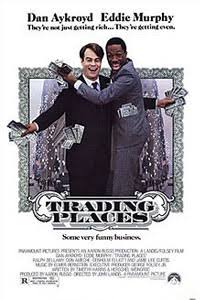
A couple of days ago, Marcia put out a call for business movie/TV recommendations.  A perennial favorite on such lists is the 1983 classic, Trading Places.  That movie is about two brothers who make a bet to see whether they can pluck a man off the street and – by providing him with the proper environment – turn him into a successful commodities trader.  Its stature is such that a real-life statutory amendment, intended to plug the regulatory loophole exploited by the film’s characters, is colloquially known as the “Eddie Murphy rule.”  The CFTC first exercised its authority under the new rule in 2015.

Well, apparently the movie was just as inspiring to business aficionados in 1983 as it remains today.  After seeing the film, two prominent commodities traders of the era, Richard Dennis and William Eckhardt, decided to reenact the brothers’ experiment.  (Except, rather than kidnap a homeless criminal and then frame one of their own employees for dealing PCP, Dennis just took out an ad in the newspaper).  Dennis selected people with a certain affinity for numbers and probability, but with no formal education in commodities, and trained them to trade.  The experiment

This Saturday, I point you to a colorful long read: Sheelah Kolhatkar’s deep dive into William Ackman’s short bet against Herbalife.  Unabashedly sympathetic to Ackman, the article describes how Herbalife was brought to his attention (there are analyst firms that just identify shorting opportunities?  Who knew?  Please don’t answer that everybody knew; that would be embarrassing) and ultimately ended up as something of a crusade to expose what Ackman believes is a pyramid scheme. (And the FTC believes is a scheme that is awfully like a pyramid scheme but without actually using those words.)  According to Kolhatkar, Ackman and his people want to make money, sure, but they also want to expose a fraud that – like Trump’s universities (a comparison Kolhatkar explicitly makes) – robs desperate people of their savings.  

The article describes the titanic battle between Herbalife and Ackman (Herbalife’s CEO is described as having an “air of PTSD”), including how Ackman even tried to enlist Latino civil rights groups to advocate on his behalf.  It’s reminiscent of that time the NAACP involved itself in the epic battle over debit card swipe fees.

Ackman has held on to this bet for a while, combatting other

It’s Mardi Gras season here in NOLA, so I’m afraid I’ve been a little distracted.  It’s hard to concentrate when this is what’s going on a block away ….

Muses2

Muses1

Muses3

So, for this Saturday, I offer you a game: The Unicorn Startup Simulator.  The goal is to reach a billion dollar valuation while keeping your employees happy – it took me a few tries, but I managed it.   Good luck!

In 1995, the Private Securities Litigation Reform Act revamped the procedures applicable to class action lawsuits alleging claims under the federal securities laws.

Concerned about frivolous, attorney-driven litigation, Congress mandated that once a class action complaint is filed, the court must appoint a “lead plaintiff” to take control of the case.  This, it was believed, would be preferable to the old tradition of simply giving control of the case to the first plaintiff to file a complaint.  The lead plaintiff would be selected based on factors similar, but not quite identical, to those involved in selecting a class representative, using a more preliminary, less searching inquiry than might be expected for class certification.  See 15 U.S.C. §78u-4; Topping v. Deloitte Touche Tohmatsu CPA, 95 F. Supp. 3d 607 (S.D.N.Y. 2015).

In enacting the scheme, Congress left a number of questions unanswered.  Like, what is the relationship between the lead plaintiff and the class rep?  Does the lead plaintiff position disappear once class reps are appointed?  It’s not an issue that comes up often, since most lead plaintiffs seek class rep status, and those that don’t tend to cooperate with any class reps who are eventually appointed. 

Another unanswered question was, what

I’m teaching a seminar on the Financial Crisis this semester, and so I was intrigued when I saw this article about a new paper that proposes a simple reform to improve credit ratings.

As most readers probably know, one of the problems that led to the crisis was a gradual deterioration in the quality of the credit ratings issued by agencies like Moody’s and Standard & Poor’s.  The basic charge has been that the agencies, paid by the issuers, had an incentive to issue inflated ratings.  If they did not, the issuer would simply turn to another agency.  The competition for business among agencies was destructive and corrupted the integrity of the rating.

There have been lots of proposals to reform the process – everything from greater disclosure to disgorgement of profits – but Howard Esaki and Lawrence J. White have a simpler idea.  They would simply create a rule that if the issuer goes to more than one ratings agency, the issuer is required to drop (or not pay for) the most lenient rating.  

They have a couple of variations, but the basic idea is the same – ratings agencies won’t compete to give the most lenient rating if

It’s a drive-by this week, but I wanted to call your attention to the recent Delaware Chancery decision in In re Merge Healthcare Inc. Stockholders Litigation.  The plaintiffs challenged IBM’s acquisition of Merge, alleging that a 26% Merge shareholder counted as a controller and was conflicted.  Therefore, the shareholder vote in favor of the merger could not cleanse the deal under Corwin v. KKR Financial Holdings LLC, 125 A.3d 304 (Del. 2015).

Vice Chancellor Glasscock rejected the argument.  Assuming (without deciding) that the 26% shareholder counted as a controller, he concluded that because the shareholder’s interests were aligned with those of the public shareholders – among other things, the alleged controller had no unusual need for liquidity/a fire sale – no heightened scrutiny was required and the stockholder vote in favor of the deal was sufficient to cleanse the transaction.

Of particular interest:  It turns out that the Merge corporation did not have a 102(b)(7) exculpatory clause in its charter, which potentially exposed its board to damages for duty of care violations (though, ultimately, the stockholder vote was sufficient to cleanse any problems).  I didn’t even know that was a thing that could happen.

In other

I’ve previously posted about Delaware’s vulnerability – namely, to the extent it tries to police shareholder litigation through procedural rather than substantive legal standards, it is vulnerable to losing disputes to other jurisdictions that have rules deemed more favorable by litigants.  Plaintiffs and defendants can reach sweetheart merger settlements in jurisdictions that examine the terms less searchingly; defendants can win a dismissal of all claims filed by weak plaintiffs in one jurisdiction and estop stronger plaintiffs who bring suit in Delaware.

So, for example, Delaware encourages derivative plaintiffs to seek books and records under Section 220 before bringing a lawsuit, but that takes time.  A plaintiff in another jurisdiction might simply file a lawsuit right away, and if that suit is dismissed, the dismissal can preclude the Delaware plaintiff– which only gives the Delaware plaintiff less incentive to seek books and records in the first place.

Well, until now.  In Cal. State Teachers Ret. Sys. v. Alvarez, 2017 WL 239364 (Del. 2017), that exact scenario occurred in the long-running action against Wal-Mart for violations of the foreign corrupt practices act in Mexico.  While the Delaware plaintiffs sought books and records to bolster a derivative claim, federal plaintiffs