Photo of Benjamin P. Edwards

Benjamin Edwards joined the faculty of the William S. Boyd School of Law in 2017. He researches and writes about business and securities law, corporate governance, arbitration, and consumer protection.

Prior to teaching, Professor Edwards practiced as a securities litigator in the New York office of Skadden, Arps, Slate, Meagher & Flom LLP. At Skadden, he represented clients in complex civil litigation, including securities class actions arising out of the Madoff Ponzi scheme and litigation arising out of the 2008 financial crisis. Read More

In an address on Halloween, President Biden announced his support for a new rule proposal from the Department of Labor.  The rule would impose a fiduciary duty on persons giving advice about retirement assets.  His remarks framed the issue as addressing “junk fees” in financial services.

The rule targets critical transactions.  In 2022, Americans moved about $800 billion from 401(k) type plans into individual retirement accounts.  The decisions people make when moving their funds out of their 401(k) and into something else matter.  It’s also often a vulnerable point for many.  We know that cognitive decline affects a greater percentage of the population as they age. Yet our regulatory infrastructure does not currently impose consistent standards on persons giving advice about that pot of money.

The kind of advice a retiree receives depends on the person and product at issue.  A registered investment adviser will owe a fiduciary duty under the Investment Advisers Act.  A stockbroker will owe an obligation to give advice in the investor’s “best interest” under the SEC’s regulation “Best Interest.” 

What about the duties owed by insurance producers who often aim to divert retirement savings into insurance products?  An insurance agent selling equity-indexed or fixed-indexed annuities
PIABA, the Public Investor Advocate Bar Association, and the PIABA Foundation released a new report on FINRA expungement earlier this week. The current report gives a good snapshot of where things stand at the end of an era with a new set of FINRA rules around expungement going into effect on October 16, 2023.  FINRA adopted some of these changes after comment letters I sent in on earlier proposals. On the whole, my record remains mixed with FINRA continuing to keep this process in arbitration.  James Tierney and I have a forthcoming paper on this contending that an administrative procedure would produce much better results than leaving this outsourced to the arbitration forum.  My core view is that the current structure simply fails to generate any real scrutiny, much less adversarial scrutiny, for most of these requests.

To address the scrutiny problem, we have some changes.  One of the biggest changes to the rules is a new process for notifying state regulators and allowing them to participate in hearings.  On the one hand, this is a good thing.  State regulators should be able to take steps to appropriately prevent the deletion of public records.  But on the other

Another case challenging FINRA’s constitutionality has generated a District Court opinion upholding FINRA’s constitutionality.  Judge Reyes found that, Alpine “does not suggest that courts must enjoin every challenged FINRA enforcement action pending the Alpine merits decision.”

Kim differs from Alpine in some significant ways.  The plaintiff does not face expulsion, just an ordinary fine and disciplinary proceeding.  Kim faces a possible $30,000 fine and a requirement to disgorge $16,000 in profits.  This, unsurprisingly, complicates his attempt to secure an injunction against the enforcement action because it doesn’t seem as though he will face any irreparable harm–just “an enforcement hearing, months away, and most likely, monetary fines.”

The case also differs in that amici got involved at an early stage this time.  The opinion thanks “CBOE Global Markets, Inc.; CME Group Inc.; National Futures Association; and the Securities Exchanges.”  

Most courts will not be familiar with SROs.  Given that, it makes sense for a range of amici to come in on these cases to help give context to courts.

Ultimately, how this issue will turn out for Kim depends on the pending Alpine appeal.

You may be interested in an event taking place on October 11 at the Center for American Progress in Washington, DC, which will focus on the regulation of private markets and feature SEC Commissioner Caroline Crenshaw, as well as business law professors Renee Jones (BC) and George Georgiev (Emory).

The registration link (in-person or virtual) is as follows: https://www.americanprogress.org/events/accessing-public-capital-without-public-disclosure/

Event description:

Accessing Public Capital Without Public Disclosure

Oct. 11, 2023

12:30 PM – 12:35 PM

Introductory remarks provided by CAP Senior Vice President for Inclusive Growth Emily Gee.

12:35 PM – 1:05 PM

Keynote remarks provided by Caroline A. Crenshaw, Commissioner of the U.S. Securities and Exchange Commission.

1:05 PM – 1:45 PM

A panel discussion with experts on the topic moderated by CAP Senior Director for Financial Regulation Alexandra Thornton, featuring Renee Jones (Boston College Law School) and George Georgiev (Emory University School of Law)

Today, more capital is raised annually in private markets than in the public markets. Hundreds of multibillion-dollar companies can raise all the capital they need from an unlimited number of unaffiliated investors, while selling products and services to tens of thousands of customers and employing thousands of people. Many are unicorns—companies that started in

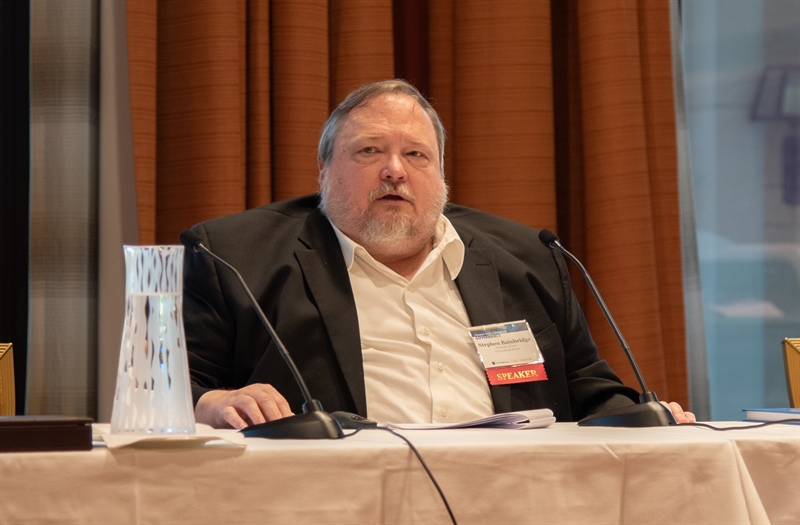
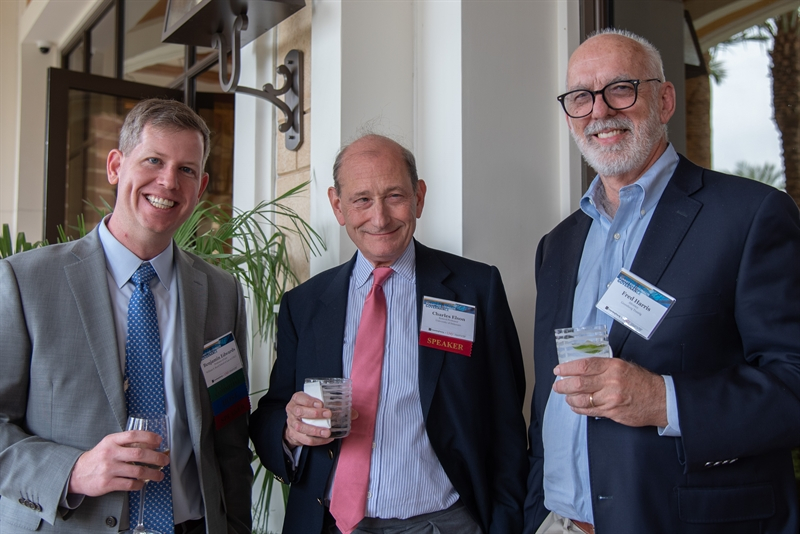
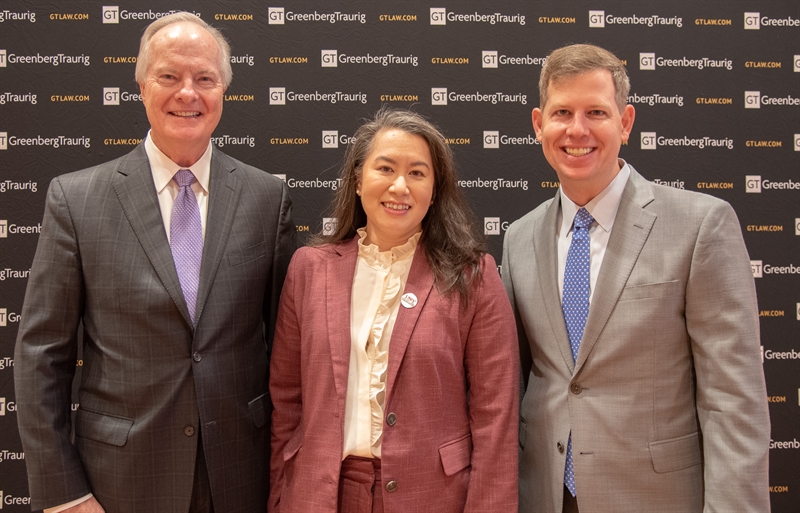
Last week, we hosted the Fourth Annual Corporate Governance Summit at the Wynn in Las Vegas.  You can see the program here.  Stephen Bainbridge came in to give our keynote address in a talk focused on his new book, The Profit Motive.  We ended up drawing about 130 participants.  I’m incredibly grateful to Mike Bonner at Greenberg Traurig and the rest of the Greenberg team that helped put the event together.  We were also fortunate to have some great sponsors for the event: Joele Frank, Connor Group, Deloitte, J.P. Morgan Chase & Co., and Whittier Trust.  

Bonner_Ginvald_Edwards

The AALS Professional Responsibility Section invites papers for its program “2024 New Voices Workshop.” The goal of this audience interactive workshop is to provide a forum for new voices and new ideas related to professional responsibility (PR), broadly defined.

Many scholars might address PR without realizing it. We are interested in your potential contributions whether you are an evidence scholar writing about the attorney-client privilege, a feminist interested in gender dynamics that affect lawyering, a critical race scholar commenting on how power plays out in legal systems, an ethicist exploring the moral foundations of the rules governing lawyering, or something entirely different.

Toward that end, we encourage you to submit a proposal even if you are pursuing scholarship on PR for the first time, even if you question whether your ideas really do relate to PR, and even if you are reticent to submit for some other reason.

The selected papers will be presented at the AALS Annual Meeting in January of 2024.

WORKSHOP DESCRIPTION:

The Workshop will be an opportunity to nurture the growth of a broad scholarly community in the field of Professional Responsibility and Legal Ethics. As such, it is a place to take risks and develop

Last month, the SEC released a report on Mandatory Arbitration Among SEC-Registered Advisers.  The report tackles a basic dispute resolution problem.  For context, investors with a problem with a financial adviser will likely have to go to arbitration.  If their financial adviser is an associated person for a FINRA-registered brokerage firm, the dispute will likely go through FINRA arbitration.  While the FINRA system isn’t perfect, it’s often much better than any other alternative out there.  FINRA has made improvements to its arbitration process over the years resulting in a forum that has become fairer for investors.

But many financial advisers are not brokers.  They are registered investment advisers.  They usually charge fees on an assets under management basis.  Where do disputes against these RIA firms go?  It depends on what kind of pre-dispute arbitration agreement exists between the adviser and the investor.  The SEC report details the current options available to investors.

Here’s the short version, far too many RIAs have put in place arbitration agreements that effectively frustrate an investor’s ability to resolve a complaint.  Most of these agreements force investors to resolve their disputes through AAA–the American Arbitration Association.  Within that forum, Advisers generally elect to apply

The Nevada Supreme Court recently delivered an opinion on Series LLCs.  These entities are relatively new and not much caselaw on them currently exists so it’s good to get some more guidance about how to deal with them.

The case, Federal Housing Finance Agency v. Saticoy Bay LLC, reached the Nevada Supreme Court on a certified question from the Ninth Circuit about how to obtain jurisdiction over series LLC entities.  In short, the question the Ninth Circuit wanted answered was whether a court obtained jurisdiction over series entities by naming the master LLC itself or whether the individual series must be sued in its own name to establish jurisdiction over it?  Nevada’s Supreme Court answered that naming the individual series LLC at issue was not an “optional” matter.  To establish jurisdiction over a series entity, the entity itself must be sued.  It found that the “plain language of NRS 86.296(2) does not allow a party to sue a master LLC in lieu of a series LLC at the party’s discretion.”

The Belmont University College of Law invites applications for entry-level and junior-
lateral candidates in the area of business law for a tenure-track, faculty position to
begin Fall 2024. 
The Belmont College of Law encourages applications from people whose background,
life experiences, and scholarly approaches would contribute to the diversity of our
faculty, curriculum, and programs.
Applicants must possess a J.D. from an accredited U.S. law school and must
demonstrate strong scholarly potential and a commitment to excellence in teaching. 
Belmont is an EOE/AA employer.  Belmont College of Law reserves the right to
exercise a preference for those candidates who support the goals and missions of the
University.
If interested, please submit a letter of interest and curriculum vitae to the Chair of the
Faculty Recruitment Committee, Professor Kristi W. Arth, using the recruitment
committee’s email address – lawfaculty.recruitment@belmont.edu. If you have
questions about the position or Belmont University, please contact Professor Arth at
kristi.arth@belmont.edu.
Belmont University is a private, Christian university focusing on academic excellence
and is located in the heart of Nashville, one of the fastest growing and most culturally
rich cities in the country.  Belmont is the second largest private university in Tennessee
approximating 9,000

Submissions and nominations of articles are being accepted for the fourteenth annual Fred C. Zacharias Memorial Prize for Scholarship in Professional Responsibility.  To honor Fred’s memory, the committee will select from among articles in the field of Professional Responsibility with a publication date of 2023.  The prize will be awarded at the 2024 AALS Annual Meeting in Washington, DC.  Please send submissions and nominations to Professor Samuel Levine at Touro Law Center: slevine@tourolaw.edu.  The deadline for submissions and nominations is September 1, 2023