Photo of Benjamin P. Edwards

Benjamin Edwards joined the faculty of the William S. Boyd School of Law in 2017. He researches and writes about business and securities law, corporate governance, arbitration, and consumer protection.

Prior to teaching, Professor Edwards practiced as a securities litigator in the New York office of Skadden, Arps, Slate, Meagher & Flom LLP. At Skadden, he represented clients in complex civil litigation, including securities class actions arising out of the Madoff Ponzi scheme and litigation arising out of the 2008 financial crisis. Read More

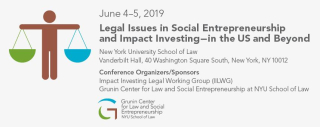
I do plan to write a bit about the Law and Society Association and Grunin Center conferences that I attended over the past two weeks.  But today, I am compelled to briefly post about a newly decided U.S. Supreme Court case and a recent blog post.  The connection?  Both reference in relevant part postal delivery services, public and private.

I was alerted to the Supreme Court opinion (in Return Mail v. U.S. Postal Service) by Tom Norris, one of our fabulous BLPB readers in Nashville.  The subject of the case is the U.S. government’s attempt to assert patent invalidity as a defense to a claim of infringement.  The Court finds that the government is not a “person” for purposes of the relevant provisions of the U.S.  Patent and Trademark Act.  The National Law Journal article to which Tom pointed me offers a nice summary.  I really enjoy legal actions that focus on the “person” definitions in statutes and decisional law.  This one offers some interesting policy arguments (as do most)–in both the opinion of the Court and the dissent.

The blog post (Modern Mailmen) is coauthored by Leonid Sirota and Akshaya Kamalnath, the latter of whom I

At the 2019 Law and Society Association Annual Meeting last week, Geeyoung Min presented her paper Governance by Dividends.  In the paper, she focuses attention on stock dividends.  Near the end of her presentation, Geeyoung trod over ground on which so many of us also have trod–relating to judicial standards of review in fiduciary duty actions.  As familiar as the story was, she helped me to see something I had not seen before.  Perhaps many of you already have identified this.  If so, I am sorry to bore you with my new insight.

Essentially, what I came to realize during her talk–and develop with her and members of the audience in the ensuing discussion–was that Delaware’s judiciary may have (and I may be quoting Geeyoung or someone else who was there, since I wrote this down long-form in my contemporaneous notes) muddied the waters by seeking clarity.  What do I mean by that?  Well, by addressing relatively clearly the circumstances in which the business judgment rule, on the one hand, or entire fairness, on the other, govern the judicial review of corporate fiduciary duty allegations, the Delaware judiciary has effectively made the interstitial space between the two–intermediate tier scrutiny–less

Last week, I attended the American Law Institute (ALI) Annual Meeting in Washington, DC.  (I am back in The District this week for the Law and Society Association Annual Meeting.  More on that in a later post.)  Many important project drafts and projects were vetted at the ALI meeting.  As many readers know, however, the tentative draft of the Restatement of the Law, Consumer Contracts generated some significant debate in advance of and at the conference.  The membership approved part of the draft of the project at the meeting, but much still is to come.  

I want to briefly pick up a small thread here from the portions of the proposed Restatement discussed at the meeting that relates to some of the work I have done on crowdfunding.  Crowdfunding platforms, like most web-based service businesses, use standard form “terms of use” that the service provider and customer end-user may desire to enforce under contract law.  Unsurprisingly, many of the terms of use for websites of this kind (and crowdfunding platform sites are no exception to the rule) are protective of the interests of the service provider.  These terms include, for example, mandatory arbitration provisions and waivers of jury

AmericnFlagCemetary
[Image by Keturah Moller from Pixabay ]

When I was young, Memorial Day meant one thing: the Memorial Day Fair at my church, The Cathedral of the Incarnation in Garden City, New York.  As I contemplated how to honor our war dead this Memorial Day, I kept coming back to thinking about that fair.  Others have also had memories of the fair on their minds this week.  A May 25th post in a Facebook group I belong to, I grew up in Garden City, New York, asked: “What are your memories of the Memorial Day fair at the cathedral? I looked forward to it every year!”  At the time this post was published, there were over 100 comments and replies posted.  The Memorial Day Fair even gets a nod on the TripAdvisor page for the church–“Wonderful [sp] Memorial Day Fair and Concert.”  Local press stories on the preparations and schedule for this year’s fair can be found here and here.

The Memorial Day Fair is a collaborative community event in which local businesses join together with church volunteers to produce a major good time.  The webpage for this year’s fair notes ten business sponsors and boasts that

Brown(Jonathan-2018)
Last week, a wonderful man in my life died.  Jonathan Spencer, a classmate from and fellow class leader for Brown University, died unexpectedly a week ago.  He collapsed while exercising and was unable to be revived.  At the time of his death, he was the General Counsel of the Museum of Science Fiction in Washington, DC, a museum that he helped to found.  The above photo was taken last year at our 35th reunion celebrations.  Although we did not see each other a lot in between reunions, we shared a passion for Brown and our class.

We also shared a professional connection, as the title of this post indicates.  Jonathan was a fellow business lawyer.  He focused on communications technology for much of his career.  His formal professional bio as currently posted at the Museum of Science Fiction is as follows:

Jonathan Spencer, General Counsel. Jonathan is a technology and transactional attorney with over 25 years of experience having held senior and executive level positions with several Internet and telecommunications companies. Jonathan has also representedtechnology and media companies, financial institutions and nonprofit organizations. Jonathan is a former chair of the Association of Corporate Counsel’s IT, Privacy and E-Commerce Committee and

Today, I have been attending and presenting at the Midwest Symposium on Social Entrepreneurship in Kansas City, Missouri.  This is the Seventh Annual installment of this event, which engages entrepreneurs, lawyers, government actors, and others in education, networking, and discussions around various issues (which differ from year to year) relating to social enterprise structure, governance, finance, and operations.  I love attending this symposium.  The people are socially and intellectually stimulating.  I appreciate Tony Luppino inviting me to participate.

There is much I could write about the programs today.  However, I will focus in one one small thing for now: Opportunity Zones and more particularly the funds that invest in them.  A quick description of Opportunity Zones and a cautionary message on related investment funds follow.

The U.S. Internal Revenue Service has defined Opportunity Zones as follows in a Q&A posted on its website:

An Opportunity Zone is an economically-distressed community where new investments, under certain conditions, may be eligible for preferential tax treatment. Localities qualify as Opportunity Zones if they have been nominated for that designation by the state and that nomination has been certified by the Secretary of the U.S. Treasury via his delegation of authority to the

I read with interest and some sadness this New York Times article published last month.  Having just finished a full weekend of yoga continuing education with a group of women (most of whom were about to graduate from a registered teacher training like the one I completed last November), I feel compelled to say a few words about the article and the business of yoga and yoga instructor training.  My perspective on the matters raised in the article is, of course, colored by my background in business law practice and teaching and my recent teacher training experiences.  I am sure that co-blogger Colleen also would be interested in the article for similar reasons (and given her earlier post on yoga and entrepreneurship).

The article highlights specific tactics allegedly used to generate then expansion/growth of a particular yoga business.  The core aspect of the article–reports that instructors were pressured or coerced to make sales pitches that may have misrepresented the instructor training program or the results it can achieve–struck me most clearly.  To say that the “story” told in the article was chilling understates the case.  My thought after reading it?  This does not look like the yoga businesses or

My essay, “Mr Toad’s Wild Ride: Business Deregulation in the Trump Era,” was recently published by the Mercer Law Review as part of a volume featuring works from a recent symposium on “Corporate Law in the Trump Era.”  The symposium was held back in October and resulted from ideas shared at a discussion group on “Corporate and Financial Reform in the Trump Administration” convened for the 2017 Southeastern Association of Law Schools conference.  A portion of the introduction explaining the overall nature of the essay follows (footnote reference omitted).

This Essay identifies and takes stock of the Trump Administration’s deregulatory efforts as they impact business interests, with the thought that even incomplete or biased information may be useful to transactional business lawyering. What of significance has been done to date? With what articulated policy goals, if any? How may—or how should—the success of the administration’s business deregulatory plans and programs be judged? What observations can be made about those successes? For example, who may win and lose in the revised regulatory framework that may emerge? The Essay approaches these questions from a transactional business law perspective and offers related observations. Spoiler Alert: to date, the

Co-blogger Ann Lipton has posted a number of times on Elon Musk’s Twitter disclosures and their potential legal significance.  I chimed in once.  Unless I am mistaken, her most recent post (citing to our prior posts) on this subject is here.  Based on these posts, we both seem to understand that the Twitter Era has spawned some interesting disclosure-related legal questions.

I had these posts in the back of my mind when I got an email invitation yesterday from IPO Docs, a firm that sells “Regulation D Private Placement Memorandum Templates” to check into the firm’s services.  I have never been a fan of online templates or form documents as drafting precedent, especially for investment disclosure documents.  In general, one-size-fits-all disclosure lawyering is just too far from my practice background (which involved reverse-engineering the work of my Skadden colleagues and others).  But I do tell students they should be familiar with these kinds of form/exemplar resources and that, after determining the quality and suitability of a resource for their purposes, they may want to use form documents as a cross-check for contents or phrasing.

These two examples of Internet-related disclosures (online commentary and disclosure forms) are two pieces

Anthony Rickey and I recently posted a new paper focusing on the settlement approval process in securities class and stockholder derivative actions.   These settlements are a fascinating world. In most instances, plaintiffs’ counsel urge a judge to find that a settlement is reasonable, and defendants either stay silent or join in supporting the deal.  At this stage, plaintiff and defense interests often align. The defendant wants to get out of the case at the negotiated price.  Plaintiff’s counsel want to get paid. 

In many instances the settlement will be perfectly reasonable and a court should just approve it.  But there will also be times when a court should not approve a settlement or should do a bit more digging before deciding whether to approve the settlement and how to apportion the recovery between the class and its counsel.

How do courts identify these instances?  Courts generally excel at deciding disputes after adversarial briefing.  They may not have the institutional resources to slog through hundreds of pages in settlement disclosures or canvas other public records to determine whether to approve a settlement.  We suggest some possible reforms to the settlement approval process to help bring relevant information to the court’s attention.