Photo of Joan Heminway

Professor Heminway brought nearly 15 years of corporate practice experience to the University of Tennessee College of Law when she joined the faculty in 2000. She practiced transactional business law (working in the areas of public offerings, private placements, mergers, acquisitions, dispositions, and restructurings) in the Boston office of Skadden, Arps, Slate, Meagher & Flom LLP from 1985 through 2000.

She has served as an expert witness and consultant on business entity and finance and federal and state securities law matters and is a frequent academic and continuing legal education presenter on business law issues. Professor Heminway also has represented pro bono clients on political asylum applications, landlord/tenant appeals, social security/disability cases, and not-for-profit incorporations and related business law issues. Read More

The Harvard Law School Program on Corporate Governance and Financial Regulation is pleased to announce the availability of positions of Post-Graduate Academic Fellows in the areas of corporate governance and law and finance. Qualified candidates who are interested in working with the Program as Post-Graduate Academic Fellows may apply at any time and the start date is flexible.

Candidates should be interested in spending two to three years at Harvard Law School (longer periods may be possible). Candidates should have a J.D., LL.M., or S.J.D. from a U.S. law school, or a Ph.D. in economics, finance, or related areas by the time they commence their fellowship. Candidates still pursuing an S.J.D. or Ph.D. are eligible so long as they will have completed their program’s coursework requirements by the time they start. During the term of their appointment, Post-Graduate Academic Fellows work on research and corporate governance activities of the Program, depending on their skills, interests, and Program needs. Fellows may also work on their own research and publishing in preparation for a career in academia or policy research. Former Fellows of the Program now teach in leading law schools in the U.S. and abroad.

Interested candidates should submit a CV,
I had the privilege of being invited again this year to present at the 2017 LLC Institute, an annual program produced by the LLC, Partnership and Unincorporated Entities Committee of the American Bar Association’s Business Law Section.  As part of a panel discussion on LLC fiduciary duties (with friend-of-the-BLPB Mohsen Manesh and others), I sang a few bars of Rocky Top (!) and talked about the fiduciary duty waiver issue that we faced in Tennessee in revamping our limited partnership law this past year.  But that was far from the highlight of the program!  

Luckily, friend-of-the-BLPB Tom Rutledge–a leader in (and former chair of) the LLC, Partnership and Unincorporated Entities Committee–has captured the essence of the two-day event in blog posts here and here.  He notes in sum:

Over the last two days we have . . . , by means exceptional panels, considered and informed the participants on the broadest range of issues materially important to our shared area of interest and practice.  That is the mission of the LLC Institute, and hopefully it has again delivered on its objective.  The materials are posted and available for anyone, and in a few weeks the audio recordings will

National Business Law Scholars Conference
Thursday & Friday, June 21-22, 2018

Call for Papers

The National Business Law Scholars Conference (NBLSC) will be held on Thursday and Friday, June 21-22, 2018, at the University of Georgia School of Law in Athens, Georgia.  A vibrant college town, Athens is readily accessible from the Atlanta airport by vans that depart hourly. Information about transportation, hotels, and other conference-related matters can be found on the conference website.

This is the ninth meeting of the NBLSC, an annual conference that draws legal scholars from across the United States and around the world.  We welcome all scholarly submissions relating to business law. Junior scholars and those considering entering the legal academy are especially encouraged to participate. If you are thinking about entering the academy and would like to receive informal mentoring and learn more about job market dynamics, please let us know when you make your submission.

To submit a presentation, email Professor Eric C. Chaffee at eric.chaffee@utoledo.edu with an abstract or paper by February 16, 2018.  Please title the email “NBLSC Submission – {Your Name}.”  If you would like to attend, but not present, email Professor Chaffee with an email entitled “NBLSC Attendance.”  Please specify in your email whether you

As some of our BLPB readers know, I am a habitual 12,000-step-a-day walker.  I monitor my progress on steps, stairs, and sometimes sleep using a Fitbit “One” that I have had since Christmas Day 2012.  Fitbit recently announced that it is discontinuing the One.  So, if my existing One dies off, I will have to switch trackers.  And, sadly, I am likely to have to switch suppliers.  While Fitbit has been good to me, the rest of its trackers are not at all interesting or suitable for my desired uses.  They are almost all wrist models, and the one clip-on tracker Fitbit sells is relatively bulky and antiquated.

I am not the only one who is unhappy about the discontinuation of the One tracker.  Fitbit has discussion boards for members of its “community.”  The discussion board titled “Is Fitbit One being discontinued?” (which was started over the summer) has lit up over the past week.  As of the time of this post, there were 519 posts in the Fitbit forum.  

I have been impressed by the passion of the folks who have posted comments and responses.  Many posted reviews of other Fitbit products and competitor products that might be

Screenshot 2017-09-03 19.09.35

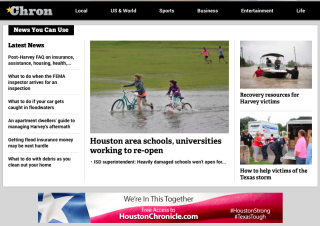
Now that Hurricane Harvey’s threat to the United States has dissipated, we can begin to fully appreciate the damage it has caused to person, property, and business.  It’s staggering.  The screenshot included above was captured from the Houston Chronicle’s website yesterday.  Although I am not sure how one calculates such things, Wikipedia notes that, “[b]ased on current damage estimates made by multiple agencies, Hurricane Harvey is likely to be at least the second-most costly natural disaster in U.S. history, behind only Hurricane Katrina in 2005.”  I am heartbroken for all those who have lost so much, yet grateful for those who survived such a wicked storm, including the BLPB’s own Doug Moll.

I am confident that too many folks are using this holiday weekend–one they had hoped to spend enjoying last-of-summer moments with family and friends–mourning the loss of life and digging out from the mess at their homes or workplaces.  The damage in Tennessee from the related rain and winds was significant but pales in comparison to what the folks have suffered and continue to contend with in Houston and the surrounding areas.  Luckily, the storm threw very little at Knoxville, since the heart of it passed to the

The University of Richmond School of Law seeks to fill three tenure-track positions for the 2018-2019 academic year, including one in corporate/securities law.  Candidates should have outstanding academic credentials and show superb promise for top-notch scholarship and teaching.  The University of Richmond, an equal opportunity employer, is committed to developing a diverse workforce and student body and to supporting an inclusive campus community.  Applications from candidates who will contribute to these goals are strongly encouraged. 

Inquiries and requests for additional information may be directed to Professor Jessica Erickson, Chair of Faculty Appointments, at lawfacultyapp@richmond.edu. 

WB

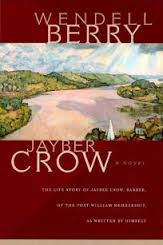
I highly recommend Jayber Crow by Wendell Berry

Set in rural Kentucky, Jayber Crow is a story about small town life, community, love/hate, sustainability, and industrialization. The main character, Jonah “Jayber” Crow loses both his parents and his Aunt and Uncle by the age of ten. He spends the next few years in an orphanage before obtaining a scholarship to a local college as a “pre-ministerial” student. Doubting his calling to the ministry, Jayber drops out and returns to his hometown. He serves as the town’s only barber, and he also picks up jobs as the local grave digger and church janitor. Jayber narrates, in vivid detail, the exodus from the small town by the younger generation and the invasion of large-scale, profit-focused, corporate farming.   

The author, Wendell Berry, warns that “persons attempting to explain, interpret, explicate, analyze, deconstruct, or otherwise ‘understand’ [this book] will be exiled to a desert island in the company only of other explainers” so I will simply end with a few of my favorite quotes below. I think one of the reasons I so liked this book is because it reminded me of my family’s property and of my maternal grandfather, who lived at a pace unknown

A few weeks ago, Stephen Bainbridge asked about the benefits of the social media site LinkedIN. His question caused me to revisit the costs/benefits of social media. Below I reflect on the social media websites I use.

With so many professors getting in trouble on social media – see, e.g., here, here, here, here, and here – it may make sense to ask if any of the websites are worth the risk. As long as you are wise when you post, and assume a post will be seen in the worst possible light, I think social media can be worth using. 

Facebook. 

  • Benefits. Facebook has a broader network of people than any of the other social media sites I use. My parents are on Facebook, as is my wife’s grandmother and great aunt, as are my peers, as are my much younger cousins. Facebook also has a wide range of user generated content — photos, links, short & long posts, groups, etc. The “Friends in ___ City” feature has allowed me to catch up with old acquaintances when traveling for conferences or family trips. Just a few weeks ago, I visited with two

Download

While I am already looking forward to returning to the classroom in the fall, one of the reasons that I love summers is that I get to catch up on reading. It has been an embarrassingly long time since I have finished a fiction book, but I am committed to making fiction an increasing percentage of my reading.  

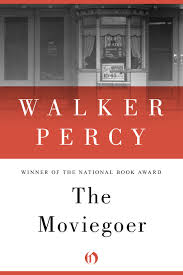
Percy’s Moviegoer won the 1962 National Book Award. I have my brother Will to thank for the recommendation and for the book itself. The novel focuses on the life of a New Orleans area stockbroker “Binx” Bolling, and his search for meaning. I won’t ruin the story for those who have not read it, but I was moved by the Binx’s struggle against what he called the malaise and everydayness. Binx appears to be a pretty sad character, spending a good bit of time hiding from life in movie theaters and engaging in flings with his secretaries, but he can also inspire the reader to ask serious questions, engage in meaningful relationships, and live more intentionally. 

Recently, I participated in a focus group on running shoes for Brooks. A few years ago, I did something similar for New Balance

Brooks paid each participant $100 for 90 minutes. 

The group was well-facilitated, and the group members stayed incredibly engaged. The 90-minutes flew by.

The research Brooks was conducting on both shoe design and marketing was extremely qualitative. It was essentially a brainstorming session. I do think Brooks could have gotten more out of the time if they would have had everyone privately write down their own ideas first, as there were about three or four of the ten of us who dominated the discussion. 

While this type of focus group was not cheap—$1000 in payment plus renting the room plus travel for two employees from Seattle—it was surely a very small fraction of their production and marketing budget. And I do think Brooks got some valuable ideas. Brooks does this sort of thing all over the country, and their employees said that they do start to hear patterns in the responses. It is those patterns that Brooks acts on, as they can’t possibly address every one-off comment. 

This focus group made me think that universities should consider similar focus groups with