
At the beach with my wife’s family, I read Parker J. Palmer’s Courage to Teach in a couple sittings. Palmer has a PHD in sociology from UC Berkeley, and has written extensively on education.

My mother-in-law was reading the book for her job at a private elementary school, and I brought a limited number of books (due to the weight of my hardcopy books), so I read this book too. Our teaching center at Belmont University has mentioned Palmer’s work a number of times, so I was interested in the book.

Simply stated, Palmer’s thesis is that “good teaching comes from the identity and integrity of the teacher.” He defines identity as “an evolving nexus where all the forces that constitute my life converge in the mystery of self,” and he defines integrity as “whatever wholeness I am able to find within that nexus as its vectors form and re-form the pattern of my life.” (13) Teaching, he argues, comes from the heart and soul of the teacher, and not primarily from chosen techniques. 

Palmer makes a solid point about paradox and pedagogical design. “The space should be bounded and open….hospitable and charged….invite the voice of the
WB

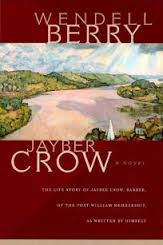
I highly recommend Jayber Crow by Wendell Berry

Set in rural Kentucky, Jayber Crow is a story about small town life, community, love/hate, sustainability, and industrialization. The main character, Jonah “Jayber” Crow loses both his parents and his Aunt and Uncle by the age of ten. He spends the next few years in an orphanage before obtaining a scholarship to a local college as a “pre-ministerial” student. Doubting his calling to the ministry, Jayber drops out and returns to his hometown. He serves as the town’s only barber, and he also picks up jobs as the local grave digger and church janitor. Jayber narrates, in vivid detail, the exodus from the small town by the younger generation and the invasion of large-scale, profit-focused, corporate farming.   

The author, Wendell Berry, warns that “persons attempting to explain, interpret, explicate, analyze, deconstruct, or otherwise ‘understand’ [this book] will be exiled to a desert island in the company only of other explainers” so I will simply end with a few of my favorite quotes below. I think one of the reasons I so liked this book is because it reminded me of my family’s property and of my maternal grandfather, who lived at a pace unknown

Download

While I am already looking forward to returning to the classroom in the fall, one of the reasons that I love summers is that I get to catch up on reading. It has been an embarrassingly long time since I have finished a fiction book, but I am committed to making fiction an increasing percentage of my reading.  

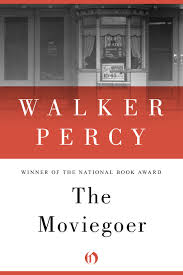
Percy’s Moviegoer won the 1962 National Book Award. I have my brother Will to thank for the recommendation and for the book itself. The novel focuses on the life of a New Orleans area stockbroker “Binx” Bolling, and his search for meaning. I won’t ruin the story for those who have not read it, but I was moved by the Binx’s struggle against what he called the malaise and everydayness. Binx appears to be a pretty sad character, spending a good bit of time hiding from life in movie theaters and engaging in flings with his secretaries, but he can also inspire the reader to ask serious questions, engage in meaningful relationships, and live more intentionally. 

A friend who is a member of a university faculty (non-law) some years ago recommended that I read Straight Man, by Richard Russo. I am forever thankful.  The book is a novel set in a small town in Pennsylvania and follows the trials and tribulations of an English-department faculty member at a college besieged by budget challenges, a dysfunctional department, and his own lack of motivation.   

The book is funny — sometimes laugh-out-loud funny — and for anyone on a faculty, I am willing to wager that, despite occasional absurdity, this faculty will feel like it could be yours.  The main character is sympathetic, to a point, but he is also part of the problem.  It is a fast read, and it’s one I come back to every couple years.  Perhaps it is just a guilty pleasure, but the universality of the characters and the bit of hope that emerges are things I find to be comforting in some way. It may be that the book serves as a reminder that we’re not alone in our craziness.  Everyone who has taught for a while knows a Hank, a Finny, a Gracie DuBois, Jacob Rose, a Billy Quigley.  

COLLECTIVE BOOK ON LEGAL INNOVATION

Call for submissions

The program « Law & Management » developed by the European Center of Law and Economics (known as CEDE in French) of ESSEC Business School, is an innovative and pioneering research program which aims to study the use of law as a competitive factor.

In this regard, the members of the research program « Law & Management » have decided to publish a collective book focusing on legal innovation. This book, co-edited by A. Masson (ESSEC) and D. Orozco (Florida State University), will analyze, by crossing the points of view of lawyers and creative specialists, the concept and life cycle of legal innovations, techniques and services, whether they are related to legislation, legal engineering, legal services, legal strategies…, as well as the role of law as a source of creativity and interdisciplinary teamwork. All the techniques that could facilitate legal innovations from the perspective of design thinking to predictive design, through the customer experience will be analyzed.

The program Board is now opening the call for proposals. Papers proposals (consisting in a brief summary in English) of a maximum length of 1000 words, should be sent to

This post is not about politics, although it does concern President-elect Trump’s cabinet pick, ExxonMobil head, Rex Tillerson. I first learned about Tillerson during some research on business and human rights in the extractive industries in 2012. I read the excellent book, “Private Empire” by Pultizer-prize winner Steve Coll to get insight into what I believe is the most powerful company in the world.

Although Coll spent most of his time talking about Tillerson’s predecessor, Lee Raymond, the book did a great job of describing the company’s world view on climate change, litigation tactics, and diplomatic relations. Coll writes, “Exxon’s far flung interests were at times distinct from Washington’s.” The CEO “did not manage the corporation as a subordinate instrument of American foreign policy; his was a private empire.” Raymond even boasted, “I am not a U.S. company and I don’t make decisions based on what’s good for the U.S.” Indeed, the book describes how ExxonMobil navigated through Indonesian guerilla warfare, dealt with kleptocrats in Africa, and deftly negotiated with Vladmir Putin and Hugo Chavez. 

Before I read the book, I knew that big business was powerful–after all I used to work for a Fortune 500 company. But Coll’s work described a company that

As you know, assessment is of critical importance these days, and I am confident that in a few years most, if not all, law school casebooks will come with effective, out-of-the-box, turnkey assessments. If you believe your book is already there, or even close, please send your pitch to me at spadfie@uakron.edu. Assuming no unforeseen problems, I plan to post these pitches here, as I am sure they will be of interest to many of our readers.

I have been following Professor Angela Duckworth’s work on grit for well over a year, so I was eager to read her new book, Grit: The Power of Passion and Perseverance. In fact, I can’t remember the last time I bought and read a book within a few weeks of it being published.  

The book is an easy read, written for a for a popular audience, and I was able to finish it in three relatively short sittings.

Below, I reflect on the book, hopefully in a balanced way. 

Thesis. As may be evident from previous posts of mine, I like Duckworth’s thesis – essentially, that passion and perseverance in pursuit of long-term goals are important in achieving success. Duckworth is careful to caveat her thesis, noting at hard work and passion are important, but are not the only factors that matter in achieving success. With this caveat, her thesis seems rather obvious and uninteresting.

Grit ScaleThe Grit Scale Duckworth created for her studies seems easy to fake, and to her credit, she admits that it can be faked, like most self-reporting measures. Given the ability to fake the Grit Scale, I am not sure that it would be of much

I recently finished Grit: The Power of Passion and Perseverance (2016) by Angela Duckworth (Penn Psychology).

Next week, I will post some reflections on the contents of the book, but for now, I would like to discuss professors publishing for a popular audience. Tongue-twisting alliteration unintended.  

I am thankful that Duckworth wrote this book for a popular audience rather than in a way that would target a narrow slice of academia. Even as a professor myself, I find books written for popular audience easier to digest, especially if in a different discipline. While popular press books often oversimplify, I would rather a professor author a popular press book on her studies (and studies in her field) than have a journalist attempt to explain them. Also, while a popular press book may oversimplify, professors tend to be intentional about avoiding claims that are too sweeping. Note that in this interview, like the book, Duckworth is careful to state that grit is not the only thing that contributes to success. Finally, especially when the professor has done the background academic work first, as Duckworth did in many peer-reviewed journal articles, a popular press book can reach more people and inspire change and may

I never thought I would say this, but my favorite book this year is about punctuation. That’s right. Punctuation! The book is Making a Point: The Pernickety Story of English Punctuation, by David Crystal, and it’s well worth reading.

It’s an enjoyable romp through the English language, with limited attention to writing in other languages as well. (I just placed something in a German English-language publication and discovered that Germans don’t know how to “correctly” use quotation marks.)

This isn’t a rule book; Crystal talks about current usage, including areas where the “experts” disagree. (Oxford comma, anyone?) But he also covers the history—how the use of punctuation has evolved over time. One of the book’s recurring themes is how two functions of punctuation–clarifying the writer’s meaning and providing cues to speakers–can sometimes be at odds.

The history is fascinating. I have to admit that, after reading this book and seeing what excellent writers have done in the past, it’s harder to argue for a prescriptive position. I don’t always agree with Crystal’s position on disputed issues, but his case is always cogent.

Crystal covers all the major punctuation marks: , , ;, :, . . . , ., and