
Hello to all from Tokyo, Japan (Honshu).  I have been in Japan for almost a week to present at and attend the 20th General Congress of the International Academy of Comparative Law (IACL), which was held last week in Fukuoka, Japan (Kyushu).  By the time you read this, I will be on my way home.

Fukuoka(Me+Sign)

As it turns out, I was at the Congress with old business law friends Hannah Buxbaum (Indiana Maurer Law), Felix Chang (Cincinnati Law), and Frank Gevurtz (McGeorge Law), as well as erstwhile SEALS buddy Eugene Mazo (Rutgers Law).  I also met super new academic friends from all over the world, including several from the United States.  I attended all of the business law programs after my arrival (I missed the first day due to my travel schedule) and a number of sessions on general comparative and cross-border legal matters.  All of that is too much to write about here, but I will give you a slice.

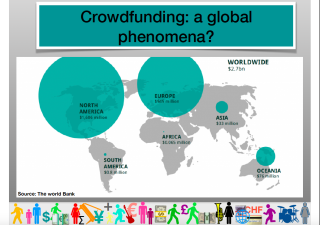
I spoke on the legal regulation of crowdfunding as the National Rapporteur for the United States.  My written contribution to the project, which I am told will be part of a published volume, is on SSRN here.  The entire project consists of eighteen papers from around the world, each of which responded to the same series of prompts conveyed to us by the General Rapporteur for the project (in our case, Caroline Kleiner from the University of Strasbourg).  The General Rapporteur is charged with consolidating the information and observations from the national reports and synthesizing key take-aways.  I do not envy her job!  The importance of the U.S. law and market to the global phenomenon is well illustrated by this slide from Caroline’s summary.
Fukuoka(GlobalCrowdfundingSlide)

The Congress was different from other international crowdfunding events at which I have presented my work.  The diversity of the audience–in terms of the number of countries and legal specialties represented–was significantly greater than in any other international academic forum at which I have presented.  Our panel of National Rapporteurs also was a bit more diverse and different than what I have experienced elsewhere, including panelists hailing from from Argentina, Brazil, Canada, France, Germany, Poland, and Singapore (in addition to me).  At international conferences focusing on the microfinance aspects of crowdfunding, participants from India and Africa are more prominent.  I expect to say more about the individual national reports on crowdfunding in later posts, as the need or desire arises.

A few outtakes on other sessions follow.

Pura vida from Costa Rica. Between recovery from carpal tunnel surgery a few weeks ago and an ATV flip two days ago, I don’t have much mental or physical energy to do a full post. I haven’t mastered dictation so I’m typing this on an iPad with one hand. Next week, I’ll provide more substance as well as a preview on my September talk at our second annual BPLB symposium at the University of Tennessee. Today, I want to pass on some resources for those who don’t know anything about blockchain. 

For those who want to provide resources for students, Walter Effross has put together a great site:

Ten Reasons for Blockchain Law Literacy

The following sources come from Professor Tonya Evans at UNH, who has developed an online curriculum on blockchain:

Use Cases: 

https://medium.com/fluree/blockchain-for-2018-and-beyond-a-growing-list-of-blockchain-use-cases-37db7c19fb99

https://www.mycryptopedia.com/16-promising-blockchain-use-cases/

Education:

https://medium.com/universablockchain/blockchain-in-education-49ad413b9e12

Blockchain + Law:

http://www.abajournal.com/news/article/lawyers_can_contribute_to_the_rise_of_blockchain_by_understanding_it

https://abovethelaw.com/2018/02/blockchain-can-smart-contracts-replace-lawyers/

Bitcoin And Blockchain: What Lawyers Need To Know

Next week, I’ll talk about my research into how blockchain is used in corporate governance, compliance, supply chain management, enterprise risk management, cybersexurity, and human rights. 

On Thursday and Friday of last week, I had the honor of attending and presenting at the inaugural conference on Women’s Leadership in Academia at the University of Georgia School of Law.  The conference featured a wide variety of plenary and breakout/workshop sessions over the two days.  My dean and two other colleagues from UT Law also were presenters at the conference; an additional UT Law colleague attended but did not present.

The opening plenary panel featured four women talking about “Me Too and the Legal Academy.”  The panelists offered perspectives from journalism, criminal law, tort law, constitutional law, victim/survivor advocacy, classroom teaching, law school administration, campus Title IX adjudication, and personal experience.  Audience members actively participated in a dialogue with the panelists.  The keynote on the second day was delivered by the interim provost at UGA, Libby Morris, who offered information on women in leadership–data, anecdotes, and observations–and moderated a related audience Q&A.

The remainder of the program included various panels, presentations, and workshops.  Among them was a nifty combined PechaKucha/workshop offered by three of my UT Law colleagues on “Leadership Challenges and Solutions over the Course of a Career” and my breakout session entitled “Outside the Four

Call for Papers for

Section on Agency, Partnership, LLCs and Unincorporated Associations on

Respecting the Entity: The LLC Grows Up

at the 2019 AALS Annual Meeting

The AALS Section on Agency, Partnership, LLCs and Unincorporated Associations is pleased to announce a Call for Papers from which up to two additional presenters will be selected for the section’s program to be held during the AALS 2019 Annual Meeting in New Orleans on Respecting the Entity: The LLC Grows Up.  The program will explore the evolution of the limited liability company (LLC), including subjects such as the LLCs rise to prominence as a leading entity choice (including public LLCs and PLLCs), the role and impact of series LLCs, and differences in various LLC state law rights and obligations. The program will also consider ethics and professional responsibility and governance raised by the LLC. The Section is particularly seeking papers that discuss the role of the LLC as a unique entity (or why it is not).

The program is tentatively scheduled to feature:

  • Beth Miller, M. Stephen and Alyce A. Beard Professor of Business and Transactional Law, Baylor Law
  • Tom Rutledge, Member, Stoll Keenon Ogden PLLC, Louisville, KY

Our Section is proud to

The close of business on Friday, June 22 marked the end of the 9th National Business Law Scholars Conference.  With Paul Mahoney and Cindy Schipani as our keynote speakers, two featured plenary panels (revisiting, respectively, the 2008 financial crisis and salient business crime issues), and 30 academic paper and author-meets-readers panels, this year’s conference was packed with activity.  Maggie Sachs, who retired from an illustrious business law teaching career effective May 31, and the University of Georgia hosted the event.  I am proud to have had a role in planning the conference and am relieved that our all-volunteer planning committee was able to (again) carry off a successful event.  A mostly final (!) event program is available here.  Thanks to Eric Chaffee for his usual Herculean efforts in organizing and reshuffling (up through the last day of the conference) the program.

I moderated the financial crisis plenary panel, offered comments on David Webber‘s The Rise of the Working-Class Shareholder: Labor’s Last Best Weapon, (as shown in the picture below), presented a two-paper project on business deregulation that I am working on this summer, and introduced Cindy’s Friday keynote luncheon presentation on corporate board independence and

Call for Papers: Midwestern Law & Economics Association Annual Meeting
The University of Alabama School of Law
September 14-15, 2018

Dear colleagues,

Please note that the deadline for submitting papers to the Midwestern Law & Economics Association has been extended to July 20, 2018. 

The University of Alabama School of Law (UASL) is pleased to host the Eighteenth Annual Meeting of the Midwestern Law & Economics Association (MLEA) September 14-15, 2018 in Tuscaloosa, Alabama. This year’s meeting will be co-sponsored by the UASL and the UASL¹s Cross Disciplinary Legal Studies Program.

We invite participants from across the nation (not just the Midwest) and abroad. There are no registration or membership fees. Participants will finance their own travel and hotel costs.

Papers can be on any topic that touches on law and economics. This includes, for example, papers with empirical analysis and economic modeling, as well as papers that address legal doctrine or theory that have been informed by economic thought.

To apply, submit a paper or abstract to Shahar Dillbary (sdillbary@law.ua.edu) and Yonathan Arbel (yarbel@law.ua.edu ) no later than Friday, July 20th. 

A block of rooms at Hotel Indigo has been reserved for conference participants at a rate of

June has been a busy month for me.  I look forward to catching my breath after the National Business Law Scholars Conference this coming Thursday and Friday at the University of Georgia School of Law.  Today, having already written about the biennial transactional law and skills conference at Emory Law a few weeks ago, I will briefly outline three of my more recent forays: (1) a conference on Legal Issues in Social Entrepreneurship and Impact Investing—in the US and Beyond organized by the Impact Investing Legal Working Group and NYU Law’s Grunin Center for Law and Social Entrepreneurship; (2) the Law and Society Association Annual Meeting and Conference, Law at the Crossroads: Le Droit à la Croisée des Chemins; and (3) a town hall meeting of the U.S. Securities and Exchange Commission at the Georgia State University College of Law.

Grunin2018

I had a super opportunity to speak at the Grunin Center conference this year, helping to construct and guide a discussion on whether definitions matter to the developing fields of impact investing and social entrepreneurship.  Sadly, my travel got bolloxed up by a plane with mechanical difficulties, and I missed the first half of the panel discussion at the

It was great to see co-blogger Marcia Narine Weldon (albeit briefly) at the Sixth Biennial Conference: To Teach is to Learn Twice: Fostering Excellence in Transactional Law and Skills Education hosted by Emory Law’s Center for Transactional Law and Practice.  I had the opportunity to present and attend some of the presentations on Friday.  I had to leave Saturday morning to teach Contract Law to ProMBA students in Knoxville Saturday afternoon, however, and missed hearing half the conference program as a result.  Even on Friday, due to the number of super concurrent sessions, I had to forego a lot of great presentations.  Consequently, I was delighted to read Marcia’s post on Tina Stark’s presentation.  Great stuff.

At the conference, I offered insights on my document “treasure hunt” teaching method in a “try this” session on Friday afternoon.  More specifically, I talked about and demonstrated a corporate finance treasure hunt.  After laying a substantive and practical foundation, I sent the audience, some of whom are not corporate finance folks, on a search for blank check preferred stock provisions in Delaware corporate charters.  Then, I called on them to share their search logic and make observations about what they found, relating their treasure

Greetings from Atlanta, Georgia, site of the Emory Transactional Law & Skills Conference. After only a few hours of presentations, I’m already inspired to make some changes in my new transactional lawyering class. I will write about some of the lessons learned next week. Today, I want to share some of Tina Stark’s remarks from the conference dinner that ended moments ago. Although she initially teased the audience by stating that she would make “subversive” statements, nothing that she said would scandalize most law students or surprise practicing lawyers.

Her “radical” proposal entailed having transactional skills education be a part of every law student’s curriculum. In support, she cited ABA Standard 301(a), which states:

OBJECTIVES OF PROGRAM OF LEGAL EDUCATION (a) A law school shall maintain a rigorous program of legal education that prepares its students, upon graduation, for admission to the bar and for effective, ethical, and responsible participation as members of the legal profession.

She argued that for the academy to meet this standard, schools must go beyond a narrow reading of ABA rules and provide every student with the foundation to practice transactional law, particularly because half of graduates will practice in that area even if they don’t know

Call for Papers

AALS Section on Transactional Law and Skills

Transactional Law and Finance: Challenges and Opportunities
for Teaching and Research

2019 AALS Annual Meeting

New Orleans, Louisiana

The AALS Section on Transactional Law and Skills is proud to announce a call for papers for its program, “Transactional Law and Finance: Challenges and Opportunities for Teaching and Research.” This session will examine the role of finance in business transactions from various perspectives with the goal of inspiring more deliberate consideration of finance in law school teaching and legal scholarship.From structured finance to real estate, from mergers & acquisitions to capital markets, finance plays an important and fundamental role in transactional law. The intersection of transactional law and finance is dynamic, providing academics, practitioners, and the judiciary with both challenges and opportunities. For example, financial product innovation and new funding sources for entrepreneurs continue to expand. Meanwhile, the significant growth in merger appraisal litigation has cast a new spotlight on the ability to critically analyze financial models (with a critical issue being whether a particular model is appropriate for expert use to determine fair value in appraisal proceedings). At the same time, activist investors are impacting company boards and the way in which companies do