
The-overnighters

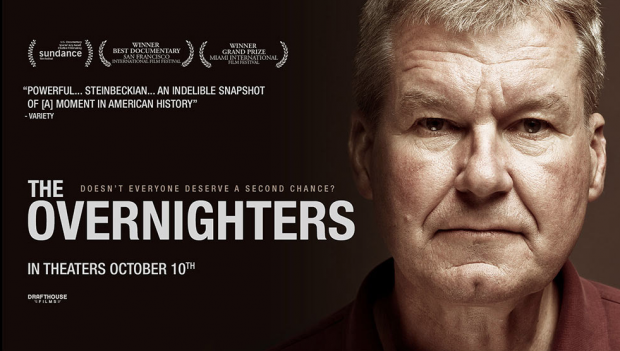
Over the break, I watched the documentary Overnighters on Netflix. 

In short, the documentary chronicles the story of a pastor who opens the church to migrant workers in North Dakota during the energy boom in that state. The pastor faces pushback from his congregation, neighbors, and city officials who do not appreciate having these men – some with criminal records – housed so close. 

In my opinion, the pastor is right, and the congregants are wrong, about the purpose of a church. The church should be in a community to serve, especially its needy neighbors. That said, the logistics of how to serve may be up for debate. Also, it is at least arguable that by serving the migrant workers the church strayed from serving its congregation. It would have been helpful if the church had a clear statement on its purpose and priorities. Many social enterprises have extremely vague purpose statements, which I do not think are very helpful. Benefit corporations are often required by statue to “benefit society and the environment.” A purpose statement like that would not have helped the church in Overnighters much at all. A statement that showed that those in need would be prioritized

AALS2018(SHProposalPanel)

Last week, I had the privilege of attending and participating in the 2018 annual meeting of the Association of American Law Schools (#aals2018).  I saw many of you there.  It was a full four days for me.  The conference concluded on Saturday with the program captured in the photo above–four of us BLPB co-bloggers (Stefan, me, Josh, and Ann) jawing about shareholder proposals–as among ourselves and with our engaged audience members (who provided excellent questions and insights).  Thanks to Stefan for organizing the session and inspiring our work with his article, The Inclusive Capitalism Shareholder Proposal.  I learned a lot in preparing for and participating in this part of the program.

Earlier that day, BLPB co-blogger Anne Tucker and I co-moderated (really, Anne did the lion’s share of the work) a discussion group entitled “A New Era for Business Regulation?” on current and future regulatory and de-regulatory initiatives.  In some part, this session stemmed from posts that Anne and I wrote for the BLPB here, here, and here.  I earlier posted a call for participation in this session.  The conversation was wide-ranging and fascinating.  I took notes for two essays I am writing this

At a time when many boards may be thinking of tax planning and possible M & A deals, they may have to start focusing more on the unseemly topic of their executives’ sex lives because the flood of terminations and resignations due to sexual misconduct shows no signs of slowing down. One of the most shocking but underreported terminations in 2017 related to VISA. The CEO, one year into the role, chose to terminate one of his most valuable executives after an anonymous tip about sexual misconduct.  He wanted his employees to know that the corporate culture and values mattered. Board members should look closely at the VISA example.

We will continue to see the rise of the #MeToo movement spurred on in part by the messaging from a star-studded task force  formed to address Hollywood issues and the establishment of a multimillion-dollar legal defense fund to help blue-collar workers. Even Supreme Court Chief Justice Roberts addressed sexual harassment in the court system in his Year-End Report on the Federal Judiciary.  More people than ever may now choose to come forward with claims of harassment or assault. Whether companies choose to terminate wrongdoers or the accused choose to

Two weeks ago, I asked whether companies were wasting time on harassment training given the flood of accusations, resignations, and terminations over the past few weeks. Having served as a defense lawyer on these kinds of claims and conducted hundreds of trainings, I know that most men generally know right from wrong before the training (and some still do wrong). I also know that in many cases, people look the other way when they see or hear about the complaints, particularly if the accused is a superstar or highly ranked employee. Although most men do not have the power and connections to develop an alleged Harvey Weinstein-type “complicity machine” to manage payoffs and silence accusers, some members of management play a similar role when they ignore complaints or rumors of inappropriate or illegal behavior. 

The head in the sand attitude that executives and board members have displayed in the Weinstein matter has led to a lawsuit arguing that Disney knew or should have known of Weinstein’s behavior. We may see more of these lawsuits now that women have less fear of speaking out and Time honored the “Silence Breakers” as the Person of the Year. As I

I am putting together a panel or discussion group (depending on how many folks respond positively) for the SEALS conference for next summer, which is scheduled to be held August 5-11, 2018, at the Marriott Harbor Beach Resort & Spa in Fort Lauderdale, Florida (details here).

Here is the proposed title and a brief draft description (which may have to be shortened for the submission):

The Role of Corporate Personhood in Masterpiece Cakeshop

The United States Supreme Court is scheduled to hear arguments in the case of Masterpiece Cakeshop, Ltd. v. Colorado Civil Rights Commission on Dec. 5, 2017 (SCOTUSblog summary here). The issue presented in that case is: “Whether applying Colorado’s public accommodations law to compel the petitioner to create expression that violates his sincerely held religious beliefs about marriage violates the free speech or free exercise clauses of the First Amendment.” A group of corporate law professors have filed an amicus brief in support to the CCRC (available here). One of the two arguments in that brief is: “Because Of The Separate Legal Personality Of Corporations And Shareholders, The Constitutional Interests Of Shareholders Should Not Be Projected Onto The Corporation.” This [panel] [discussion group] features

The Harvard Law School Forum on Corporate Governance and Financial Regulation recently contained a notice about the Delaware Corporate Law Resource Center, which I thought might interest our readers as well. The post is reproduced below the line.

The oral histories of iconic Delaware cases are the most interesting, and useful, part of the website to me, though some of the cases do not appear to have materials yet. In addition to the cases, there is an oral history on 102(b)(7) to which my judge (VC Stephen Lamb) and others contributed. I hope the existing materials will be added to and expanded over time.  

————

The University of Pennsylvania Law School Institute for Law and Economics (ILE) is pleased to announce the creation and public availability of a new website devoted to resources relating to the development of the Delaware General Corporation Law and related case law. This website (the Delaware Corporation Law Resource Center) has two principal components. The first is a compilation of resources relating to the Delaware General Corporation Law itself, including a link to the text of the statute, and links to the bills to amend the statute since its general revision in 1967.

The following is a guest post from Bernard S. Sharfman*:

The foundation of my understanding of corporate governance rests on a small but growing number of essays, articles, and books.  These writings include Henry Manne’s Mergers and the Market for Corporate Control, Michael Dooley’s Two Models of Corporate Governance, Stephen Bainbridge’s Director Primacy: The Means and Ends of Corporate Governance and The Business Judgment Rule as Abstention Doctrine, Kenneth J. Arrow, The Limits of Organization, Frank H. Easterbrook & Daniel R. Fischel, The Economic Structure of Law, Zohar Goshen & Gideon Parchomovsky’s The Essential Role of Securities Regulation, and Alon Brav, Wei Jiang, Frank Partnoy & Randall Thomas’ Hedge Fund Activism, Corporate Governance, and Firm Performance.  Recently, I have added to this esteemed list Zohar Goshen and Richard Squire’s Principal Costs: A New Theory for Corporate Law and Governance.

Goshen and Squire put forth a new theory, the “principal-cost theory,” which posits that a firm’s optimal corporate governance arrangements result from a calculus that seeks to minimize total control costs, not just agency costs (“the economic losses resulting from managers’ natural incentive to advance their personal interests even when those interests conflict with

Earlier this week, my two-year old daughter was in the pediatric ICU with a virus that attacked her lungs. We spent two nights at The Monroe Carell Jr. Children’s Hospital at Vanderbilt (“Vanderbilt Children’s). Thankfully, she was released Wednesday afternoon and is doing well. Unfortunately, many of the children on her floor had been in the hospital for weeks or months and were not afforded such a quick recovery. There cannot be many places more sad than the pediatric ICU.

Since returning home, I confirmed that Vanderbilt Children’s is a nonprofit organization, as I suspected. I do wonder whether the hospital would be operated the same if it were a benefit corporation or as a traditional corporation.

Some of the decisions made at the hospital seems like they would have been indefensible from a shareholder perspective, if the hospital had been for-profit. Vanderbilt Children’s has a captive market, with no serious competitors that I know of in the immediate area. Yet, the hospital doesn’t charge for parking. If they did, I don’t think it would impact anyone’s decision to choose them because, again, there aren’t really other options, and the care is the important part anyway. The food court

Earlier this week, I had the pleasure of hearing a talk about universal proxies from Scott Hirst, Research Director of Harvard’s Program on Institutional Investors.

By way of background, last Fall under the Obama Administration, the SEC proposed a requirement for universal proxies noting:

Today’s proposal recognizes that few shareholders can dedicate the time and resources necessary to attend a company’s meeting in person and that, in the modern marketplace, most voting is done by proxy.  This proposal requires a modest change to address this reality.  As proposed, each party in a contest still would bear the costs associated with filing its own proxy statement, and with conducting its own independent solicitation.  The main difference would be in the form of the proxy card attached to the proxy statement.  Subject to certain notice, filing, form, and content requirements, today’s proposal would require each side in a contest for the first time to provide a universal proxy card listing all the candidates up for election.

The Council of Institutional Investors favors their use explaining, “”Universal” proxy cards would let shareowners vote for the nominees they wish to represent them on corporate boards. This is vitally important in proxy contests, when

Yesterday, I listened to How I Built This‘ podcast on Gary Hirshberg of Stonyfield Yogurt.

I assume most readers are familiar with Stonyfield Yogurt, and perhaps a bit of its story, but I think the podcast goes far beyond what is generally known. 

The main thing that stuck out in the podcast was how many struggles Stonyfield faced. Most of the companies featured on How I Built This struggle for a few months or even a few years, but Stonyfield seemed to face more than its share of challenges for well over a decade. The yogurt seemed pretty popular early on, but production, distribution, and cash flow problems haunted them. Stonyfield also had a tough time sticking with their organic commitment, abandoning organic for a few years when they outsourced production and couldn’t convince the farmers to follow their practices. With friends and family members’ patient investing (including Gary’s mother and mother-in-law), Stonyfield finally found financial success after raising money for its own production facility, readopting organic, and finding broader distribution.

After about 20 years, Stonyfield sold the vast majority of the company to large multinational Group Danone. Gary explained that some investors were looking for liquidity and