
As I discussed briefly last week, I think reverse veil piercing in the Hobby Lobby case is a bad idea, in part because it uses a doctrine designed to prevent fraud to impute characteristics to the entity. One of the reasons this concerns me is that there are other recent decisions that imply courts may be missing the point about the separate and distinctive nature of entities, even as the individual rights of entities appear to be expanding. 

In a recent West Virginia case, for example, a lower court allowed a wildly improper use of the statutory provision, “Unknown claims against dissolved corporation” to be the basis what became a $25 million jury award for punitive damages for emotional impact to a former entity’s shareholders. In the Order Addressing AIG Posttrial Motions (pdf) of May 1, 2012 (“Order”) Ryan Environmental, Inc. v. Hess Oil Co., Inc., Civil Action No. 10-C-20, the court adopted a plaintiff’s argument that, under W. Va. Code § 31D-14-1407(d), “the interests of the shareholders are joined with the interests of the corporation after a corporation’s dissolution.” See Order at 7.  The court later explained its view that, because the plaintiff’s former entity was dissolved, damages and hardships attributable to the shareholders were a sufficient basis for the defendants’ liability directly to the shareholders and that such damages and hardships did not need to attributed to the former entity.  That is, the defendants’ liability ran to the entity’s shareholders post-dissolution even though the harms claimed were never attributable to the entity.  Click below to read more.
In my article, “The Silent Role of Corporate Theory in the Supreme Court’s Campaign Finance Cases,” 15 U. Pa. J. Const. L. 831, I criticized the Supreme Court justices for failing to acknowledge the role of competing conceptualizations of the corporation in their corporate political speech cases.  I noted, however, that former Chief Justice Rehnquist was arguably the lone modern justice to deserve at least some praise in this area.

Justice Rehnquist’s stand-alone dissent in Bellotti provides arguably the sole example in these opinions of a Justice affirmatively adopting a theory of the corporation for purposes of determining the constitutional rights of corporations–though not via the express adoption of one of the traditionally recognized theories. Specifically, Justice Rehnquist relied on Justice Marshall’s Dartmouth College opinion to conclude that: “Since it cannot be disputed that the mere creation of a corporation does not invest it with all the liberties enjoyed by natural persons . . . our inquiry must seek to determine which constitutional protections are ‘incidental to its very existence.”’ Thus, while it may be true that “a corporation’s right of commercial speech . . . might be considered necessarily incidental to the business of a commercial corporation[

I wonder how many people are boycotting Hobby Lobby because of the company’s stance on the Affordable Health Care Act and contraception. Perhaps more people than ever are shopping there in support. Co-blogger Anne Tucker recounted the Supreme Court’s oral argument here in the latest of her detailed posts on the case. The newspapers and blogosphere have followed the issue for months, often engaging in heated debate. But what does the person walking into a Hobby Lobby know and how much do they care?

I spoke to reporter Noam Cohen from the New York Times earlier today about an app called Buycott, which allows consumers to research certain products by scanning a barcode. If they oppose the Koch Brothers or companies that lobbied against labels for genetically modified food or if they support companies with certain environmental or human rights practices, the app will provide the information to them in seconds based on their predetermined settings and the kinds of “campaigns” they have joined. Neither Hobby Lobby nor Conestoga Woods is listed in the app yet. 

Cohen wanted to know whether apps like Buycott and GoodGuide (which rates products and companies on a scale of 1-10 for their health, environmental

A little more than six weeks ago The Lego Movie hit theaters. Without getting into too much detail for those of you who have not yet seen the movie or who will never get around to seeing the movie, in essence it’s about an ordinary guy who’s mistakenly identified as an extraordinary “MasterBuilder”. He is recruited to fight against a Lego villain (President Business-we can call him P.B.) who is intent on gluing everything together. The anti-PB crusaders like having the freedom to dismantle, break, and re-make their Lego creations and shudder at the thought of having everything permanently fixed in place. PB, on the other hand, is intent on perma-gluing the Lego bricks together because he likes the certainty and control of knowing where everything is, and he is wary of innovation or change. Hence, his admonition- “EVERYTHING MUST STAY IN PLACE.”

Now as I watched this battle unfold between President Business’ pro-gluing supporters on one hand, and the pro-change supporters on the other, I could not help but see some similarities between the Lego people’s contested views on the purpose of Legos and our society’s contested views on the purpose of corporations. In The Lego Movie

I’m trying out a new weekly blog post theme, “The Weekly BLT,” wherein I highlight a few interesting business law tweets that I’ve come across in the past week that have not yet made it to the BLPB.

Carnegie
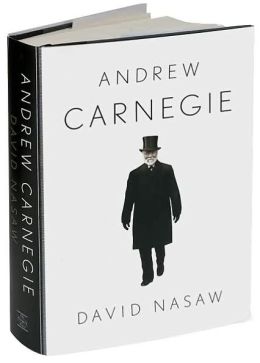
On spring break, I found a hardcover copy of Professor David Nasaw’s biography of Andrew Carnegie in a Boone, NC thrift shop for $1.  (Good books and good deals are two of my favorite things).  A New York Times book review is available here.

I only made it about 200 pages into the fascinating 801 page biography before returning to work.  I am currently on page 293, but already have some thoughts to share.

Before digging into this book, “failure” was one of the last words I would have associated with Andrew Carnegie.  Carnegie is well known as one of the “captains of industry” (in the steel business) and as an extremely generous philanthropist.  Even the word “struggle” is not a word I would have associated with Andrew Carnegie; from a distance, everything seemed to come easily for him.

But, like most of us, Carnegie experienced failure, and his life was marked by numerous struggles.

[More after the break] 

It’s proxy season and the Conference Board has released a series of reports on investor engagement and corporate governance. In “The Conference Board Governance Center White Paper: What is the Optimal Balance in the Relative Roles of Management, Directors, and Investors in the Governance of Public Corporations?” the authors provide a 76-page overview of the evolution of US corporate governance, describing key trends and issues.

The report begins by discussing the history of the allocation of roles and responsibilities for governance of public companies. If I thought my law students would read it, I would assign this section to them.  The second part of the paper addresses the legal, social and market trends that have influenced the historical allocation of rights. Specifically, it reviews:

a) the increasing influence of institutional investors resulting from the concentration of ownership in institutional investment, changes in voting rules and practices and more assertive shareholder activism;

b) shifting conceptions about the purpose of the corporation and the duty to maximize corporate value, with a strong emphasis on shareholder wealth maximization;

c) decreased public trust of business leaders following the corporate scandals of 2001-2002 and 2007-2008;

d) federal regulation intended to enhance the influence of shareholders

A hearing in the Delaware Court of Chancery highlights the question raised in my earlier post of institutional shareholder activism and provides a timely example of one brand of shareholder activism:  issue activism.

Yesterday, Vice Chancellor J. Travis Laster denied Hershey’s motion to dismiss a books-and-records suit brought by shareholder Louisiana Municipal Police Employees’ Retirement System. The suit seeks inspection of corporate books to investigate claims that the chocolate company knowingly used suppliers violating international child labor laws.  A full description of the hearing is available here.

UPDATE, Kent Greenfield who has been involved in the case, provided me with a copy of the Hershey hearing & ruling ( Download Hershey Ruling) as well as some context for the case.  Yesterday’s hearing did two things. First, it clarified the standard of review for motions to dismiss section 220 books and records demands. Citing to Seinfeld v. Verizon Commc’ns, Inc., 909 A.2d 117, 118 (Del. Supr. 2006), the proper standard is whether a shareholder has provided “some evidence to suggest a ‘credible basis’ from which a court can infer that mismanagement, waste or wrongdoing may have occurred.”    Second, the books and record request was brought on

Ed Whelan at National Review Online (h/t: Prof. Bainbridge) asks, in light of a recent Fourth Circuit opinion, “Will those who (wrongly) think that for-profit corporations are incapable of exercising religion for purposes of RFRA object as vigorously to the concept that for-profit corporations can have a racial identity for purposes of Title VI? If not, why not?”

I have been following the Hobby Lobby case with interest, though I am just delving into its depths now.  After starting through the various amicus briefs, my initial reaction is that the law has not evolved to where it needs to be with respect to protecting those engaging in the widespread use of entities.  As is often the case, my initial reaction is that the answer to Mr. Whelan’s question is somewhere in the middle: I think for-profit corporations are capable of exercising religion under RFRA, but in this case I don’t see the necessary substantial burden, at least when balanced with an individual’s right to make such decisions, to carry the day. (Reasonable minds can disagree on this, but that’s my take). 

Taking a broader look, though, view entities should be able to take on the race, gender