
Hello to all from Tokyo, Japan (Honshu).  I have been in Japan for almost a week to present at and attend the 20th General Congress of the International Academy of Comparative Law (IACL), which was held last week in Fukuoka, Japan (Kyushu).  By the time you read this, I will be on my way home.

Fukuoka(Me+Sign)

As it turns out, I was at the Congress with old business law friends Hannah Buxbaum (Indiana Maurer Law), Felix Chang (Cincinnati Law), and Frank Gevurtz (McGeorge Law), as well as erstwhile SEALS buddy Eugene Mazo (Rutgers Law).  I also met super new academic friends from all over the world, including several from the United States.  I attended all of the business law programs after my arrival (I missed the first day due to my travel schedule) and a number of sessions on general comparative and cross-border legal matters.  All of that is too much to write about here, but I will give you a slice.

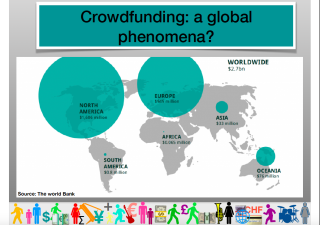
I spoke on the legal regulation of crowdfunding as the National Rapporteur for the United States.  My written contribution to the project, which I am told will be part of a published volume, is on SSRN here.  The entire project consists of eighteen papers from around the world, each of which responded to the same series of prompts conveyed to us by the General Rapporteur for the project (in our case, Caroline Kleiner from the University of Strasbourg).  The General Rapporteur is charged with consolidating the information and observations from the national reports and synthesizing key take-aways.  I do not envy her job!  The importance of the U.S. law and market to the global phenomenon is well illustrated by this slide from Caroline’s summary.
Fukuoka(GlobalCrowdfundingSlide)

The Congress was different from other international crowdfunding events at which I have presented my work.  The diversity of the audience–in terms of the number of countries and legal specialties represented–was significantly greater than in any other international academic forum at which I have presented.  Our panel of National Rapporteurs also was a bit more diverse and different than what I have experienced elsewhere, including panelists hailing from from Argentina, Brazil, Canada, France, Germany, Poland, and Singapore (in addition to me).  At international conferences focusing on the microfinance aspects of crowdfunding, participants from India and Africa are more prominent.  I expect to say more about the individual national reports on crowdfunding in later posts, as the need or desire arises.

A few outtakes on other sessions follow.

Pura vida from Costa Rica. Between recovery from carpal tunnel surgery a few weeks ago and an ATV flip two days ago, I don’t have much mental or physical energy to do a full post. I haven’t mastered dictation so I’m typing this on an iPad with one hand. Next week, I’ll provide more substance as well as a preview on my September talk at our second annual BPLB symposium at the University of Tennessee. Today, I want to pass on some resources for those who don’t know anything about blockchain. 

For those who want to provide resources for students, Walter Effross has put together a great site:

Ten Reasons for Blockchain Law Literacy

The following sources come from Professor Tonya Evans at UNH, who has developed an online curriculum on blockchain:

Use Cases: 

https://medium.com/fluree/blockchain-for-2018-and-beyond-a-growing-list-of-blockchain-use-cases-37db7c19fb99

https://www.mycryptopedia.com/16-promising-blockchain-use-cases/

Education:

https://medium.com/universablockchain/blockchain-in-education-49ad413b9e12

Blockchain + Law:

http://www.abajournal.com/news/article/lawyers_can_contribute_to_the_rise_of_blockchain_by_understanding_it

https://abovethelaw.com/2018/02/blockchain-can-smart-contracts-replace-lawyers/

Bitcoin And Blockchain: What Lawyers Need To Know

Next week, I’ll talk about my research into how blockchain is used in corporate governance, compliance, supply chain management, enterprise risk management, cybersexurity, and human rights. 

SnapchatLogo

One of the business law academy’s power couples, Amy and Bert Westbrook, recently posted an intriguing piece on SSRN that Bert and I have been communicating about a bit this summer.  It is entitled Snapchat’s Gift: Equity Culture in High-Tech Firms, and it is, indeed, a lovely gift–well conceived and packaged.  It is a look at dual class common equity in technology firms–and equity more generally–that confronts and incorporates many perspectives from law, economics, and other social sciences.

Some of you, like me, teach basic corporate finance in a variety of courses.  In those situations, it is important for instructors to have a handle on descriptions of the basic instruments of corporate finance–debt, equity, hybrid, and other.  What is the package of rights each instrument represents that incentivizes investors to supply money or other valuable assets?  In my classes, we ultimately discuss equity as a bundle of rights that includes potentials for financial gain and governance.  Snapchat’s Gift digs into the validity of these perceived rights in relevant part by focusing on recent changes in the primary public offering market for equity securities in the United States–in particular, the advent of highly publicized and fully subscribed initial public offerings of nonvoting common shares.

I am both a business law professor and an energy law professor, which is sometimes surprising to people. That is, some folks are surprised that have a research focus in two areas that are seemingly very distinct.  In one sense, that’s true, at least in the academic realm.  Most energy law scholars tend to have a focus on more close related disciplines, such as environmental law, administrative law, and property law.  And business law scholars tend to trend toward things like commercial law, bankruptcy, tax, and contracts.  

There is substantial overlap, though, in the energy and business law spaces, as I have noted on this blog before. I am even working on some research that looks specifically at the role laws and regulations have on business and economic development.   My work with the WVU Center for Innovation in Gas Research and Utilization builds on this energy and business nexus. 

I am pleased to share a newly published article I wrote with Amy Stein from the University of Florida’s Levin College of Law. The piece is called Decarbonizing Light-Duty Vehicles, and it appears in the July issue of Environmental Law Reporter. It is available here. This article

In 2015, I and several academics and other experts traveled to Guatemala as part of the Lat-Crit study space. The main goal of the program was to examine the effect of the extractive industries on indigenous peoples and the environment. During our visit, we met with indigenous peoples, government ministers, the chamber of commerce, labor leaders, activists (some who had received multiple death threats), and village elders.

Our labor of love, From Extraction to Emancipation Development Reimagined, edited by Raquel Aldana and Steve Bender, was released this week. My chapter “Corporate Social Responsibility in Latin America: Fact or Fiction” introduces the book. I first blogged about CSR in the region in 2015 in the context of a number of companies that had touted their records but in fact, had been implicated in environmental degradation and even murder. Over the past few years, one of the companies I blogged about, Tahoe Resources, has been sued in Canada for human rights violations, the Norwegian pension fund has divested, and shareholders have filed a class action based on allegations re: the rights of indigenous people.

Although the whole book should be of interest to business law professors and practitioners, chapters of particular interest

Music star/clothing designer Kanye West stirred up controversy on Wednesday when he began tweeting about his support of Donald Trump, calling him his “brother,” discussing their shared “dragon energy,” and showing off his  MAGA hat, autographed by President Trump himself. The President thanked West for the support, and some level of outrage ensued among liberal pundits and many in the black community about West’s actions. A number of marketing experts opined that West’s vocal support had the potential to adversely affect sales of his Yeezy line of clothing and sneakers, which had already suffered a decline of late, even though earlier releases of his product sold out in minutes online. In the past, Yeezy sneakers’ assoication with Adidas helped that company double its stock price.

As fans threatened to get rid of their Yeezy gear, news outlets wondered if West had killed his brand. But a funny thing happened. GQ Magazine reported today that Yeezy sales are actually up and West has even more Twitter followers than ever. The article described the backlash and boycott threats that other sneaker companies faced after their executives supported President Trump. Even Kim Kardashian, West’s wife and marketing, urged him to cease his

Last week, I blogged blogged about lawsuits against chocolate makers alleging unfair and deceptive trade practices for failure to disclose that the companies may have used child slaves to harvest their products. Today, I want to discuss steps that the Business Law Section of the American Bar Association is taking to provide more transparency in supply chain practices.

In 2014, the ABA House of Delegates adopted Model Principles on Labor Trafficking and Child Labor developed by over 50 judges, in-house counsel, outside counsel, academics, and NGOs. The Model Principles address the UN Guiding Principles on Business and Human Rights and other hard and soft law regimes. At last week’s ABA Business Law Spring Meeting, academics David Snyder and Jennifer Martin presented on human rights issues in supply chains alongside practicing lawyers and in-house executives. Many of them (and several others) had formed a Working Group to Draft Human Rights Protections in Supply Contracts. The Group aims to provide contract clauses that are “legally effective” and “operationally likely.”

As a former Deputy GC for a supply chain management company, I can attest that the ABA’s focus is timely as companies answer questions from customers, regulators, shareholders, and other stakeholders. Human rights

Greetings from the ABA Business Law Meeting in sunny Orlando, Florida. Today, I attended an excellent program on Protecting Human Rights in Supply Chains; Moving from Policy to Action. I plan to blog more about the meeting next week, highlighting the work surrounding draft human rights clauses for supplier contracts. The project was spearheaded by David Snyder of American University and corporate lawyer Susan Maslow. In this post, I want to address one of the topics Susan Maslow discussed– the recent spate of lawsuits brought by consumers who allege unfair trade practices based on what companies say (or don’t say) about their human rights records.

I’ve blogged (incessantly for the past five years) and written longer articles about the various ESG disclosure regimes. I’ve argued that in theory, disclosure is a good thing. But without meaningful financial penalties from regulators for violations, many corporations won’t do anything more than the bare minimum for human rights, even with the threat of (often short-lived) consumer boycotts. Further, most consumers suffer from disclosure overload or don’t understand or remember what they read.

The disclosure issue has now reached the courts. In 2015, a law firm filed cases in California under unfair competition and

This timely post comes to us from Jeremy R. McClane, Associate Professor of Law and Cornelius J. Scanlon Research Scholar at the University of Connecticut School of Law.  Jeremy can be reached at jeremy.mcclane@uconn.edu
__________________________________________________

Spotify, the Swedish music streaming company known for disrupting the music market might do the same thing this week to the equity capital markets. On April 3, Spotify plans to go public but in an unusual way. Instead of issuing new stock and enlisting an underwriter to build a book of orders and provide liquidity, Spotify plans to cut out the middleman and list stock held by existing shareholders directly on the New York Stock Exchange.

This will be an interesting experiment that will test some prevailing assumptions that about how firms must raise capital from the public.

The Importance of Bookbuilding. First, we will see just how important bookbuilding is to ensuring a successful IPO. When most companies go public, they hire an underwriter to market the shares in what is known as a “firm commitment” underwriting. The investment banks commit to finding buyers for all of the shares, or purchasing any unsold shares themselves if they cannot find buyers (an occurrence which never happens in practice). The process involves visiting institutional investors and building a book of orders, which are then used to gauge demand and set a price at which to float the stock. The benefit of this process is risk management – the issuing company and its underwriters try to ensure that the offering will be a success (and the price won’t plummet or experience volatile ups and downs) by setting a price at a level that they know market demand will bear, and ensuring that there are orders for all of the shares even before they are sold into the market.

Without underwriters or bookbuilding, Spotify is taking a risk that its share price will be set at the wrong level and become unstable. In Spotify’s case, however there is already relatively active trading of shares in private transactions, which gives the company some indication of what the right price should be. Nonetheless, that indication of price is volatile, in part because the securities laws limit the market for its shares by restricting the number of pre-IPO shareholders to 2,000, at least in the US. In 2017 for example, the price of Spotify’s shares traded in private transactions ranging from $37.50 to $125.00, according to the company’s Form F-1 registration statement.

Within the past 24 hours, I’ve seen at least three news article that led me to reflect on my past blog posts. Rather than write a full post on each article, I’ve decided to note some observations.

The Tweet That Launched A Boycott (And Maybe a Buycott)

I’ve been skeptical in the past about whether boycotts work.  Perhaps times are changing. This week, Parkland shooting survivor David Hogg tweeted that advertisers on Laura Ingraham’s cable show should pull out after she tweeted,  “David Hogg Rejected By Four Colleges To Which He Applied and whines about it. (Dinged by UCLA with a 4.1 GPA…totally predictable given acceptance rates.) https://www.dailywire.com/news/28770/gun-rights-provocateur-david-hogg-rejected-four-joseph-curl ”  On March 28th, the 17-year old activist responded with “Soooo what are your biggest advertisers … Asking for a friend. .” He then provided a list of her top twelve sponsors.

As of 8:00 p.m. tonight, the following companies dumped the Fox show, eleven after the talk show host had apologized, stating “On reflection, in the spirit of Holy Week, I apologize for any upset or hurt my tweet caused him or any of the brave victims of Parkland… For the record, I believe my