CNM

On May 12, 2015, I will present at a breakout session of the Center for Nonprofit Management’s 8th Annual Bridge to Excellence Nonprofit Conference. My talk will focus on the legal issues facing entities with multiple bottom lines. 

If interested, you can register here.

As you can tell from the conference description, this conference is designed for nonprofit and community leaders. From the conference schedule, it appears that I will be the only professor presenter. While I enjoy academic conferences, and find them useful, I also think it is important for professors to engage with practitioners. Professors should share the knowledge they have uncovered and should also listen to the current, practical concerns. 

This coming Monday, I will be presenting – virtually – at the above titled conference. My piece of the presentation will cover my recent research on benefit corporation reporting.

Further information is available here and reproduced below. Personally, I am looking forward to hearing from the many impressive speakers, including Sara Burgess, the Regulator of Community Interest Companies in the UK.

May 11, 2015

08:00 AM – 06:00 PM ET

Morgan Lewis, in conjunction with the Impact Investing Legal Working Group, invites you to join us for an exclusive all-day conference featuring panels of leading lawyers who work in the area of impact investing—in business, academia, government, multilateral development institutions, and nonprofit organizations and foundations.

Topics will include:

How are investors aggregating capital for impact investing?

What are the newest social finance innovations in impact investing?

How can we build a robust legal community of practice in impact investing?

How can we advance the development of regulatory regimes and government policies that promote impact investing?

Details

8:00 – 8:30 AM | Registration

8:30 – 6:00 PM | Program

6:00 PM | Networking reception

View the agenda >>

Credit

CLE credit in CA (1.25 hours),

Benjamin Means (South Carolina) recently posted a new article to SSRN entitled Wealth Inequality and Family Businesses. The article is forthcoming in the Emory Law Journal.

This article builds on Ben’s previous, extensive and well-regarded research on family businesses. Ben’s analysis of the relationship between family businesses and wealth inequality is carefully done and thought-provoking. The abstract is posted below, and I recommend reading the entire article.

Wealth inequality endangers democratic values and calls for a public response. This Article contends that family businesses merit special scrutiny because they control vast amounts of private wealth and combine two of society’s most important economic institutions: family and business. Accordingly, family businesses implicate concerns regarding both inherited wealth and the concentration of economic power made possible by the corporate form.

Despite their economic significance, little has been done to investigate whether family businesses contribute to wealth inequality. This Article offers the first legal, and one of the only academic, treatments of the topic and shows that family businesses play a double role. On the one hand, family businesses reinforce existing disparities in wealth and opportunity. Heirs, after all, stand to benefit from the hard work of previous generations. On the

Almost three years ago, I helped organize a conference on social enterprise law. (The law review members, especially Rachel Bauer and Sam Moultrie, were responsible for most of the organizing and did an excellent job). 

My co-bloggers Joan Heminway and Marcia Narine were among the speakers.

Also joining us was Michael Pirron of Impact Makers, one of the first certified B corporations in Virginia. While Impact Makers was a certified B corporation at the time of the conference, it was organized as a Virginia nonstock corporation; now Impact Makers is organized as a benefit corporation. Michael did an excellent job serving as a panelist and the keynote speaker.

Recently, I saw Michael back in the news. He transferred ownership of his company (valued at approximately $11.5 million) to two foundations. As Michael mentioned to me over e-mail, this was not a radical departure from his previous business model for Impact Makers. Previously, Impact Makers donated 100% of its profits to area charities, so this move just formalized their previous commitment.  Impact Makers has given away approximately $1 million to date.

At the University of Connecticut social enterprise and entrepreneurship conference I attended and presented at last

Bain Deval

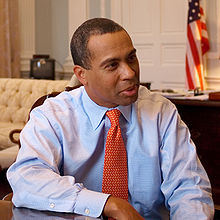
The New York Times DealB%k recently reported that Deval Patrick, former governor of Massachusetts, will join Bain Capital to head a new social impact fund.

These types of social impact funds seem to becoming more and more common. Social impact funds, however, vary greatly. Some social impact funds appear to be primarily focused on profits (while simply avoiding some “sin stocks“), others focus on serious social enterprises, and others fall somewhere in-between.  

SE2-Logo2

At the end of next week, I will be at the University of Connecticut School of Business and the Thomas J. Dodd Research Center for their Social Enterprise and Entrepreneurship Conference.

Further information about the conference is available here, a portion of which is reproduced below:

In October 2014, Connecticut joined a growing number of states that empower for-profit corporations to expand their core missions to expressly include human rights, environmental sustainability, and other social objectives. As a new legal class of businesses, these benefit corporations join a growing range of social entrepreneurship and enterprise models that have the potential to have positive social impacts on communities in Connecticut and around the world. Designed to evaluate and enhance this potential, SE2 will feature a critical examination of the various aspects of social entrepreneurship, as well as practical guidance on the challenges and opportunities presented by the newly adopted Connecticut Benefit Corporation Act and other forms of social enterprise.

Presenters at the academic symposium on April 23 are:

  • Mystica Alexander, Bentley University
  • Norman Bishara, University of Michigan
  • Kate Cooney, Yale University
  • Lucien Dhooge, Georgia Institute of Technology
  • Gwendolyn Gordon, University of Pennsylvania
  • Gil Lan, Ryerson University
  • Diana Leyden, University of

Yesterday was the third anniversary of the JOBS Act. President Obama signed it into law on April 5, 2012. The JOBS Act, as regular readers of this blog know, requires the SEC to adopt rules to enact an exemption for crowdfunded securities offerings. The statutory deadline for the SEC to do so was December 31, 2012. The SEC proposed the required rules on October 23, 2013, but it still has not adopted them.

It is now

  • 1096 days since Congress passed the JOBS Act
  • 826 days since the deadline for the SEC to adopt the required rules
  • 530 days since the SEC proposed the rules

. . . and still no crowdfunding exemption.

If I treated my tax returns like the SEC has treated the crowdfunding rules, I would be in jail.

SEC Chair Mary Jo White has recently said that the SEC hopes to finalize the rules by the end of the year. I certainly hope so.

In connection with the current legislative debate on benefit corporations in Tennessee (which has been gathering momentum since I last wrote on the topic), I have repeatedly asked about the impetus for the bill.  Of course, there is the obvious “push” for benefit corporation legislation by the B Lab folks, who have gotten the ear of folks at the Chamber, convincing them that the legislation is needed in Tennessee to protect social enterprise entities from the application of a narrow version of the shareholder wealth maximization norm (a conclusion that I dispute in my earlier post).  But what else?  What real parties in interest in Tennessee, if any, have expressed a desire that Tennessee adopt this form of business entity?

There is anecdotal information from one venture attorney that some Tennessee entrepreneurs have indicated a preference for the benefit corporation form and have specifically requested that their business be organized as a Delaware benefit corporation.  Leaving aside the Delaware versus Tennessee question, why are these entrepreneurs looking to organize their businesses as benefit corporations?  Where does this idea come from?

Earlier this week I went to a really useful workshop conducted by the Venture Law Project and David Salmon entitled “Key Legal Docs Every Entrepreneur Needs.” I decided to attend because I wanted to make sure that I’m on target with what I am teaching in Business Associations, and because I am on the pro bono list to assist small businesses. I am sure that the entrepreneurs learned quite a bit because I surely did, especially from the questions that the audience members asked. My best moment, though was when a speaker asked who knew the term “right of first refusal” and the only two people who raised their hands were yours truly and my former law student, who turned to me and gave me the thumbs up.

Their list of the “key” documents is below:

1)   Operating Agreement (for an LLC)– the checklist included identity, economics, capital structure, management, transfer restrictions, consent for approval of amendments, and miscellaneous.

2)   NDA– Salmon advised that asking for an NDA was often considered a “rookie mistake” and that venture capitalists will often refuse to sign them. I have heard this from a number of legal advisors over the past few

The JOBS Act requires the SEC to create an exemption for small, crowdfunded offerings of securities. That exemption, if the SEC ever enacts it, will allow issuers to raise up to $1 million a year in sales of securities to the general public. (Don’t confuse this exemption with Rule 506(c) sales to accredited investors, which is sometimes called crowdfunding, but really isn’t.)

The crowdfunding exemption restricts resales of the crowdfunded securities. Crowdfunding purchasers may not, with limited exceptions, resell the securities they purchase for a year. Securities Act sec. 4A(e); Proposed Rule 501, in SEC, Crowdfunding, Securities Act Release No. 9470 (Oct. 23, 2013). Unlike the resale restrictions in some of the other federal registration exemptions, the crowdfunding resale restriction serves no useful purpose. All it does is to increase the risk of what is already a very risky investment by reducing the liquidity of that investment.

Enforcing the “Come to Rest” Idea

Some of the resale restrictions in other exemptions are designed to enforce the requirement that the securities sold “come to rest” in the hands of purchasers who qualify for the exemption.

Rule 147, the safe harbor for the intrastate offering exemption in section