
Two news articles about the Dodd-Frank whistleblower law caught my eye this week. The first was an Op-Ed in the New York Times, in which Joe Nocera profiled a Mass Mutual whistleblower, who received a $400,000 reward—the upper level of the 10-30% of financial recoveries to which Dodd-Frank whistleblowers are entitled.

Regular readers of this blog may know that I met with the SEC, regulators and testified before Congress before the law went into effect about what I thought might be unintended effects on compliance programs. I have blogged about my thoughts on the law here and here

The Mass Mutual whistleblower, Bill Lloyd, complained internally and repeatedly to no avail. Like most whistleblowers, he went external because he felt that no one at his company took his reports seriously. He didn’t go to the SEC for the money. As I testified, people like him who try to do the right thing and try resolve issues within the company (if possible) deserve a reward if their claims have merit.

The second story had a different ending. The Wall Street Journal reported on the Second Circuit opinion supporting Siemens’ claim that Dodd-Frank’s anti-retaliation protection did not extend to its foreign

Wharton

Below is a call for abstracts from Professor Amy Sepinwall (Wharton).

———————–

Call for Abstracts for the Normative Business Ethics Workshop Series of the Carol and Lawrence Zicklin Center for Business Ethics Research:

Over the 2014-2015 academic year, the Carol and Lawrence Zicklin Center for Business Ethics Research at the Wharton School, University of Pennsylvania, will be convening a regular works-in-progress series for scholars working in normative business ethics (NBE).

Workshop Objectives:

The series is part of an effort to foster, and increase the prominence of, normative business ethics in the academy and the public sphere. This particular initiative has two key objectives: First, it endeavors to provide a regular forum for scholars working on business ethics from a normative perspective. The community of such scholars is relatively small, and dispersed across numerous institutions, and there are few opportunities for these individuals to convene and share work. This series is an effort to connect these scholars, and enrich their shared intellectual life. Second, the series aims to be especially valuable to junior faculty, by providing them with feedback from, and opportunities to interact with, more established members of the normative business ethics community. To that end, we hope to have one junior

Warning- do not click on the first link if you do not want to see nudity.

Dov Charney founded retailer American Apparel in 1998 and it became an instant sensation with its 20-something year old consumer base. He mixed a “made in America- sweatshop free” CSR focus with a very sexy/sexual set of ads (hence the warning- – when I first created the link, the slideshow went from a topless “Eugenia in disco pants in menthe” (seriously) to a shot of adorable children’s clothing in about 10 seconds).  No wonder my 18-year old son, who leaves for art school in two weeks, appreciates the ad campaigns. Most of his friends do too- both the males and females. In fact, he indicated that although they all know about the “sweatshop free” ethos, because “it’s in your face when you walk in the stores,” that’s not what draws them to the clothes. As a person who blogs and writes about human rights and supply chains, I almost wish he had lied to me. But he’s no different than many consumers who over-report their interest in ethical sourcing, but then tend to buy based on quality, price and convenience. I am still researching

As many have celebrated or decried, Dodd-Frank turned four-years old this week. This is the law that Professor Stephen Bainbridge labeled “quack federal corporate governance round II” (round I was Sarbanes-Oxley, as labeled by Professor Roberta Romano). Some, like Professor Bainbridge, think the law has gone too far and has not only failed to meet its objectives but has actually caused more harm than good (see here, for example).  Some think that the law has not gone far enough, or that the law as drafted will not prevent the next financial crisis (see here, for example). The Council on Foreign Relations discusses the law in an accessible manner with some good links here.

SEC Chair Mary Jo White has divided Dodd-Frank’s ninety-five mandates into eight categories. She released a statement last week touting the Volcker Rule, the new regulatory framework for municipal advisors, additional controls on broker-dealers that hold customer assets, reduced reliance on credit ratings, new rules for unregulated derivatives, additional executive compensation disclosures, and mechanisms to bar bad actors from securities offerings. 

Notwithstanding all of these accomplishments, only a little over half of the law is actually in place. In fact, according to the

In last week’s post about the business of the World Cup, I indicated that I would review Christine Bader’s book, The Evolution of a Corporate Idealist: When Girl Meets Oil. I have changed my mind, largely because I don’t have much to add to the great reviews the book has already received. Instead I would like to talk about how lawyers, professors and students can use the advice, even if they have no desire to do corporate social responsibility work as Bader did, or worse, they think CSR and signing on to voluntary UN initiatives is really a form of “bluewashing.”

Bader earned an MBA and worked around the world on BP’s behalf on human rights initiatives. This role required her to work with indigenous peoples, government officials and her peers within BP convincing them of the merits of considering the human rights, social, and environmental impacts. She then worked with the UN and John Ruggie helping to develop the UN Guiding Principles on Business and Human Rights, a set of guidelines which outline the state duty to protect human rights, the corporate duty to respect human rights, and both the state and corporations’ duty to provide judicial

The title of this post refers to the thought-provoking book by former BP executive, Christine Bader, The Evolution of a Corporate Idealist: When Girl Meets Oil. I will save a review for next week in Part 2 of this post. Briefly, Bader discusses the internal and external struggles that she and other “corporate idealists” face when trying to provide practical, culturally appropriate, innovative ways to implement corporate social responsibility and human rights programs around the world. Much of what she said resonated with me based upon my years as a compliance and ethics officer for a multinational corporation and as a current consultant on these issues.

Like comedian/TV commentator John Oliver, I am torn about the World Cup and the significant power that soccer/futbol’s international governing body FIFA has over both Brazil and its residents. His hilarious but educational rant is worth a close watch, and I experienced the conflict he describes firsthand during my two recent trips to Salvador, Brazil. I went to watch what the rest of the world calls “the beautiful game” in a country where soccer is a religion. That’s not an exaggeration by the way– I bought a statuette of a monk holding a

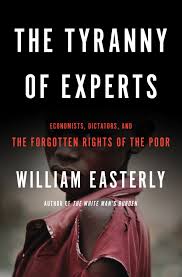
On Steve Bradford’s recommendation, I chose William Easterly’s (NYU) The Tyranny of Experts: Economists, Dictators, and the Forgotten Rights of the Poor (2014) as the book for my annual beach trip with the in-laws and cousins. (Last year was Daniel Kahneman’s (Princeton) Thinking, Fast and Slow – and yes, my wife’s side of the family makes fun of my beach reading material).  Easterly is an author I have wanted to read for a while now, and I still need to read some of his earlier books. 

Easterly

More after the break.

I always enjoy reading Bryan Cave partner Scott Killingsworth’s comments in various LinkedIn groups. In addition to practicing law, he’s a contributing editor to a treatise on the duties of board members. He’s just published a short but thorough essay on “The Privatization of Compliance.” It reminds me of some of the comments that Dean Colin Scott made at Law and Society about tools of private transnational regulation, which include self-regulation, contracts, consumers, industry initiatives, corporate social responsibility programs and meta-regulators. Killingsworth’s abstract is below.

Corporate Compliance is becoming privatized, and privatization is going viral. Achieving consistent legal compliance in today’s regulatory environment is a challenge severe enough to keep compliance officers awake at night and one at which even well-managed companies regularly fail. But besides coping with governmental oversight and legal enforcement, companies now face a growing array of both substantive and process-oriented compliance obligations imposed by trading partners and other private organizations, sometimes but not always instigated by the government. Embodied in contract clauses and codes of conduct for business partners, these obligations often go beyond mere compliance with law and address the methods by which compliance is assured. They create new compliance obligations and enforcement mechanisms and

Regular readers of this blog have seen several posts discussing the materiality of various SEC disclosures. See here and here for recent examples. I have been vocal about my objection to the Dodd-Frank conflict minerals rule, which requires US issuers to disclose their use of tin, tungsten, tantalum and gold deriving from the Democratic Republic of Congo and surrounding nations, and describe the measures taken to conduct audits and due diligence of their supply chains. See this post and this law review article.

Last year SEC Chair Mary Jo White indicated that she has concerns about the amount and types of disclosures that companies put forth and whether or not they truly assist investors in making informed decisions.  In fact, the agency is undergoing a review of corporate disclosures and has recently announced that rather than focusing on disclosure “overload” the agency wants to look at “effectiveness,” duplication, and “holes in the regulatory regime where additional disclosure may be good for investors.”

I’m glad that the SEC is looking at these issues and I urge lawmakers to consider this SEC focus when drafting additional disclosure regulation. One possible test case is the Business Supply Chain Transparency on Trafficking and