
The National Business Law Scholars Conference (NBLSC) will be held on Thursday, June 19th and Friday, June 20th at Loyola Law School, Los Angeles. This is the fifth annual meeting of the NBLSC, a conference which annually draws together dozens of legal scholars from across the United States and around the world. We welcome all scholarly submissions relating to business law. Presentations should focus on research appropriate for publication in academic journals, especially law reviews, and should make a contribution to the existing scholarly literature. We will attempt to provide the opportunity for everyone to actively participate. Junior scholars and those considering entering the legal academy are especially encouraged to participate.

To submit a presentation, email Professor Eric C. Chaffee at eric.chaffee@utoledo.edu with an abstract or paper by April 4, 2014. Please title the email “NBLSC Submission – {Name}”. If you would like to attend, but not present, email Professor Chaffee with an email entitled “NBLSC Attendance.” Please specify in your email whether you are willing to serve as a commentator or moderator. A conference schedule will be circulated in late May.  More information is available here:  http://lls.edu/resources/events/listofevents/eventtitle,81539,en/

Conference Organizers

Barbara Black (The University of Cincinnati College of Law)
Last week I attended the UN Forum on Business and Human Rights in Geneva.  The Forum was designed to discuss barriers and best practices related to the promotion and implementation of the non-binding UN Guiding Principles on Business and Human Rights, which discuss the state’s duty to protect human rights, the corporation’s duty to respect human rights, and the joint duty to provide access to judicial and non-judicial remedies for human rights abuses. This is the second year that nation states, NGOs, businesses, civil society organizations, academics and others have met to discuss multi-stakeholder initiatives, how businesses can better assess their human rights impact, and how to conduct due diligence in the supply chain.

Released in 2011 after unanimous endorsement by the UN Human Rights Council, the Guiding Principles are considered the first globally-accepted set of standards on the relationship between states and business as it relates to human rights. The US State Department and the Department of Labor have designed policies around the Principles, and a number of companies have adopted them in whole or in part, because they provide a relatively detailed framework as to expectations.  Some companies faced shareholder proposals seeking the adoption of the Principles

Yesterday was the last day of a fantastic three-day conference at the UN in Geneva on business and human rights, and I will blog about it next week after I fully absorb all that I have heard. As I type this (Wednesday), I am sitting in a session on corporate governance and the UN Guiding Principles on Business and Human Rights moderated by a representative from Rio Tinto. The multi-stakeholder panel consists of representatives from Caux Roundtable Japan  (focused on moral capitalism), the Norwegian National Contact Point (the governmental entity responsible for responding to claims between aggrieved parties and companies), Aviva Public Limited (insurance, pensions UK), Cividep (a civil society organization in India), and Petrobas (energy company in Brazil).

If you want to learn more about the conference, I have been tweeting for the past two days at @mlnarine, and you can follow the others who have been posting at #UNForumWatch #unforumwatch or #businessforum. 1700 businesspeople, lawyers, academics, NGOs, state delegates and members of civil society are here.  Economist Joseph Stiglitz presented a fiery keynote address. Some of the biggest names in business such as Microsoft, Unilever, Total, Vale and others have represented corporate interests.  

Depending on where you

Earlier this week the SEC released its 2014 rulemaking agenda and excluded from the list is a proposal for public companies to disclose political spending.  In 2011, the Committee on Disclosure of Corporate Political Spending, comprised of 10 leading corporate and securities academics, petitioned the SEC to adopt a political spending disclosure rule.  This petition has received a historic number of comments—over 640,000—which can be found here.

The Washington Post reported that after the petition was filed,

A groundswell of support followed, with retail investors, union pension funds and elected officials at the state and federal levels writing to the agency in favor of such a requirement. The idea attracted more than 600,000 mostly favorable written comments from the public — a record response for the agency.

Omitting corporate political spending from the 2014 agenda has received steep criticism from the NYT editorial board in an opinion piece written yesterday declaring the decision unwise “even though the case for disclosure is undeniable.” Proponents of corporate political spending disclosure like Public Citizen are “appalled” and “shocked” by the SEC’s decision, while the Chamber of Commerce declares the SEC’s omission a coup that appropriately avoids

The increase in institutional ownership of corporate stock has led to questions about the role of financial intermediaries in the corporate governance process. This post focuses on the issues associated with the so-called “separation of ownership from ownership,” arising from the growth of three types of institutional investors, pensions, mutual funds, and hedge funds.

Originally, the anti-takeover law passed its court challenges because the judges accepted faulty data that showed investors could acquire at least 85 percent of the target corporation and satisfy the Williams Act, Subramanian said. But none of the cases used to support the anti-takeover law actually allowed hostile suitors to acquire a controlling 85 percent of a target company, he said, and plaintiffs using research from new studies would be able to convince a judge that the statute is unconstitutionally restrictive.

For me, the financial crisis was an eye-opening moment. I’ve long believed in free market economics and believed that the Church would do a lot of good

  • If you are looking for some books to help you better understand our economic history, try: Timothy Shenk on “The Long Shadow of Mont Pèlerin” – reviewing Angus Burgin’s The Great Persuasion (“[U]ncovering a history where the supposed founders of the American chapter of neoliberalism at the University of Chicago reprimand Hayek’s The Road to Serfdom for overdoing its indictment of the state while Keynes reports himself “in a deeply moved agreement” with the very same text.”).
  • For the blogroll: Jennifer Taub’s “perpetual crisis” blog (“a blog on banking, corporate governance, and financial market reform”).
  • Finally, you might be interested in Michael Pettis on “When Are Markets ‘Rational’?” (“To me, much of the argument about whether or not markets are efficient misses the point. There

In the movie Margin Call, which “[f]ollows the key people at an investment bank, over a 24-hour period, during the early stages of the financial crisis,” one of the main characters says: “There are three ways to make a living in this business: be first, be smarter, or cheat.”  Given that only a few folks will be first or smarter, it may not be surprising that a “new report finds 53% of financial services executives say that adhering to ethical standards inhibits career progression at their firm.”  In a piece over at The Guardian, Chris Arnade, a former Wall Street trader describes why.  What follows is an excerpt from that piece, but you should go read the whole thing here.

After a few years on Wall Street it was clear to me: you could make money by gaming anyone and everything. The more clever you were, the more ingenious your ability to exploit a flaw in a law or regulation, the more lauded and celebrated you became. Nobody seemed to be getting called out. No move was too audacious. It was like driving past the speed limit at 79 MPH, and watching others

On Saturday evening I leave for Geneva to attend the United Nations Forum on Business and Human Rights with 1,000 of my closest friends including NGOs, Fortune 250 Companies, government entities, academics and other stakeholders.  I plan to blog from the conference next week.  I am excited about the substance but have been dreading the expense because the last time I was in Switzerland everything from the cab fare to the fondue was obscenely expensive, and I remember thinking that everyone in the country must make a very good living. Apparently, according to the New York Times, the Swiss, whom I thought were superrich, “scorn the Superrich,” and last March a two-thirds majority voted to ban bonuses, golden handshakes and to require firms to consult with their shareholders on executive compensation. Nonetheless, last week, 65% of voters rejected a measure to limit executive pay to 12 times the lowest paid employee at their company. According to press reports many Swiss supported the measure in principle but did not agree with the government imposing caps on pay.

Meanwhile stateside, next week the SEC closes its comment period on its own pay ratio proposal under Section 953(b) of the Dodd-Frank Act. Among

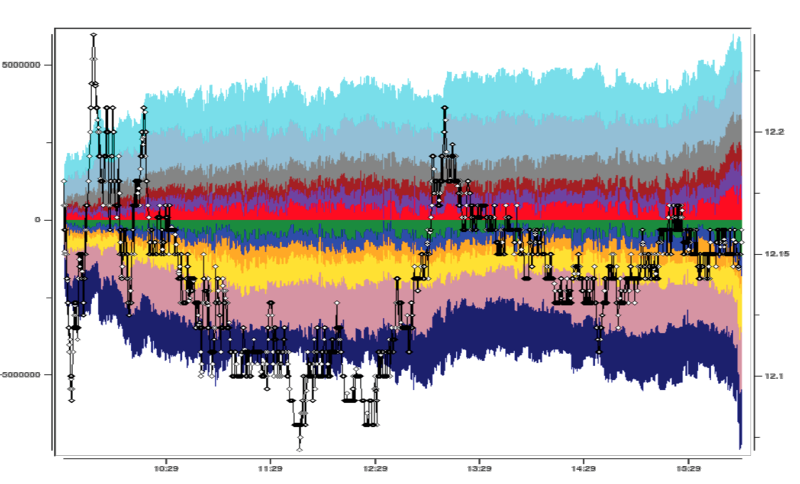
For those of you interested in empirical research now or in the future, keep in mind the new MIDAS (Market Information Data Analytics System) data sets available from the SEC.

Every day MIDAS collects about 1 billion records from the proprietary feeds of each of the 13 national equity exchanges time-stamped to the microsecond. MIDAS allows us to readily perform analyses of thousands of stocks and over periods of six months or even a year, involving 100 billion records at a time.

MIDAS collects posted orders and quotes, modifications/cancellations, and trade executions on national exchanges, as well as off-exchange trade executions. 

SEC Midas

The methodology for MIDAS is available here.

Happy Thanksgiving BLPB readers!  

-Anne Tucker

The CFA Institute, the Journal of Corporate Finance, and the Schulich School of Business are sponsoring a Conference on Financial Misconduct, April 3-4, 2014, in Toronto, Canada.  Deadline for submissions is December 15, 2013.  You can go here for all the information.  What follows is the stated rationale, along with suggested research questions.

RATIONALE:

Financial market misconduct erodes investors trust, and in turn influences stock market liquidity and performance, and exacerbates volatility.  Financial market misconduct includes but is not limited to fraud.  Despite the widespread media attention on market misconduct, the causes and consequences of market misconduct are often misunderstood and under researched around the world. The evolving structure of markets gives rise to new work on topic

This international conference will provide a timely debate on financial market misconduct. The conference also encourages, but does not require, submission to the Journal of Corporate Finance. Papers submitted to the Journal of Corporate Finance would go through the normal review process.

RESEARCH QUESTIONS:

Some research questions that contributors to the conference might address are:

  • Is market misconduct more common in different countries or across different exchanges?  If so, what types (earnings management, insider trading, market manipulation, dissemination of