In two earlier posts (here and here), I addressed a number of issues and tips related to the emergency remote online teaching that became the norm for most of us in the law academy back in March.  I finished my “classroom teaching” for the semester two weeks ago.  My online timed exam was given last week.  My take-home project in another class is due this week.  I survived; the students survived.  That may be the best I can say for all that. 

However, a larger, long-term issue looms in the background relating to the online teaching we did–and may continue to do–as a result of COVID-19.  That issue?  Whether our current remote teaching will catalyze a movement in higher education, including legal education, to teach more classes online.  If university and law school budgets continue to contract, administrators may see cost-savings in moving more courses online.

This issue has engendered much debate among educators generally.  I bring it to the fore here for consideration in the business law teaching context.  I have mixed feelings about moving clinical, simulation, and standard doctrinal business law courses online. The reasons vary from course to course.  And there is no doubt much

This has been quite a first year as a dean. Heck, it’s been quite a year for all of us.  

I woke up (very) early this morning, and it struck me that I hadn’t been in contact with our students since Friday, which was our last day of classes. I don’t want to be a distraction to their studies, but I also realized the midway through the first week, they might need a reminder of what they have accomplished in the face of unique and unprecedented challenges. Following is the note I sent our students, which I share for all of us who might need a reminder of what we’re accomplishing. It is addressed to our Creighton Law students, but it’s for all law students. Hang in there.  

Dear Students,

It’s the middle of the first week of what has to be the strangest finals we have ever experienced. This is always a time of hard work, long days, and high stress, but never before have we had to be so separate while going through it. We can’t experience study group or lunch breaks with friends, or play basketball or soccer in a group to blow off steam.

Whenever Haskell Murray writes a running post, I always want to write one too.  I think he’s written two (here, here) since my last one (here), so I’ve decided it’s time for another!

The tenuous link to business law is this…I was blessed to have a phenomenal first-year contracts professor.  Over the years, one of my closest friends (also in that course) and I have reminded each other of the professor’s pearls of wisdom about contracts and life. “Life is a marathon, not a sprint,” he would assure us. 

I would imagine that many of us feel in the midst of a marathon these days.  As another week in these unusual times begins, I was thinking about a few of the lessons I’ve learned in distance running that were helping me to run the course we’re all on these days.  First, the importance of paying attention to your breath (Joan Heminway has written about breath and mindfulness here).  Second, if you just keep putting one foot in front of the other, you’ll eventually reach the destination/be done.  Third, the need for pacing (likely the point my contracts prof was making).  Fourth, you’ve always got

This post comes to us from friend-of-the BLPB Nadia B. Ahmad.  Many thanks to her for this contribution.  Her post follows nicely on the spirit of my “Teaching through the Pandemic” posts, which can be found here and here.  My favorite part may be the bit on “Troubleshooting Life and Expectations.”

image from cdnimages.barry.edu

As I begin this post on Sunday, March 29, 2020, there are currently 674,466 confirmed cases of coronavirus (COVID-19). Immunology and infectious disease researchers are working round the clock with their heads down for a cure and a vaccine, but we have nothing in the near term for an end to this situation. The markets have been a tumbling since January 2020 and spiraling downward since March 2020. Even Brexit and the deceleration of China’s economy could not have expected this downturn in the market.  

On March 12, 2020, I taught my last in person Business Organizations class for the semester. For the first half of the class, I had the students complete a practice essay in Canvas on the business judgment rule. The remainder of the time, I had them join via WebEx on their laptops. In that class, approximately 40 percent of the students

Like all of us, the past few weeks have been hard. The past few days, harder. Still, I am fortunate that my challenges are nothing compared to so many. My family and I are healthy so far; my job is challenging, but not currently threatened; and the people I love are, generally, safe.  I am truly fortunate.

Complaining about courts messing up LLCs is not at the top of my mind right now, even though it remains both satisfying and important to me. Today, all I have are some thoughts.  That all I’ve got, and it will have to be good enough.

So, here are some things I think:

  • It was right to cancel March Madness, and it still makes me sad.
  • Other than being a father and a spouse, I have the most important job I have ever had.
  • I love our students. Every day. 
  • My family is the best and far more than I deserve.
  • Women are widely over scrutinized, over worked, and underappreciated.
  • I am proud to be a lawyer.
  • Lawyers lawyering everything is exhausting, and too often, wrong (i.e., bad lawyering)
  • I hate racism, and I need to work harder to be anti-racist.
  • Babies are the

So glad Colleen published the Skadden information in her post earlier today.  I had considered doing that, too.  Instead, I will add two links to the growing knowledge base.  They both relate to teaching during these challenging times.  Then, I will offer a few thoughts of my own.

First, friend-of-the-BLPB Seth Oranburg alerted me to some distance education tips he has posted.  They can be found here.  I appreciate him taking time to write his ideas out and get this essay posted.

Second, Josh Blackman posted tips on teaching using Zoom here.  Some of us are more familiar with videoconferencing technology than others.  I have not taught more than a few classes online, but I am comfortable with Zoom.  A few of Josh’s ideas were new to me and seem very useful in the emergent online teaching environment.

Since most law students will be taking all of their courses (as well as conducting meetings and continuing to do much or all of their reading and written work) online, the possibility of boredom and internet overload/online burnout is very real.  As someone who recently suffered from digital eye strain (a/k/a computer vision syndrome), I also am concerned

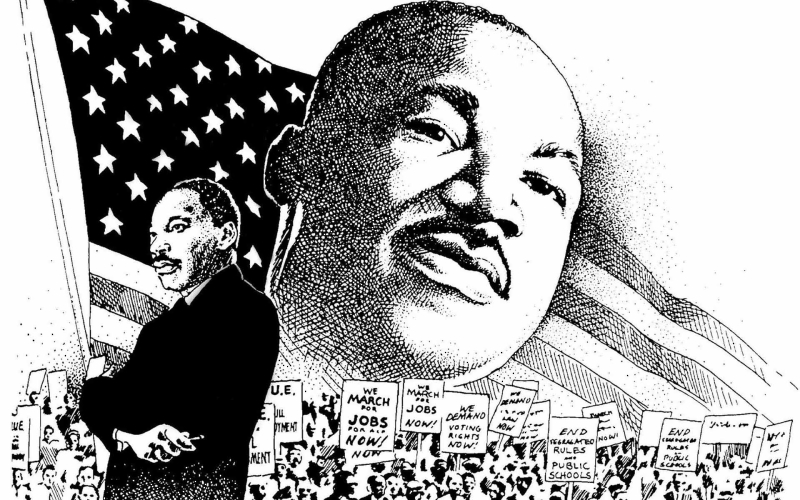
MLKClipart

[Image courtesy of Clipart Library, http://clipart-library.com/mlk-cliparts/]

Today, on Martin Luther King Jr. Day, I was in the office preparing for the week+ ahead.  I was not the only one there.  Part of me wanted to be elsewhere, publicly supporting the life and legacy of Dr. Martin Luther King Jr.  I did think about him and his work as I toiled away.

Although most of what I was sorting and sifting through today was business law-related, part of what I focused on was committee work for our celebration tomorrow that honors Dr. King.  I chair a committee at UT Law this year that is responsible for hosting one or more Martin Luther King Jr. events every year.  This year, we will have a luncheon and informal table discussions based on facts about Dr. King and quotes from his public appearances and published work.  As I was going through the facts and quotes, I came upon this quote: “No work is insignificant.  All labor that uplifts humanity has dignity and importance and should be undertaken with painstaking excellence.”  (The quote is apparently from Strength to Love, a 1963 book of Dr. King’s sermons.)  Admittedly, it spurred me on and made me

I’ve previously blogged about using negotiation exercises in my undergraduate and graduate Business Law/Legal Environment courses (here).  I’ve also mentioned that, having taught both business law and negotiation courses in a law school, I know that such exercises would also work well in a law school business law course.   

Last August, at the Annual Conference of the Academy of Legal Studies in Business, I had the good fortune of catching up with Professor Susan Marsnik from the University of St Thomas Business School.  Eventually, our conversation turned to one of my favorite topics: negotiation!  Marsnik mentioned that Professor George Siedel, the Williamson Family Professor of Business Administration Emeritus and the Thurnau Professor of Business Law Emeritus at the University of Michigan, had written some great negotiation materials (here), and they were free!  Obviously, I couldn’t wait to learn more!  And now that I have, via Marsnik’s help, I wanted to pay it forward!  

Siedel’s comprehensive negotiation materials center on the sale of a house, and include Seller/Buyer roles.  He shares that “Over the years, I have developed and tested “The House on Elm Street” exercise in undergraduate and MBA courses and in executive seminars

Business Associations is a tough course to teach, whether it is taught in a three-credit-hour or four-credit-hour format.  I have written before (here, here, and here) about the challenges of teaching fiduciary duties in this course.  And I recently posted here and here about the characterization of a classic oversight conundrum as a matter of corporate fiduciary duty law in Delaware.

I just recently finished grading my Business Associations exams from last semester.  They were a good lot overall, but they evidenced several somewhat common errors that seemed to beg for broad dissemination to the class. So, I sent them all a message inviting them to come in and review their exams and highlighting certain things for their attention of a more general nature.  

Today, I offer you that general counsel that I gave to my Business Associations students based on that review of their written final exams.  It is set forth below, absent my introductory and closing remarks.  As you’ll see, some of it relates to substantive law, and some of it relates to exam or other skills.  Perhaps this is of use to those of you who just taught or are about to

The title of this post is the core question behind a transactional law laboratory that I am co-teaching with my amazing colleague Eric Amarante for a seven-week period starting next week.  The course is being taught to the entire 1L class (intimidating!) in one two-hour class meeting each week.  In essence, the course segments explore, principally through the subjects taught in the first-year curriculum, the nature of transactional business law.  This is our first semester teaching this course, which is a substantially revised version of a course UT Law added to its 1L curriculum three years ago.  We are pretty jazzed up about it–but understandably nervous about how our course plan will “play” with this large group.

Because 1Ls come to transactional business law from various different backgrounds and experiences (including different first-semester law professors), we plan to begin by striving to develop some common ground for our work.  To that end, I am asking for a late Christmas present or early New Year’s gift from all of you: your answer to one or more of the following questions.  How would you define transactional business law?  What are some examples of this kind of practice?  What makes a good transactional