
Now that the spring commencement address season has come to a close, I’ll take a moment to reflect on one of the most infamous commencement speeches in history. Thirty-five years ago, on May 18, 1986, Ivan Boesky addressed the graduating class of UC Berkeley’s Haas School of Business. In his speech, he famously claimed that

[g]reed is all right, by the way. I want you to know that. I think greed is really healthy. You can be greedy and still feel good about yourself.

In response, James B. Stewart notes that the “crowd burst into spontaneous applause as students laughed and looked at each other knowingly.” Den of Thieves p.261 (1992). And why not? This was the 1980s, the “Decade of Greed” (see, e.g., here and here). Boesky’s claim garnered so much attention that it was famously paraphrased by the fictional Gordon Gekko in Oliver Stone’s iconic 1987 movie, Wall Street.

    But, of course, by definition greed is not good. As Aristotle explained, greed is a vice. It is the opposite of the virtue of generosity. The greedy are “shameful love[rs] of gain” who “go to excess in taking, by taking anything from any source.” Aristotle
So much going on today . . . .   Rather than choose one focus, I will offer three.  Each is near and dear to my heart in one way or another.

Happy International Yoga Day to all.  This year’s theme is “Yoga for well-being” or “Yoga for wellness.” The Hindustan Times reports: “On International Yoga Day on Monday, Prime Minister Narendra Modi said yoga became a source of inner strength for people and a medium to transform negativity to creativity amid the coronavirus pandemic.” The United Nations’s website similarly adds that:

The message of Yoga in promoting both the physical and mental well-being of humanity has never been more relevant. A growing trend of people around the world embracing Yoga to stay healthy and rejuvenated and to fight social isolation and depression has been witnessed during the pandemic. Yoga is also playing a significant role in the psycho-social care and rehabilitation of COVID-19 patients in quarantine and isolation. It is particularly helpful in allaying their fears and anxiety.

Yes!  I am so grateful for yoga, including asanas and meditation, and other mindfulness practices at this time–for their positive effects on me, my faculty and staff colleagues, and my students.  👏🏼 

I’ve addressed the recent social-media-driven retail trading in stocks like GameStop in prior posts (here and here). In both posts, I focused on evidence that at least some of this trading seems to pursue goals other than (or in addition to) profit. For example, some of these retail traders claim that they are buying and holding stocks as a form of social, political, or aesthetic expression. My coauthors Jeremy Kidd, George Mocsary, and I recently posted a forthcoming article on this subject, Social Media, Securities Markets, and the Phenomenon of Expressive Trading, to SSRN. The article introduces the emerging phenomenon of expressive trading. It considers some of the challenges and risks expressive trading may pose to issuers, markets, and regulators–as well as to our traditional understanding of market functioning. Ultimately, the article concludes that while innovations like expressive trading “can be disruptive and demand a reimagining of the established order,” market participants, issuers, and regulators would be wise to pause and observe before rushing to adopt defensive strategies or implement reforms. Here’s the abstract:

Commentators have likened the recent surge in social-media-driven (SMD) retail trading in securities such as GameStop to a roller coaster: “You

Ten days ago, co-blogger John Anderson posted about a new insider trading paper co-authored by  Sureyya Burcu AvciCindy SchipaniNejat Seyhun, and Andrew Verstein,  A revised version of the paper, entitled Insider Giving, was recently posted on SSRN.  In the interim, I have been in communication with two of the co-authors, both friends of the BLPB (and of mine), Cindy Schipani and Andrew Verstein.  This paper, forthcoming in the Duke Law Journal, has a lot to offer.

As an insider trading nerd, I was pulled into this paper from the get-go.  Having written my own insider trading piece about gifting information a few years ago, I was intrigued by the ides of looking at the gifting of the subject securities themselves as possible violative conduct.  Of course, what Insider Giving starkly portrays is a situation in which stock is not donated wholly “from a ‘detached and disinterested generosity,’ … ‘out of affection, respect, admiration, charity or like impulses.’” Commissioner v. Duberstein, 363 U.S. 278, 285 (1960) (citations omitted) (defining a gift for federal income tax purposes).  The article presents significant information about insider gifts, including background on the motivation for these

With recent studies suggesting that insiders are availing themselves of SEC Rule 10b5-1(c) trading plains to beat the market by trading their own company’s shares based on material non-public information, Congress may be poised to act. In March of 2021, Representative Maxine Waters reintroduced a bill entitled the Promoting Transparent Standards for Corporate Insiders Act. The same bill passed the house in the 116th Congress, but died in the Senate. If passed, the bill would require the SEC to study a number of proposed amendments to 10b5-1(c), report to Congress, and then implement the results of that study through rulemaking. I identified some problems with the bill in my article, Undoing a Deal with the Devil: Some Challenges for Congress’s Proposed Reform of Insider Trading Plans. But if significant reforms are in store for insider trading plans, then insiders may look to other creative “loopholes” that permit them to monetize access to their firms’ material nonpublic information.

Professors Sureyya Burcu Avci, Cindy Schipani, Nejat Seyhun, and Andrew Verstein, have identified “insider giving” as another strategy for hiding insider trading in plain sight. Here’s the abstract for their article, Insider Giving, which is

The University of Connecticut School of Business hosts The Business and Human Rights Initiative, which “seeks to develop and support multidisciplinary and engaged research, education, and public outreach at the intersection of business and human rights.” Professor Stephen Park, Director of the Business and Human Rights Initiative, invited me to be a discussant at the most recent meeting of the Initiative’s workshop series. The workshop focused on Rachel Chambers’ and Jena Martin’s excellent paper, A Foreign Corrupt Practices Act for Human Rights. Here’s an abstract:

The global movement towards the adoption of human rights due diligence laws is gaining momentum. Starting in France, moving to the Netherlands, and now at the European Union level, lawmakers across Europe are accepting the need to legislate to require that companies conduct human rights due diligence throughout their global operations. The situation in the United States is very different: on the federal level there is currently no law that mandates corporate human rights due diligence. Civil society organization International Corporate Accountability Roundtable is stepping into the breach with a legislative proposal building on the model of the Foreign Corrupt Practices Act to prohibit corporations from engaging in grave human rights

I just posted a new article, Regulatory Ritualism and other Lessons from the Global Experience of Insider Trading Law, on SSRN. This article is the culmination of a five-year research project. It offers a comprehensive comparative study of insider-trading regimes around the globe with an eye to much-needed reform in the United States. It is the first article to consider global insider trading enforcement in light of the problem of regulatory ritualism. Regulatory ritualism occurs where great attention is paid to the institutionalization of a regulatory regime without commitment to, or acceptance of, the normative goals that those institutions are designed to achieve. The article develops and expands upon some themes and arguments that were first sketched out in Chapters 5 and 11 of my book, Insider Trading: Law, Ethics, and Reform. Here’s the article’s abstract:

There is growing consensus that the insider-trading regime in the United States, the oldest in the world, is in need of reform. Indeed, three reform bills are currently before Congress, and one recently passed the House with overwhelming bipartisan support. As the U.S. considers paths to reforming its own insider trading laws, it would be remiss to ignore potential lessons from global

I tell my students that the participants in securities transactions are “the three Is” or  “I3“: issuers, intermediaries, and investors.  Tomorrow morning, having covered the definition of a security and the concept of materiality, I offer some foundational words on investors. 

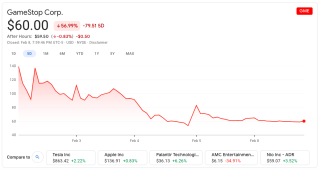
What to tell?  Of course, I will talk a bit about investment theory, the investor protection policy and mechanisms of federal securities law, the composition/demographics of the typical equity ownership of a public company, etc.  But what do I say about GameStop Corp.?  Set forth below is a chart summarizing the trading in GameStop common stock for the past five days: (courtesy of Google Finance):

Screen Shot 2021-02-08 at 11.54.19 PM

Who are the investors in the market for GameStop common stock, options, and short positions now?  Who will they be in a month or six months or a year (assuming a trading market can be sustained)?  And what do the changes in GameStop’s investor profile say about the firm itself, about the New York Stock Exchange, and about various related aspects of securities regulation?  

There remain few answers to the fundamental question of who owns or is trading in GameStop’s publicly traded common stock.  Nevertheless, there are many worthy conversation

    Commenters have likened the recent retail “meme” trading in stocks such as GameStop Corp. to buying a ticket on a roller coaster—“You don’t go on a roller coaster because you end up in a different place, you go on it for the ride and it’s exciting because you’re part of it.” See, Bailey Lipschultz and Divya Balji, Historic Week for Gamestop Ends with 400% Rally as Shorts Yield, Bloomberg (January 29, 2021).

    The comparison is apt in a number of respects. These retail traders, led by some members of the “WallStreetBets” group on the Reddit social media platform, “got on” GameStop a couple weeks ago at just under $20 a share, and, despite its rapid rise to a high of just under $500 a share, I think most people expect (including the meme traders) that the price at which this turbulent ride will end is somewhere around where it began. After all, GameStop’s fundamentals have not changed. It remains a brick-and-mortar business that was devastated by the pandemic, and it is expected to steadily lose market share to online vendors.

    For anyone interested in the mechanics of the “short squeeze” and how these traders managed to move price

Wow.  All I can say is . . . wow.  Last Monday, GameStop Corp. was, for me, just a dinosaur in the computer gaming space–a firm with a bricks-and-mortar retail store in our local mall that I have visited maybe once or twice.  What a difference a week makes . . . .

Now, GameStop is: frequent email messages in my in box; populist investor uprisings against establishment institutional investors; concern about students investing through day-trading accounts; news and opinion commentary on all of the foregoing (and more); compulsion to inform an under-informed (and, in some cases, bewildered) community of friends and family.  This change of circumstances, which is centered on, but not confined to, the volatile market for GameStop’s common stock, raises many, many questions–legal questions and factual questions.  Some are definitively answerable, others are not.

The legal questions run the gamut from possibilities of securities fraud (including insider trading) and market manipulation, to the governance of trading platforms, the propriety of trading limitations and halts, and the authority and control of clearinghouses.  Co-blogger Ben Edwards published a post here last Thursday on the trading halts in GameStop stock, the role of clearinghouses, and the possibility of market manipulation.