
Federal Rule of Civil Procedure 9 provides:

(b) Fraud or Mistake; Conditions of Mind. In alleging fraud or mistake, a party must state with particularity the circumstances constituting fraud or mistake. Malice, intent, knowledge, and other conditions of a person’s mind may be alleged generally.

That said, there are certain causes of action under the securities laws, like claims under Section 11 and 12 of the Securities Act, that do not require plaintiffs to prove that the defendant had any particular state of mind.  These claims do not, therefore, sound in fraud by their nature.  And, because the PSLRA did not alter the pleading standards for claims under the Securities Act, that means Section 11 and 12 claims are ordinarily subject to the more limited demands of Rule 8 pleading.

Nonetheless, federal courts have generally agreed that if a particular plaintiff’s allegations in a particular case come across as rather fraudy, the higher pleading standard will apply.  Plaintiffs have therefore gone to great lengths to avoid alleging fraud in connection with Securities Act claims, which can be particularly challenging when Section 10(b) claims arise out of the same facts – plaintiffs usually try to completely separate the two sets
Stacie Strong recently posted Pro Bono Publico Versus Pro Bono Presidential on SSRN. It’s a look at the propriety of agreements to perform pro bono work to escape punitive executive orders against law firms. This is how the abstract describes it:

This Essay considers the propriety of these pro bono agreements from several perspectives. First, this Essay considers the voluntary nature of pro bono and examines the propriety of the executive branch coercing private lawyers to accede to particular pro bono obligations. Second, this Essay discusses the nature of pro bono activities as a means of assisting indigent individuals and considers whether presidential efforts to direct how private law firms fulfill their pro bono obligations constitute an improper privatization of the executive branch’s policy goals, particularly given presidential cuts to and curtailment of conventional public means of fulfilling those policy goals. Third, this Essay considers whether and to what extent the executive orders and settlement agreements discussed herein violate hard or soft principles of international law. The Essay concludes with brief suggestions about how to proceed going forward.

My initial reaction to these orders was to wonder whether services performed as consideration for a settlement even qualify as pro bono.

We invite submissions of paper abstracts for the Fall series of the Miami Law & Finance Workshop. The workshop will take place online on Fridays from 1pm to 2pm EST. We welcome papers on all finance-related topics, including corporate law and finance.

Abstracts should be sent to the workshop co-organizers nikita.aggarwal@miami.edu,cbradley@law.miami.edu and ggeorgiev@miami.edu no later than Friday July 18th, 2025, with the following information:
– Name of author(s)
– Affiliation
– Summary of paper’s main thesis, contribution to the prior literature, and methods employed (Abstract length: 500-1000 words max).

We will notify selected authors by July 25th. Note that selected authors must be ready to send a complete draft of their paper to us at least one week before the scheduled date of the workshop, which we will circulate to the discussant and registered workshop participants.

Proxy votes have begun to come in at this point and we’ve got some early results on the reincorporation front. (Some earlier posts on this topic are available here, here, and here.)

Overall Status

I broke down and just created a chart for 2025 attempts to shift to Nevada. I had previously only been tracking attempts to move after SB21 in Delaware.

2025 Nevada Domicile Shifts
 FirmResultNotes
 1Fidelity National FinancialPass 
 2MSG SportsPass 
 3MSG EntertainmentPass 
 4Jade BiosciencesPassJade merged with Aerovate.
 5BAIYU HoldingsPassAction by Written Consent
 6RobloxPass 
 7Sphere EntertainmentPass 
 8AMC NetworksPass 
 9Universal Logistics Holdings, Inc.PassAction by Written Consent
 10Revelation BiosciencesFail97% of votes cast were for moving.  There “were 1,089,301 broker non-votes regarding this proposal”
 11Eightco HoldingsFailVotes were 608,460 in favor and 39,040 against with 763,342 broker non-votes.
 12DropBoxPassAction by Written Consent
 13Forward IndustriesPendingThis is New York to Nevada.
 14NuburuPending 
 15Xoma RoyaltyPass 
 16Tempus AIPass 
 17AffirmPending 

There

I’ve been blogging long enough that I forget my prior rants, so I’m diving into this one because I don’t remember discussing it before, but if I did, forgive me.

Anyway, today’s rant is about the “statements before the class period” rule, most recently employed in Stephans v. Maplebear, 2025 WL 1359125 (N.D. Cal. May 9, 2025).

The rule, roughly, is that, in the context of a class action, Section 10(b) plaintiffs can’t bring claims based on statements that are made prior to the beginning of the class period.  In Maplebear – which is Instacart, by the way – public trading began on September 19, 2023, so that’s when the class period began.  The rule was employed to bar the class from alleging that certain statements made during the IPO roadshow were false and had defrauded class members.

Let’s break this down in general, and then talk about Instacart.

The “class period,” in a typical Section 10(b) action, defines the investors on whose behalf the action is brought. In your typical 10(b) fraud on the market case, the class period will include anyone who bought (or sold) a particular security between Date A and Date B. It defines the

Two years ago, I published a paper challenging the internal affairs doctrine and arguing that it should be relaxed in various ways. I didn’t exactly intend that to play out as it has with respect to Texas – as I blogged here and here – and now there’s a new lawsuit against United Airlines to add to the mix.

United Airlines is incorporated in Delaware, but it is headquartered in Illinois.  The National Center for Public Policy Research, as the owner of 123 United Airlines shares, has sued the company in Illinois, alleging that under Illinois’s inspection statute, it is entitled to internal records regarding United’s decision to limit flights to Tel Aviv. The NCPPR is explicitly choosing not to seek inspection under Delaware law, on the ground that the changes to Delaware’s inspection statute wrought by SB 21 would make such a demand futile.  Instead, NCPPR argues that inspection rights are outside the scope of the internal affairs doctrine, and therefore United is subject to Illinois’s inspection statute.

It seems that almost immediately after the lawsuit was filed, United reversed course and resumed Tel Aviv flights, but as far as I know, the lawsuit is

First up, we have a couple of cases out of the New York Court of Appeals, Eccles v Shamrock Capital Advisors, LLC, 245 N.E.3d 1110 (N.Y. 2024), and Ezrasons Inc v. Rudd, 2025 WL 1436000 (N.Y. May 20, 2025).  So, there’s a backstory here.  New York, like California, has what’s known as an “outreach” statute.  Passed in 1961, New York Business Corporation Law § 1319 says that various provisions of New York’s corporate code “shall apply to a foreign corporation doing business in this state, its directors, officers and shareholders.”

Now, on its face, this statute would suggest that New York does not strictly adhere to the internal affairs doctrine, and would in fact apply New York corporate governance law for companies doing business in the state.  But, in fact, lower New York courts have previously held that the statute does not mean what it says, and have gone on to apply the internal affairs doctrine anyway.  See, e.g., Potter v. Arrington, 810 N.Y.S.2d 312 (Sup. Ct. 2006).

Matters recently came to a head.  In Eccles, the New York Court of Appeals held that the internal affairs doctrine would apply unless “(1) the

The Association of American Law Schools Section on Leadership, for which I serve as Chair this year, is hosting the program described below tomorrow on scholarship in the area of lawyer leadership. Business law and leadership are a natural fit, and each time we argue for change through our scholarship, we are assuming a role of leadership in law. Yet, many of us never expressly acknowledge that connection in our research and writing.

Moreover, many of us may not talk about lawyer leadership in our classrooms or assign law leadership scholarship to our students. Yet, our students begin to lead in the law and otherwise develop their professional identities while we are teaching them in law school. Encouraging and guiding that part of our students’ journey into lawyering is, in my view, one of the great joys of being a law faculty member.

The section is excited to offer this program featuring national experts on law leadership who engage in research and writing relating to that field. Come and listen in to learn how the scholarship of lawyer leadership may matter to you and your work. Links to further information and registration are included below.


Advancing Lawyer Leadership: Why Scholarship

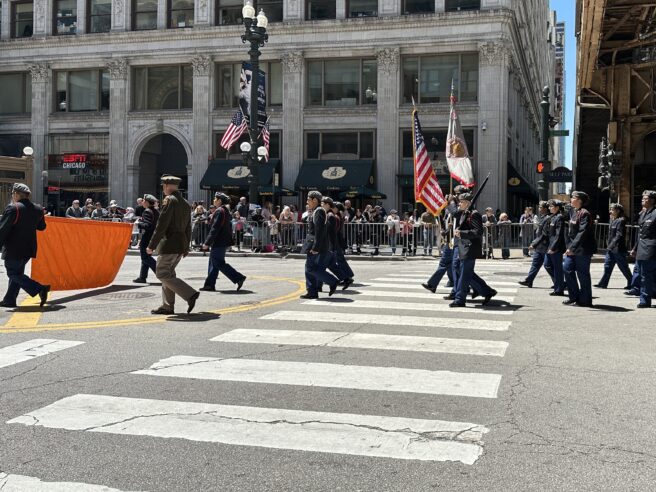
As the BLPB’s ostensible Monday blogger, I have written in many years past on and about Memorial Day and other Monday holidays. I try to take a business-related approach, when possible. Last year, for example, I posted used an artificial intelligence approach to comment. In 2023, I took a more personal angle, reflecting on a family member–a civilian–who lost his life working in enemy territory in World War II. The holiday is so important! Yet, each year, I struggle a bit to find a new connection that may be of interest to readers. Of course, the main message is that it is important to remember those who have sacrificed their lives for our country . . . .

I should be asking my co-blogger Marcia to author today’s post. On LinkedIn, she wrote about her father, who died earlier this year. She noted that while he did not die on the battle field, he did suffer and die as a result of his military service. This type of sacrifice is among the many we should and do remember on Memorial Day.

Although not all businesses close on Memorial Day, those that do offer all of us the