The Delaware Chancery Court recently issued its opinion in the Dole Food Stockholder litigation (.pdf), and it’s a doozy.

The précis, as has been reported extensively, is that according to the court, Dole’s Chair, CEO, and 40% controlling shareholder David Murdock conspired with C. Michael Carter, another Dole officer, to make Dole look less profitable than it actually was, so that Murdock could buy out the public stockholders at a bargain price.

The opinion is well worth reading if only for the entertainment value – the machinations involved, and the court’s commentary, make for a riveting tale – but I can’t help but read this and wonder, can we expect to see a follow on Section 10(b) complaint?  And what would that look like?

[tl;dr analysis under the cut]

Apparently, Paul Hastings is planning to bring lawyer cubicles to New York.  First and second year associates won’t get an office; instead, they’ll get a cubicle.  The firm pitches this as a move to enhance creativity; conveniently, it also saves expenses on office space.

Whenever I hear about moves like this – which include offices with glass walls, or offices shares by multiple people – I always wonder: But how will they sleep?

Leaving aside the sleep research demonstrating the cognitive benefits of naps, I know from personal experience that I cannot get through a full working day – let alone the kind of long day that lawyers often must work – without one or two 20-minute naps.  I’ve talked to other lawyers and I’ve heard the same thing; they loathe glass walls and other open-office plans not simply for the lack of privacy, but because they need space to sleep.

Google is famous for, among other things, counterbalancing shared offices and glass walls with sleeping pods – which likely benefits employee productivity (and also, presumably,  is part of a strategy to keep employees from ever leaving the complex).  I suppose Paul Hastings could try something similar, but I’m

As Marcia just discussed, the D.C. Circuit recently issued its decision in its rehearing in National Association of Manufacturers v. SEC (“NAM”), and it once again held that neither the SEC nor Congress may require public companies to disclose whether they use in their products certain “conflict minerals” that originated in the Democratic Republic of Congo or adjoining countries.  Marcia has a really important discussion of the question whether a disclosure requirement is even likely to be effective to accomplish Congress’s goals, but I also find the new opinion fascinating and fraught in its own right – and, incidentally, deeply disdainful toward the en banc opinion in American Meat Institute v. U.S. Department of Agriculture, 760 F.3d 18 (D.C. Cir. 2014) (“AMI”).  Probably not coincidentally, neither of the two judges in the NAM majority were part of the en banc decision in AMI, because both have senior status (the third member of the NAM panel, Judge Srinivasan, was in the AMI majority, and dissented in NAM).

[More after the jump]

20150813_080513_resized

This post is dedicated to our family’s dear Tara, who left our Earth in peace yesterday.  She went lame on both ends–back first, then front.  The likely cause of her troubles, at age 12, was degenerative myelopathy.  But it’s hard to tell since that’s apparently a disease of exclusion.  No matter.  Gratefully, she was not in any perceptible pain.  And that strong tail of hers did still wag, right up to the very end.

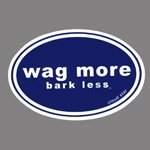
As fate would have it, on the way to the veterinary hospital yesterday, the car in front of us had a sticker on the back bearing the words that became the title for this post: “Wag More; Bark Less.”  It looked like a faded version of the picture included below.

218jxKddCSL

With classes beginning today and Tara’s incessant tail wagging still very much on my mind, I found myself wondering whether this bumper-sticker philosophy is good counsel for law students.  My general conclusion?  Yes, this mantra can be usefully embraced by law students.

My thoughts on this are simple.  Finding the joy in law and learning law is what motivates us to stay on task and keeps us happy in our journey as lawyers.  So, in this

The school year begins soon, and I’ll be teaching Business Enterprises.  (That’s what Tulane calls the basic BA/Corps class.)

One of my first tasks was to select a casebook.  There are a lot of options, and it was interesting for me to analyze how each reflects the philosophy/policy preferences of its authors.  I suppose I should have predicted that the Klein/Ramseyer/Bainbridge book would open its discussion of corporations with the Boilermakers case, and its characterization of corporate governance documents as a “contract” among shareholders.  The Allen/Kraakman/Subramanian book heavily emphasizes economic analyses.   Unsurprisingly, the casebook partially authored by my co-blogger Joan Heminway (i.e., the Branson/Heminway/Loewenstein/Steinberg/Warren book) demonstrates a particular interest in alternative entities, and Hazen/Markham seems to feel derivative actions have dominated far too much academic attention (and also that Dodge v. Ford Motor Co. needs to be retired).

One significant point of variation is how far the books go in integrating state and federal law.  As federal securities regulation expands, it clearly poses a problem for casebook authors (and business professors!) in terms of organizing the material in a coherent fashion.  It’s harder to simply divide the class into state governance law and federal disclosure law (which is how