
Fellow BLPB contributor and friend, Haskell Murray, bravely posted his view of FOMA and Family yesterday.  I am contributing to the conversation with my own view of the issues he raised.  Both of our posts are born of conversations we have been having off line for the past several months.
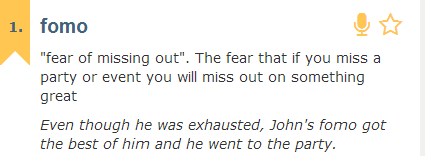
FOMA

We are approaching (if not there already) the point in the semester when I typically feel overloaded by remaining materials for class and year-end administrative responsibilities, fatigue from spring writing deadlines and travel, and a little puzzled by how a summer that isn’t even here yet, already feels “full”.   I know that I haven’t struck the right balance, especially not with an infant at home.  And yet, if the phone rang tomorrow with an opportunity that I couldn’t pass up, I would instantly add it into the mix subtracting from “free” time and further bloating the scheduled column.  I know that I am not alone. 

 I want to explore two ideas:  “opportunities that can’t be passed up” and “free time”.

The bottom line is that I am grateful to have a job that is rewarding, engaging, flexible, and ultimately fun.  I look at the pool of candidates we bring in

Michael Lewis, the author of Liar’s Poker and The Big Short, has just released a new book, Flash Boys: A Wall  Street Revolt. He argues that high-speed trading results in “rigged” securities markets. I don’t always agree with Lewis’s positions, but he writes well and it should be an interesting book.

Here are two other interesting takes on the effect of high speed trading on securities markets:

This semester, I’m teaching Securities Litigation at Duke Law.  It’s my first time teaching, so I’ve had to construct a syllabus (relying in part on syllabi provided to me by instructors at other law schools who teach similar courses).

There is a casebook, Securities Litigation and Enforcement, that I’ve been relying upon.  However, in my class, I plan to deal not only with federal law claims, but also claims brought under state law.  State law isn’t a part of this casebook, and I haven’t found anyone else who has taught it.  So, for this part of the class, I’m on my own.

[More under the cut]

I had the distinct honor and privilege of attending oral argument in the Hobby Lobby/Conestoga case at the Supreme Court today. I will be writing a substantive post on the experience in the future, but for now I wanted to share with you the highlights of the corporate-focused arguments.  It will be quick because the issues of whether corporations are persons and therefore have standing under RFRA and whether corporations can have religious identies got relatively little attention during the 90 minute argument.

Justice Sotomayor lead the charge on the corporate issues challenging Paul Clement (arguing for Hobby Lobby/Conestoga) to identify where the law protects corporate religion and how can a corporation have religious beliefs.  Justice Sotomayor also asked how courts will decide the religion of the corporation– is it 51% of shareholders’ beliefs?  dependent upon officers? the board?  (This line of quesitoning tracks with an argument that I made here in an Op-ed).  Clements, pointing to the scienter doctrine, suggested that the law has already decided that corporations have beliefs and intent. Clement also suggested that the nature of a corporation’s belief could be judged by looking at corporate governance documents and that it would become a

The New York Times editorial board weighing in on, and against, corporate religious exemptions.

“The Supreme Court has consistently resisted claims for religious exemptions from laws that are neutral and apply broadly when the exemptions would significantly harm other people, as this one would. To approve it would flout the First Amendment, which forbids government from favoring one religion over another — or over nonbelievers.”

And they cite the corporate law professors’ brief, writing:

“as an amicus brief filed by corporate law scholars persuasively argues, granting the religious exemption to the owners would mean allowing shareholders to pass their religious values to the corporation. The fundamental principle of corporate law is a corporation’s existence as a legal entity with rights and obligations separate from those of its shareholders.”

Congratulations to the main brief writing team for a document that has generated a lot of debate and raised the profile of the corporate law issues in this case.

-Anne Tucker

Professors Lucian Bebchuk and Robert Jackson have recently posted a paper to SSRN, Toward a Constitutional Review of the Poison Pill.  In the paper, they argue that state laws that facilitate the use of “poison pills” are unconstitutional in the sense that they are in conflict with the Williams Act, because they have the potential to introduce undue delay into the tender offer process.  To the extent Profs. Bebchuk and Jackson purport to be summarizing existing doctrine, I have my doubts….

[More after the jump]

My op-ed on the Hobby Lobby case, A Bad Investment: Recognizing Religous Rights of Corporations, is available on Huffington Post. 

The Hobby Lobby arguments are couched in terms of religious freedom, but it is hard to see the net gain for liberties when such a rule could require religious disclosures and could lead to restricting investments to religiously like-minded investors. Elevating private religious beliefs to a matter of market importance threatens to chill the marketplace and erodes the long-respected boundaries between private religious beliefs, the realm of the state and the role of the marketplace.

I will be attending the Hobby Lobby oral arguments at the Supreme Court.  I will be posting updates and analysis here and at twitter (@Anne_M_Tucker) on March 25th (day of argument) and the 26th.

-Anne Tucker

For those interested, here is an amicus brief in the Hershey section 220 case arguing that  violations of domestic or international law are ultra vires acts.   Download Hershey Section 220 Amicus Brief

[B]ecause Delaware corporations (including defendant The Hershey Company) are chartered only for “lawful” acts or activity, 8 Del. C. § 101(b), illegalities committed by the company are considered ultra vires and may be the proper source of both direct shareholder suits and injunctive actions by the state Attorney General.  Delaware law is explicit on this point. A “lack of capacity or power may be asserted . . .[i]n a proceeding by a stockholder against the corporation to enjoin the doing of any act or acts” or “[i]n a proceeding by the Attorney General to dissolve the corporation, or to enjoin the corporation from the transaction of unauthorized business.” 8 Del. C. § 124.
 

-Anne Tucker

Thanks for inviting me to guest blog. As Stefan said, my area is corporate governance with particular interests in the rights and responsibilities of corporations in society, and how changing market dynamics impact corporations. In that vein, I had the pleasure of moderating a panel discussion yesterday at New York Law School on High Frequency Traders (HFTs). The panel immediately followed an announcement by New York Attorney General Eric Schneiderman on new proposals targeted at HFT firms (part of what his office terms their “Insider Trading 2.0” initiative).We certainly had a lively discourse and a link to the full panel discussion will be available shortly— I’ll be sure to post at that time. But in short, here are the highlights:

High frequency traders use a fully automated trading system to move in and out of securities at a rapid speed, often just in milliseconds. To get a sense of what is at stake, consider that by constructing a high-speed fiber optic cable, round-trip communication time between New York and Chicago was reduced from 16ms to 13ms, and now using microwave technology, the round-trip transmission time was further reduced to 10ms, then to 9ms, and most recently to 8.5ms. What can

We here at the BLPB feel very lucky and excited to be able to follow up on Ann Lipton’s month of guest-blogging with a month of guest-blogging by Tamara Belinfanti and, furthermore, that Ann has agreed to come on board to blog with us on a regular basis going forward.  We have no doubt that our readers will benefit greatly from all of this.

If you want to re-visit my original introductory post for Prof. Lipton, you can find it here. As for Prof. Belinfanti, I will as usual leave the bulk of the introduction to her but pass on the following from her New York Law School profile page, which you can find here.  Welcome, Tamara & Ann!

Professor Belinfanti joined the faculty in fall 2009 and teaches Corporations, Contracts, and a corporate transactional skills seminar. Professor Belinfanti’s scholarly interests include general corporate governance matters, executive compensation, the proxy advisory industry, shareholder activism, and law, culture and identity. Prior to joining academia, Professor Belinfanti was a corporate attorney at Cleary Gottlieb Steen & Hamilton LLP, where she counseled domestic and international clients on general corporate and U.S. securities regulation matters, and was co-editor of the securities law