A while back, I blogged about a securities fraud case where the only lead plaintiff applicant was rejected on the grounds that he had sent harassing letters to the defendants.  Ultimately, in that case, no alternative lead plaintiff ever completed a new application, and the case did not proceed as a class.  Instead, several investors proceeded on an individualized basis, and their claims were eventually dismissed.

Well, it happened again: in Bosch v. Credit Suisse Group, 22-cv-2477 (ENV), Magistrate Judge Roanne Mann held that the only proposed lead plaintiff – with a $621 stake – simply did not have enough interest in the case to justify appointment as lead. 

This is a bit more unusual than the earlier case I blogged about, though, because the denial wasn’t based on misconduct, but simply dollar value of losses.  The judge reasoned that, according to the PSLRA, the lead plaintiff must make a “prima facie showing that its claims satisfy the typicality and adequacy requirements of Rule 23,” and then held that a $621 loss rendered the plaintiff inadequate: “This Court is not satisfied that Jimenez has a sufficient interest in the litigation to vigorously pursue the claims of the

It’s pending in Delaware Chancery, C.A. 2022-0357-MTZ; VC Zurn heard oral arguments July 26, and presumably a decision will soon be forthcoming.

Buzzfeed was a private company that was taken public via SPAC.  Many of its employees were paid in stock and stock options, but – as was widely reported – on the first day of trading after the merger, they found themselves unable to place sell orders.  By the time it was all straightened out, Buzzfeed’s stock price had dropped significantly, and now those employees are suing Buzzfeed, its managers, and transfer agent.  They sought to bring their claims in a mass arbitration as required by their employment agreements, but Buzzfeed filed a declaratory judgment action in Delaware Chancery, arguing that because the employees’ claims are tied to their status as Buzzfeed stockholders, they are bound by the forum selection provision that was inserted into Buzzfeed’s charter when it went public, requiring that all such actions be brought in Delaware courts.

It’s actually a complex case, in part because the publicly traded entity – the one with the forum selection provision – is not the entity that employed the plaintiffs.  The employing entity was merged into a shell

From what I can tell, law schools are seemingly falling over one another to hire this season. Following an understandable period of dormancy, lots of schools are apparently looking to fill a lot of slots — perhaps restocking to get back to pre-pandemic student-faculty ratios. But there appear to be some dark clouds looming. The news on college enrollments is not great (cf. “First-year and transfer enrollment at Rutgers-Camden is down 27%, and faculty are concerned“), hiring is slowing in some areas (cf. “Some law firms are ‘pulling back the throttle’ on hiring as expenses rise and deal work slows“), winter is coming (cf. “Europe’s household electrical bills could surge by $2 trillion by next year amid a worsening energy crisis“), and some smart market watchers are predicting a long period of significant economic pain ahead (cf. “Chamath Palihapitiya goes into detail on the 2022 economic crisis and warns about an imminent and very prolonged recession.“). Of course, these sorts of predictions are fraught with peril, and — despite the click-bait title of this post — I’m not arguing that newly-hired faculty will be fired even if the gloomy predictions pan out

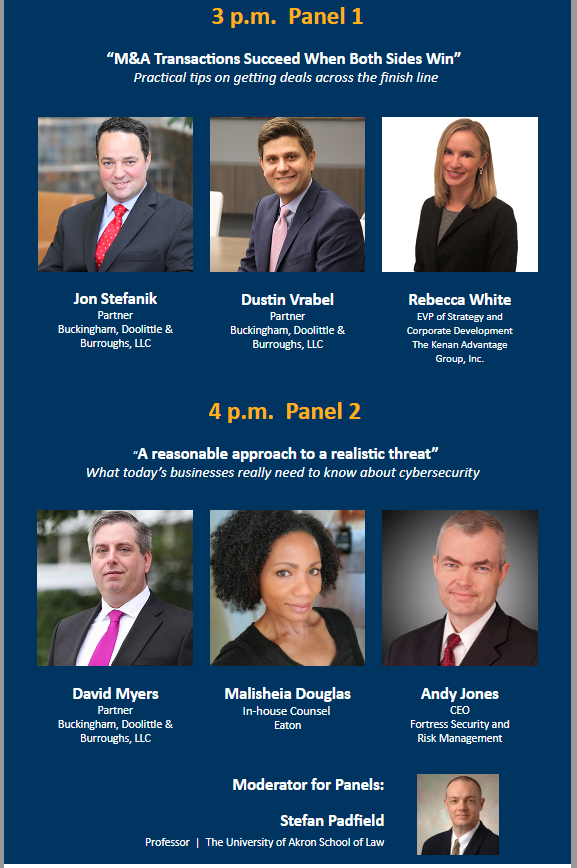
I’m pleased to report that registration is now open for our third annual Corporate Governance Summit to be held on Friday September 30, at the Wynn.  Co-sponsored by the William S. Boyd School of Law and Greenberg Traurig, the event features four panels and a keynote address from Jan Jones Blackhurst

This is our program:

8:00 a.m.
Registration and Continental Breakfast


9:00 a.m.
Opening Remarks

Michael J. Bonner, Managing Shareholder, Greenberg Traurig, Las Vegas
Benjamin P. Edwards, Associate Professor of Law, The UNLV William S. Boyd School of Law
Leah Chan Grinvald, Dean and Richard J. Morgan Professor of Law, The UNLV William S. Boyd School of Law

9:15 a.m.
“We Did What??” What No Board Wants to Hear!

Michael J. Bonner, Managing Shareholder, Greenberg Traurig, Las Vegas
Frank M. Placenti, Shareholder and Chair of the U.S. Corporate Governance Practice, Greenberg Traurig, Phoenix
Nancy Rapoport, Garman Turner Gordon Professor of Law & Affiliate Professor of Business Law and Ethics, The UNLV William S. Boyd School of Law & Lee Business School

10:30 a.m.
Break


10:45 a.m.
Dealing with Activists: When the ‘Out of Office’ Greeting is Not

Back in July, I blogged about the unprecedented dispute between Ben & Jerry’s and its sole shareholder, Unilever, regarding the sale of Ben & Jerry’s products in Israeli-occupied territories.  When Ben & Jerry’s was sold to Unilever, Unilever entered into a shareholders’ agreement with Ben & Jerry’s, whereby it promised that the board of directors would be largely self-perpetuating (i.e., continuing directors would nominate their successors), and the board would have authority to maintain the company’s social mission.  Unilever, via its CEO selection, would have authority over financial and operational decisions.  When the Ben & Jerry’s board objected to selling the company’s products in the West Bank, Unilever decided to transfer the entire West Bank business to an Israeli operator, bringing their spheres of authority into conflict: was this a social decision, or an operational one?  Ben & Jerry’s, under the direction of the board, sought a preliminary injunction to stop the transfer, arguing that it was the former; Unilever opposed on the grounds that it was the latter.

In my earlier blog post, I wrote about the unusual nature of the arrangement and the ambiguity surrounding the real parties in interest.  That ambiguity was not directly at issue

Randall Thomas, Robert Thompson, and Harwell Wells have posted Delaware’s Shifting Judicial Role in Business Governance on SSRN (here). The abstract is below, but I thought it worth highlighting the following two quotes from the paper:

  • For 2021, 28 percent of Delaware’s state budget was estimated to be provided by corporate franchise tax and business entity fees deriving from corporations, LLCs, LPs, and other business entities organized under its laws.
  • LLCs now provide Delaware almost thirty percent of its budgetary income from entity chartering, up from the low single digits twenty years ago.

Abstract

This Article examines the changing nature of judicial review of governance in American businesses. Drawing on a detailed study of all cases filed in 2018 in Delaware, the country’s dominant jurisdiction for corporate law, and a previous study of such litigation at the turn of the century, it reveals fundamental changes in corporate law issues brought to court in the twenty-first century. Twenty years ago, the chief task of the Delaware Court of Chancery, the nation’s preeminent business court (and the Delaware Supreme Court that hears all appeals from that court), was to apply fiduciary duties to resolve disputes over the governance of publicly

I received the following in an email and thought it might be of interest to BLPB readers.

MEDIA ADVISORY

MONDAY: NCLA Presents Oral Argument in Case Challenging Nasdaq Board Diversity Rules  

WHO: NCLA Senior Litigation Counsel Peggy Little, NCLA Litigation Counsel Sheng Li

WHAT: NCLA will appear before Judges Carl E. Stewart, James L. Dennis, and Stephen A. Higginson, in the U.S. Court of Appeals for the Fifth Circuit for a hearing in the case of National Center for Public Policy Research v. SEC.

On August 6, 2021, SEC narrowly approved a Rule requiring disclosure of the aggregate race, gender, and sexual preference of Nasdaq-listed companies, with two of five Commissioners dissenting. The Board Diversity Rule subjects Nasdaq-listed companies to the following requirements: (a) they must disclose information about their board’s self-identified gender, race, and sexual preference; and (b) either (i) meet minimum quotas of individuals of a certain gender, racial, and sexual preference, or (ii) publicly explain why the board does not meet such quotas.

The Board Diversity Rules fall outside of the agency’s regulatory authority.

WHERE: Room 209 of the Wisdom Courthouse, 600 S Maestri Pl, New Orleans, LA 70130

The hearing is open to the public.

I’ll admit it – I frequently choose blog post topics based on what I can write quickly, and since obviously I’ve been following the Twitter case closely, that’s the topic for today.

This post is really meant as an explainer of the legal state of play; lawyers who have been following closely probably already know most of this, but for anyone else, this is for you.

It’ll be really, really long, so I cut

At the urging of Governor DeSantis, Florida’s State Board of Administration recently adopted a new resolution changing the state investment policy.  As I read the language, it either does next to nothing or pointlessly blinds Florida’s asset allocators.  

Consider the language in the resolution instead of the overheated political press releases going out around it.  The resolution limits investment criteria to “pecuniary factors.”  A “pecuniary factor” is  one that is”expected to have a material effect on the risk and return of an investment based on appropriate investment horizons consistent with the fund’s investment objectives and funding policy.  It expressly excludes “the consideration of the furtherance of social, political, or ideological interests.” (emphasis added). The resolution also directs that its capital allocators may not “subordinate the interests of the participants and beneficiaries to other objectives and may not sacrifice investment return or take on additional investment risk to promote any non-pecuniary factors.”

This resolution seemingly has no impact on the ability of Florida funds to consider ESG factors when allocating capital.  Imagine you’re an asset allocator with a long time horizon and trying to evaluate between investing in different companies.  One company has critical infrastructure situated in areas highly likely