Today started in Williston, ND, and we then went to Mountrail County.  We vistied Tioga and Stanley, then headed south through New Town and Killdeer on the way back to Dickinson, where we stay tonight before flying out tomorrow morning (ridiculously early, I might add). 

We started the day at Williston State College, where we learned about the TrainND program and other degree programs.  TrainND works with companies to do OSHA and other safety training, and trained more than 16,000 people last, the vast majority of whom were employed.  The College also offers degree programs for those seeking to be Lease Operators and PLC-trained operators. Interesting for academics, the college had 38% turnover last summer.  The college has invested in campus housing for faculty, which can be part of the incentive package to bring people.  Apartments run from $2600/mo for 1 and 2 BR options, with home rentals over $3K.  Seventy percent of new faculty hires are moving into the new campus housing apartments (which looked nice from the outside). Just like the industry, the college is “catching up” with the whole thing. 

We saw more densely packed well sites, such at this 9-pack (nine wells on one
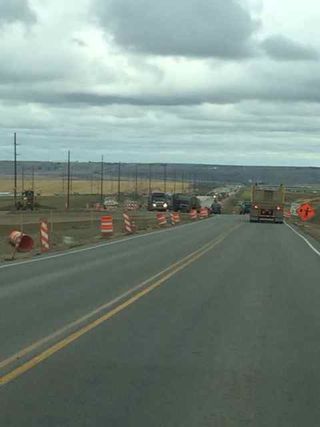
We covered a lot of ground today, driving up from Medora, ND, to Williston, ND, through Watford City.  The traffic was not terrible for us, though the truck traffic and the road construction was slow going for a while.  We’re told we missed the worst of the traffic because our timing was good. It still felt like big city traffic in what is not a big city.  Traffic

Watford City has been a prime example of a place where the oil boom has caused significant growing pains. A recent article in The Atlantic asked, What If Your Small Town Suddenly Got Huge?, and explained: 

The Bakken oil boom has brought rapid growth to many towns and cities in western North Dakota, including Williston, north of the Missouri River, and Dickinson, alongside Interstate 94. But Watford City, where the population has jumped from just 1,400 people six years ago to more than 10,000 today, has experienced a particularly dramatic shift in character. 

There is dirt being moved everywhere: for roads, for housing, and, of course, for oil.  Driving this region you see very few homes, rolling hills, a few small buttes, and some abandoned farm homes. Oil wells blend in surprisingly well

Following are some pictures from my adventures so far, as described in my prior posts on my Bakken Oil trip in western North Dakota, here and here. Thanks to co-blogger Haskell Murray for the suggestion.

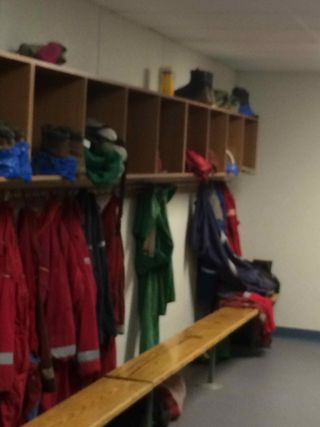
 This is a picture of one of the mudrooms from a crew camp near Dickinson, ND, in Dunn County:

Mudroom

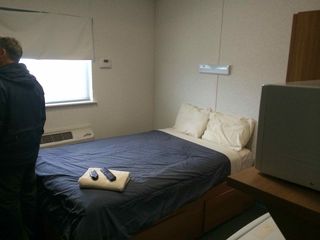
This is a VIP room in the same facility. It has a private bath, while other rooms are smaller and share a jack-and-jill style bathroom. 

VIP

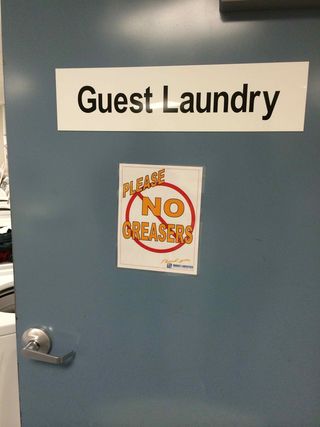
This is the sign for the guest laundry — No Greasers. 

NoGrease

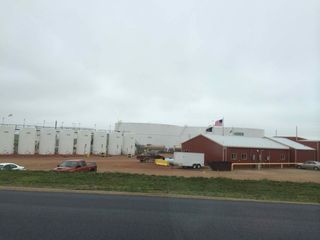
This is a picture of the crude oil site for loading oil on the tanker cars.  

OIlfield

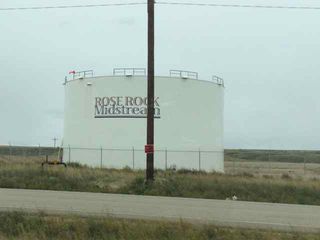
A crude storage tank: 

CrudeStorage

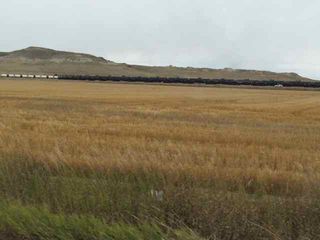
Most of the oil coming out of North Dakota, 1 million barrels a day, is shipped by rail: 

Railcars

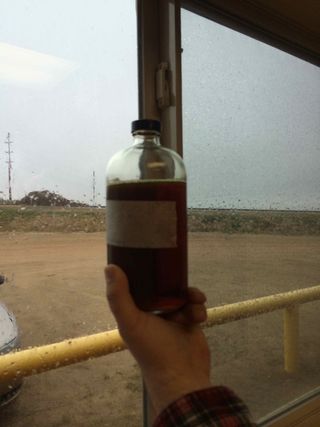
This is North Dakota crude. It comes from the ground a little more orange in color, but mellows to this over time.  It’s not thick; it almost like iced tea. 

NDCrude

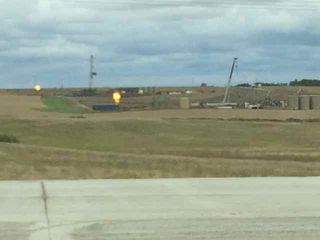
Flaring natural gas remains a problem, though some gathering is underway to help reduced the amount of flaring in the state. 

Flare

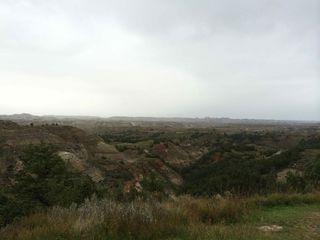
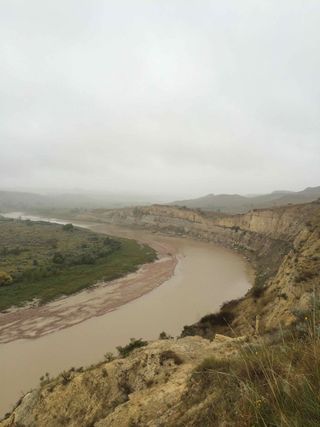
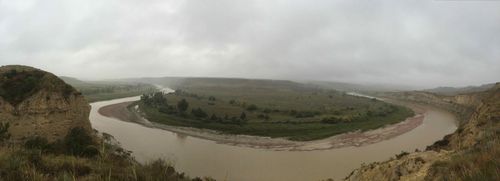
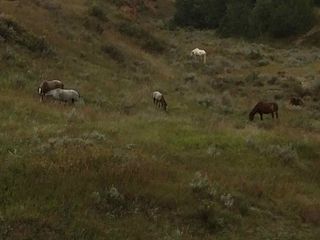
Finally, some pictures from Theodore Roosevelt National Park:

TRPark1

TR2

Ttpan

TRHorses

Today marked the first day of several meeting with people from North Dakota to discuss the oil boom and how it has impacted the state.  I lived in the state, and I loved it, so I think I am a little more connected than many to what’s happened here.  That said, I lived on the other side of the state from the oil boom, and I only spent five (largely great) years in North Dakota, so while I’m informed, I have hardly “lived the boom.”  I’ve just been watching and trying to pay attention. 

A few things I was told tonight struck me as significant: 

1. Housing costs are still a huge issue. Building a new house in Dickinson can run upwards of $250 per square foot. A one-bedroom apartment can easily run $1300.

2. In 1997, there were 698 hotel rooms in the city, largely for tourism jumping off for the North Dakota Badlands.  By 2004, that number was 754.  As of 2013, that number has increased to 1632. (The number is true of 2014, too.) 

3. In 2005, the average daily rate for a hotel room was $53.96

By 2008: $68.95

2009: $75.57

2010: $87.59

2011: $109.52

2012 :$124.03

This article popped up from the local paper (home of internet sensation Marilyn Hagerty) serving the area of my prior instituion

Committee recommends no liquor license for Rumors bar in Grand Forks

The Grand Forks City Council Service/Safety Committee recommended Tuesday that the city deny a liquor license transfer for Rumors bar in Grand Forks.

The committee originally recommended the full council deny the license earlier this month because of the previous felony charges against Blake Bond, Jamestown, N.D., one of the partners in Sin City LLC, the applicant of the license.

The council then sent the issue back to the committee, but when representatives from Sin City failed to show up at Tuesday’s meeting, the committee voted to recommend denying the license again. . . . .

A quick note for the reporter, who wouldn’t necessarily know this:  LLCs don’t have partners. They have members.  So, the more accurate statement would be that Mr. Bond “is one of the members of Sin City, LLC.”  The North Dakota Limited Liability Company Act definitions provision explains that:

“Member” means a person, with or without voting rights, reflected in the required
records of a limited liability company as the owner