
Photo of Anne Tucker

Anne Tucker teaches and researches contracts, corporations, securities regulations, and investment funds.

Tucker’s research focuses on three areas of business law. The first is on the regulation and administration of funds (both public and private funds) and how pooled investments can achieve significant personal and social ends, such as retirement security and private funding for social entrepreneurship. Second, she focuses on impact investing and contract terms that reinforce impact objectives alongside financial returns. Third, she studies corporate governance, including the role of institutional investors as shareholders. Read More

Earlier this week the SEC released its 2014 rulemaking agenda and excluded from the list is a proposal for public companies to disclose political spending.  In 2011, the Committee on Disclosure of Corporate Political Spending, comprised of 10 leading corporate and securities academics, petitioned the SEC to adopt a political spending disclosure rule.  This petition has received a historic number of comments—over 640,000—which can be found here.

The Washington Post reported that after the petition was filed,

A groundswell of support followed, with retail investors, union pension funds and elected officials at the state and federal levels writing to the agency in favor of such a requirement. The idea attracted more than 600,000 mostly favorable written comments from the public — a record response for the agency.

Omitting corporate political spending from the 2014 agenda has received steep criticism from the NYT editorial board in an opinion piece written yesterday declaring the decision unwise “even though the case for disclosure is undeniable.” Proponents of corporate political spending disclosure like Public Citizen are “appalled” and “shocked” by the SEC’s decision, while the Chamber of Commerce declares the SEC’s omission a coup that appropriately avoids
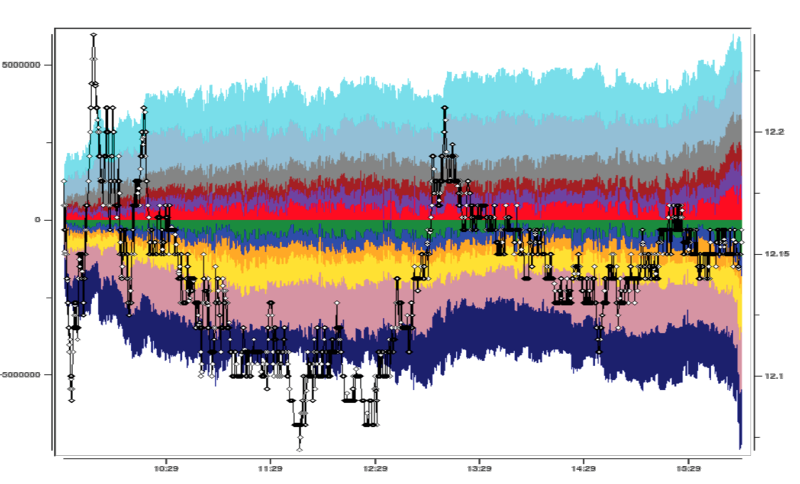
For those of you interested in empirical research now or in the future, keep in mind the new MIDAS (Market Information Data Analytics System) data sets available from the SEC.

Every day MIDAS collects about 1 billion records from the proprietary feeds of each of the 13 national equity exchanges time-stamped to the microsecond. MIDAS allows us to readily perform analyses of thousands of stocks and over periods of six months or even a year, involving 100 billion records at a time.

MIDAS collects posted orders and quotes, modifications/cancellations, and trade executions on national exchanges, as well as off-exchange trade executions. 

SEC Midas

The methodology for MIDAS is available here.

Happy Thanksgiving BLPB readers!  

-Anne Tucker

I was recently asked to evaluate a corporation’s obligation to indemnify a director named in a derivative suit initiated by the corporation alleging that the director usurped corporate opportunities. The MBCA establishes a standard framework for optional and mandatory indemnification of directors and officers, sets the appropriate boundary of indemnification obligations (i.e,. no reimbursement of derivative suit settlements or intentional misconduct), establishes the procedures for indemnification and advancement of expenses, and provides mechanisms for directors to enforce their indemnification rights through court orders.  The standard procedures for indemnification require the corporation to authorize the indemnification and make a determination that the conduct at issue qualifies for indemnification.

MBCA § 8.55 Determination and Authorization of Indemnification

(a) A corporation may not indemnify a director ….[until after] a determination has been made that indemnification is permissible ..[and].. director has met the relevant standard of conduct ….

(b) The determination shall be made:

(1)…. a majority vote of all the qualified directors…., or by a majority of the members of a committee;

(2) by special legal counsel ….or

(3) by the shareholders, but shares owned by or voted under the control of a director who at the time is not a qualified director may not

We live in a world where most working individuals have some retirement savings invested in the stock market.  The stock market funds, in part, college educations, and serve as the primary wealth accumulator for post-baby boom generations.  My parents—an elementary school teacher and a furniture salesman—lived in Midwestern frugality and invested their savings from the mid-80’s until 2006 when they pulled out of the market.  They retired early, comfortably (so I believe), and largely because of consistent gains in the stock market over a 30 year period.  The question is whether this story is repeatable as a viable outcome for working investors now. 

The Wall Street Journal ran a story on Monday “Stocks Regain Appeal” documenting the number of dollars flowing into markets from retail investors as well as the anecdotal confidence of investors.  The WSJ reports that:

“U.S. stock mutual funds have attracted more cash this year than they have in any year since 2004, according to fund-tracker Lipper. Investors have sent $76 billion into U.S. stock funds in 2013. From 2006 through 2012, they withdrew $451 billion.” 

This seems indisputably good right?  Maybe.  The real question for me is why is more money flowing into the

Yesterday was election
day
!  Elections hold a special place
in my heart, and I remain interested in the interplay of corporations and campaigns,
especially in a post-Citizens United
world.  The races, candidates, and
results, however, received significantly less attention without a federal
election (mid-term or general) to garner the spotlight.  The 2014 election season, which officially
begins today, has several unknowns. While Citizens
United
facilitated unlimited independent expenditures (distinguishable from
direct campaign contributions) for individuals and corporations alike,
corporations remain unable to donate directly to campaigns.  Individual campaign contributions are
currently capped at $2,500 per candidate/election and are subject to aggregate
caps as well.  McCutcheon
v. FEC
, which was argued
before the US Supreme Court on October 8, 2013, challenges the individual
campaign contribution cap.  If McCutcheon removes individual caps, the foundation
will be laid to challenge corporate campaign contribution bans as well.  See this pre-mortem
on McCutcheon
by Columbia University law professor Richard Briffault.  As for current corporate/campaign finance
issues, the focus remains on corporate disclosures of campaign expenditures in
the form of shareholder
resolutions
(118 have been successful) and company-initiated
disclosure policies
, possible
SEC disclosure requirements
for corporate political expenditures, and the
threat

I have a new article, Retirement Revolution: Unmitigated Risks in the Defined Contribution Society, which describes citizen shareholders–individual investors who enter the stock market through defined contribution plans–and examines the overlapping corporate and ERISA laws that govern their investments. 

If I haven’t lost you with the mention of ERISA, here’s an excerpt from the article:

A revolution in the retirement landscape over the last several decades shifted the predominant savings vehicle from traditional pensions (a defined benefit plan) to self-directed accounts like the 401(k) (a defined contribution plan) and has drastically changed how people invest in the stock market and why. The prevalence of self-directed, defined contribution plans has created our defined contribution society and a new class of investors — the citizen shareholders — who enter private securities market through self-directed retirement plans, invest for long-term savings goals and are predominantly indirect shareholders. With 90 million Americans invested in mutual funds, and nearly 75 million who do so through defined contribution plans, citizen shareholders are the fastest growing group of investors. Yet, citizen shareholders have the least protections despite conventional wisdom that corporate law and ERISA protections safeguard both these investors and their investments. As explained in an

Yesterday, the Executive Director, James Leipold, of
NALP (the National Association of Law
Placement) presented data regarding law graduate hiring trends from 2000
through 2012, both nationally and for my school (Georgia State University
College of Law).  It provided an
understanding of the changes to the legal market as a whole, and for our graduates
specifically.  I wasn’t aware of the data
compiled by NALP and available on their website prior to this presentation, and
man was I impressed.  As a faculty member
who frequently counsels students on job searches, the data paints a very
interesting story about HOW a majority of law graduates find jobs and WHERE
they find them.  The data also tells a
very compelling story of how the 2008 financial crisis/Great Recession has
impacted the legal hiring market.  (In
short:  big law jobs are down
significantly which was created downward pressure on alternative career paths
as students who would have traditionally pursued big law jobs compete for other
positions.) 

On the HOW question, the data confirmed a suspicion
of mine about how a majority of students find jobs.  Of course these statements will be either
more or less true depending on the reputational capital of your

The 2013 Nobel Prize in Economics winners were announced
earlier this week and the award was shared by three U.S. Economists for their
work on asset pricing.  Eugene
Fama
of the University of Chicago, Lars
Peter Hansen
of the University of Chicago and Robert Shiller of Yale University
share this year’s prize for their separate contributions in economics research.

The work of the
three economics is summarized very elegantly in the
summary publication
produced by The Royal Swedish Academy of Sciences
titled “Trendspotting in asset markets”.  The combined economic contribution of the
three researchers is described below:

The behavior of asset prices is essential for many important
decisions, not only for professional inves­tors but also for most people in
their daily life. The choice on how to save – in the form of cash, bank deposits
or stocks, or perhaps a single-family house – depends on what one thinks of the
risks and returns associated with these different forms of saving. Asset prices
are also of fundamental impor­tance for the macroeconomy, as they provide
crucial information for key economic decisions regarding consumption and
investments in physical capital, such as buildings and machinery. While asset
prices often seem to

I am emerging from a rabbit hole of research that began approximately 3.5 hours ago.  The question was inspired by teaching the 2002 Delaware Supreme Court case,
Download Gotham 817_A.2d_160, in my unincorporated business associations class and students’ drafting of fiduciary duty waivers in a limited partnership agreement.  Many of you are already aware that Delaware allows for the complete elimination of general partners’ fiduciary duties. I knew that Delware was an outlier in this area, but I wasn’t certain by how much.  So 3.5 hours and a 50 state (plus D.C.) survey later, I have a concrete answer.  Only Delaware (
Download Delaware GP Fiduciary duty statute) and Alabama (
Download Alabama Statute) statutes allow for the complete elimination of fiduciary duties for general partners.  The remaining 49 jurisdictions surveyed only allow for the expansion or restriction of fiduciary duties, but not the elimination.  Of those 49 jurisdictions, 20 have a stand alone provisions that outline the fiduciary duties of general partners, and 29 statutes establish the minimum fiduciary duties for general partners by linkage to the traditional partnership statutes.  Of the 29 jurisdictions that rely on linkage to traditional partnership statutes, 13 use a Uniform

Is there a sociological explanation for why Wall Street–and other large, complex and interconnected systems–are rigged for crisis?  Charles Perrow, author of Normal Accidents: Living with High Risk Technologies says yes.  Normal accidents occur when two or more unrelated failures interact in unpredicted ways.  As applied to Wall Street, the theory is that as the number of trades, a steeply rising number, increases and as the market becomes increasingly technology dependent, the likelihood of these normal accidents occuring also increases.   Examples of normal accidents in the financial markets include the flash crash based on the false tweet that there were explosions at the White House last spring, the NASDAQ software glitch that caused the flash freeze in August, and the unprecedented trading losses suffered during the financial crisis of 2008. This article in the Atlantic provides a provocative description of Wall Street’s normal accidents, predicts that more are to come, and suggests that limiting the number/volume of trades is one place to start in thinking about reducing the occurance and significance of these normal accidents. 

A specific example of a normal accident is: “one trader at JP Morgan Chase” racking up a “$6 billion in trading losses while the company’s