
Photo of Colleen Baker

PhD (Wharton) Professor Baker is an expert in banking and financial institutions law and regulation, with extensive knowledge of over-the-counter derivatives, clearing, the Dodd-Frank Act, and bankruptcy, in addition to being a mediator and arbitrator.

Previously, she spent time at the U. of Illinois Urbana-Champaign College of Business, the U. of Notre Dame Law School, and Villanova University Law School. She has consulted for the Federal Reserve Bank of Chicago, and for The Volcker Alliance.  Prior to academia, Professor Baker worked as a legal professional and as an information technology associate. She is a member of the State Bars of NY and TX. Read More

I feel badly for Chipotle. When I have taught Business Associations, I have used the chain’s Form 10-K to explain some basic governance and securities law principles. The students can relate to Chipotle and Shake Shack (another example I use) and they therefore remain engaged as we go through the filings. Chipotle has recently been embroiled in a public relations nightmare after a spate of food poisonings occurred last fall and winter, a risk it pointed out in its February 2015 10-K filings. The stock price has fluctuated from $750 a share in October to as low as $400 in January and then back to the mid $500 range. After some disappointing earnings news the stock is now trading at around $471.

Clean Yield Group, concerned that the company will focus only on bringing its stock back to “pre-crisis levels,” filed a shareholder proposal March 17th asking the company to link executive compensation with sustainability efforts. The proposal claims that the CEO was overpaid by $40 million in 2014 and states in part:

A number of studies demonstrate a firm link between superior corporate sustainability performance and financial outperformance relative to peers. Firms with superior sustainability performance were more likely
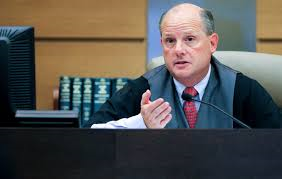
Some of our December graduates haven just taken the Florida bar exam. As always, I asked them about the business associations questions. Florida drastically changed its LLC rules in 2014, but still hasn’t asked any questions about LLCs, focusing instead on partnerships and corporations (at least according to the students). From a review of the released questions, the bar didn’t ask about LLCs before the amendments either.

I teach BA again next year and I’m struggling with what to emphasize. Business Associations is not required in many Florida law schools, but it is at St. Thomas, and many students enter the class with trepidation. Most will only take the one required course and won’t go on to advanced classes in securities regulation, corporate taxation, or other drafting courses. I try to focus the required BA class on skills that graduates will need in the workplace in addition to preparing them for the bar by using released test questions. Now I wonder how to balance the tension between the rise of LLCs and the many changes in laws related to securities regulation with the bar’s continued focus on partnerships and traditional corporations.

Yesterday the Obama administration added Miami to the list

Presidential candidate Donald Trump has repeatedly stated that he never plans to eat Oreo cookies again because the Nabisco plant is closing and moving to Mexico. Trump, who has starred in an Oreo commercial in the past, is actually wrong about the nature of Nabisco’s move, and it’s unlikely that he will affect Nabisco’s sales notwithstanding his tremendous popularity among some in the electorate right now. Mr. Trump has also urged a boycott of Apple over how that company has handled the FBI’s request over the San Bernardino terrorist’s cell phone.

Strangely, I haven’t heard a call for a boycott of Apple products following shareholders’ rejection of a proposal to diversify the board last week. I would think that Reverend and former candidate Al Sharpton, who called for the boycott of the Oscars due to lack of diversity would call for a boycott of all things Apple. But alas, for now Trump seems to be the lone voice calling for such a move (and not because of diversity). In fact, I’ve never walked past an Apple Store without thinking that there must be a 50% off sale on the merchandise. There are times when the lines are literally

Next week is our Spring Break and I plan to catch up on some television and movie watching. Many of my former business associations students have raved about the show Billions, described online as follows:

Wealth, influence and corruption collide in this drama set in New York. Shrewd U.S. Attorney Chuck Rhoades is embroiled in a high-stakes game of predator vs. prey with the ambitious hedge-fund king, Bobby Axelrod. To date, Rhoades has never lost an insider trading case — he’s 81-0 — but when criminal evidence turns up against Axelrod, he proceeds cautiously in building the case against Axelrod, who employs Rhoades’ wife, psychiatrist Wendy, as a performance coach for his company. Wendy, who has been in her position longer than Chuck has been in his, refuses to give up her career for her husband’s legal crusade against Axelrod. Both men use their intelligence, power and influence to outmaneuver the other in this battle over billions.

Now that my students are watching it, I feel compelled to do so as well, and not just because Australian papers play up the copious amounts of money and sex depicted in the series. I’m glad that my students are watching any

Strine

I haven’t seen his name on any of the short lists to replace Justice Scalia, but I would love to see the current Chief Justice of the Delaware Supreme Court, Leo Strine, get the nomination.

The benefits of nominating Chief Justice Strine include:

  • Promise of an entertaining nomination process. With all that he has said and written, there would be a lot of fodder, but he would be sure to hold his own. 
  • A nominee whose wit and writing style could rival Justice Scalia’s.
  • Diversity. Chief Justice Strine went to Penn for law school, not Harvard or Yale. (Granted, he does teach at Harvard).
  • Serious corporate law knowledge, and, at least on this blog, we know the Supreme Court of the United States needs help in this area.
  • Extremely bright, curious, and widely read. He likely has knowledge of and an opinion on most areas of law, well outside of just corporate law.

Anyway, I am sure President Obama will go with a more conventional pick, but I do hope to see a Supreme Court justice with corporate law expertise on the court eventually.

Even though I have never participated in a single Yoga class, I enjoyed my co-editor Joan Heminway’s Yoga Analogy Post from a couple weeks ago. Her post inspired this analogy post about running and the law.

While I am not the most consistent runner among the BLPB editors—that title goes to Josh Fershee—I have been running 3+ times a week consistently for the last 6 months or so, following a few very inconsistent years.

Below the break, I discuss some parallels between running (particular long-distance running) and the practice of law. Due to these parallels, as a hiring partner, I believe I would look favorably on an applicant who was a distance runner.

Also about distance running, is anyone else really excited about watching the Olympic Trials for the Marathon on NBC tomorrow? Not a great spectator sport, to be sure, but I love that so many people with normal jobs are running. Nashville-area elementary school teacher Scott Wietecha qualified for the Trials (though he has chosen not to run, due, at least in part, the some health issues). Scott has details and predictions here; after reading his long post, I can quickly see that he is even much more excited about watching the race than I am. 

This week, Delaware Governor Jack Markell nominated Joseph R. Slights, III for the position held by retiring Vice Chancellor John Noble on the Delaware Court of Chancery.

Judge Slights previously served a 12-year term on the Delaware Superior Court. Immediately prior to his nomination, Judge Slights was a commercial litigation partner at the firm of Morris, James, Hitchens & Williams LLP.

Once Vice Chancellor Noble retires, Vice Chancellor Laster will become the judge with the most experience serving on the Delaware Court of Chancery. Vice Chancellor Laster was sworn into his position in October of 2009. It has been a quick 6+ years; it seems like that was just yesterday.

I outsource the details of Joseph Slights’ nomination below:

I have been on the road a good bit over the past few months. Like Stephen Bainbridge, I greatly prefer driving to flying. On these road trips, I have noticed an increasing number of billboard advertisements for universities (my university included).

When I was in high school, I cannot remember any respectable 4-year universities or graduate schools using billboards to advertise. Maybe they did, and I just did not notice; but I do remember for-profit and community colleges using them. Today, however, I have seen billboard advertisements for schools ranked as high as the top-25 universities in the country, not to mention many solid public (including state flagship) and private universities. The Ivy League schools and their chief competitors seem to still be avoiding billboards, though even some them resort to billboards for their executive programs. (The for-profit schools still use billboards, but have also moved on to things like buying stadium naming rights).

I do wonder what accounts for the shift towards university billboard advertising, if there has been a shift. I also wonder about the costs and benefits of billboard advertising for universities. And I wonder about the comparative costs and benefits of alternative marketing.

Super

Sports have had some well-publicized legal and ethical problems over the past few months.

I hope to look into these scandals more deeply in coming months, but it seems unchecked power and/or loose oversight are at least part of the problem.

As with many of the recent business scandals, I wonder if punishments need to be more severe to curb these problems, or if there is another, more effective, solution waiting to be uncovered.