
Photo of Benjamin P. Edwards

Benjamin Edwards joined the faculty of the William S. Boyd School of Law in 2017. He researches and writes about business and securities law, corporate governance, arbitration, and consumer protection.

Prior to teaching, Professor Edwards practiced as a securities litigator in the New York office of Skadden, Arps, Slate, Meagher & Flom LLP. At Skadden, he represented clients in complex civil litigation, including securities class actions arising out of the Madoff Ponzi scheme and litigation arising out of the 2008 financial crisis. Read More

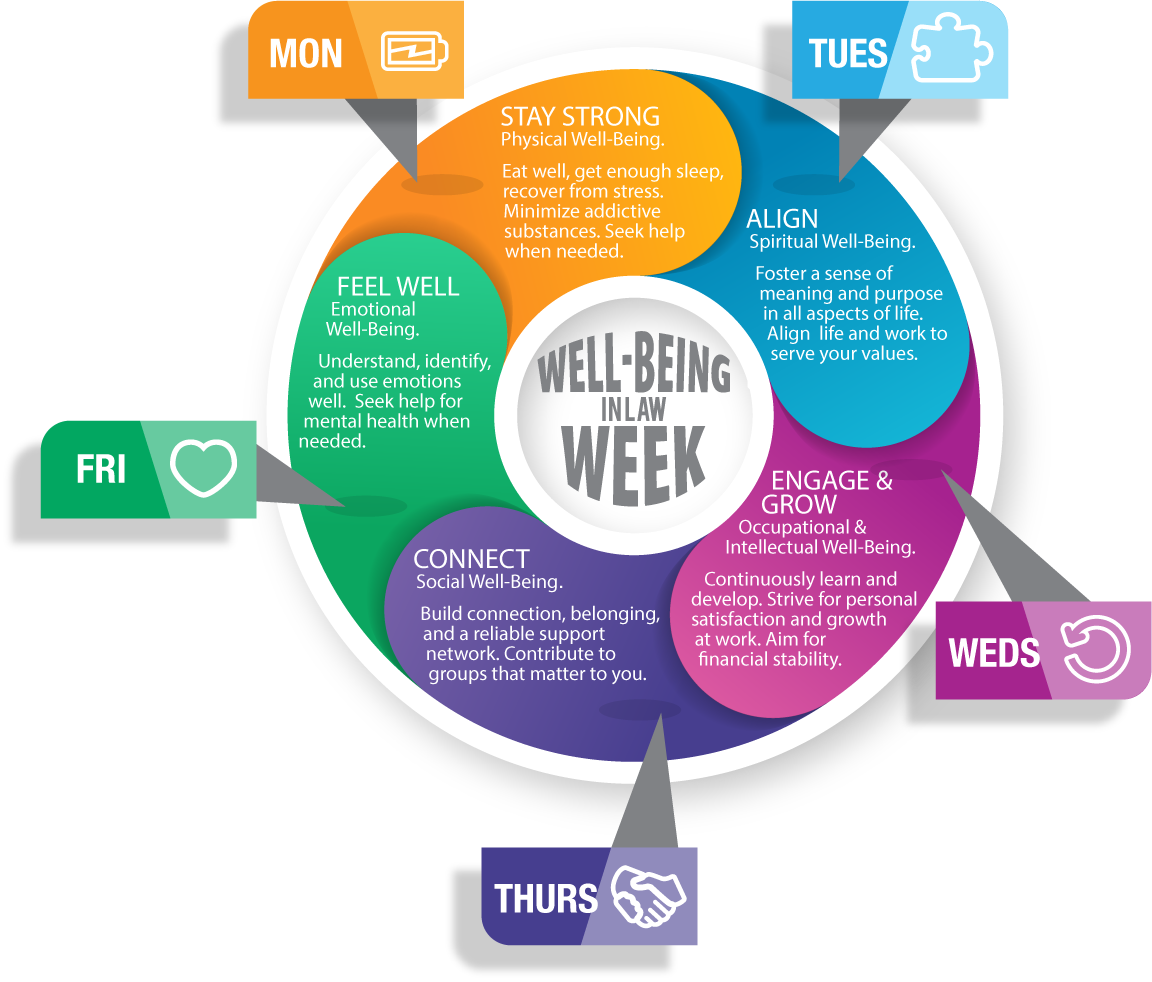
image from lawyerwellbeing.net

It is again Well Being in Law Week!

Ways for individuals to engage with the week can be found here.  On that page, the organizers note that “[e]ach of the 5 days in Well-Being Week is focused on one dimension of overall well-being.” Today’s objective is alignment (spiritual wellbeing)–“Cultivating a sense of meaning and purpose in work and life. Aligning our work and lives with our values, goals, and interests.”  As we head into the spring semester exam season, try focusing in on yourself a bit more this week.  There is no time like the present!  Namaste, y’all.

Mainelaw_logo-e1447856548945

The University of Maine School of Law, in the coastal city of Portland, Maine, invites applications for a one- or two-semester position as a visiting professor during the 2022-2023 academic year. Specific curricular needs include Property, Real Estate Transactions, and Land Use. The visiting appointment may be at the Professor, Associate Professor, Assistant Professor, or Professor of Practice level. Salary will be commensurate with qualifications and experience. Members of minority groups, women, and others whose background would contribute to the
diversity of the Law School are encouraged to apply.

Required: Applicants must possess a J. D. degree or its equivalent, an excellent academic record, and a record or promise of successful teaching and student mentoring, including an ability and willingness to incorporate innovative teaching approaches into the curriculum.

Applications must be submitted to the University of Maine System Hire Touch portal at: https://maine.hiretouch.com/admin/jobs/show.cfm?jobID=75546. You will need to create an applicant profile, locate the Visiting Professor of Law position in Hire Touch, and complete an application. Please upload a cover letter which fully describes your qualifications and experiences with specific reference to the required and preferred qualifications, your resume or c.v., and contact information for three

Position Number: 350124 / 20-256
Apply to: http://apply.interfolio.com/105805

Duquesne University School of Law, located in Pittsburgh, Pennsylvania, invites applications and nominations for a Visiting Assistant Professor of Law to teach during the 2022-2023 academic year. This position is a nine-month visiting position, beginning in the summer of 2022 with the possibility of one additional nine-month term. The successful candidate will be responsible for teaching three courses: one course during the fall semester and two courses the spring semester. The successful candidate will have ample time to focus on scholarship, be afforded to the Law School’s library and related resources, have no administrative or faculty committee duties.

DUTIES AND RESPONSIBILITIES:

Our curricular needs include: Business Associations, Property, Contracts, Emerging Technologies, Intellectual Property, Health Law, and related elective courses. Candidates must be available to teach in-person, although the public health situation may require occasional remote and/or hyflex teaching.

REQUIRED QUALIFICATIONS:

Juris Doctor from an ABA-accredited law school.

PREFERRED QUALIFICATIONS:

Experience teaching in legal education.

Evidence of significant practical experience in an area of curricular need.

Alternately, the successful candidate may possess any equivalent combination of experience and training, which provides the knowledge, skills and abilities required to perform the essential job

Last May, I posted on a wonderful two-day event–a symposium hosted over Zoom by Brooklyn Law School celebrating the career of Professor Roberta Karmel.  As I noted then, I was honored to be invited to speak at the event. It was so inspiring.

I have just posted the essay that I presented at the symposium, “Federalized Corporate Governance: The Dream of William O. Douglas as Sarbanes-Oxley Turns 20” (recently published by the Brooklyn Journal of Corporate, Financial & Commercial Law), on SSRN.  It can be found here

The roadmap paragraph from the essay’s introduction offers a brief description of the essay’s contents.

This essay focuses on the federalization of U.S. corporate governance since Sarbanes-Oxley—and, more specifically, since Roberta’s article was published in 2005 [Realizing the Dream of William O. Douglas — The Securities and Exchange Commission Takes Charge of Corporate Governance, 30 DEL. J. CORP. L. 79 (2005)]—pulling forward key aspects of Roberta’s work in Realizing the Dream. To accomplish this purpose, the essay first briefly reviews the contours of Roberta’s article. It then offers observations on corporate governance in the wake of (among other things) the public offering reforms adopted by the U.S.

Further to my post from last Sunday, I received notice that Northwestern continues to accept applications for full-time lecturers for its Master of Science in Law program.  (The soft submission deadline was April 8.)  Preferred qualifications include a JD and 3-5 years of experience teaching or working in a field relevant to the MSL curriculum, such as a legal, business, entrepreneurship, or regulatory setting.  Applicants should submit a CV and a cover letter explaining interest in the position through Northwestern’s online application system at this link: https://facultyrecruiting.northwestern.edu/apply/MTQ2Mg%3D%3D

The NYU Pollack Center invites applications for a Wagner Fellowship for the 2022-2023 academic year.  Thanks to a generous grant of the Leonard Wagner Testamentary Trust, the Center for Law & Business offers a one-year graduate research fellowship to help develop future law academics with an interest in the social control of business institutions and the social responsibility of business.

Requirements:

Applicants must hold a JD or LLM degree and have practiced law for two years. Preference is given to applicants with a research interest in the legal regulation of business and ethics, and to those who have a degree from NYU School of Law. Fellows are expected to make a full-time commitment to their graduate research at the center. Involvement in Pollack Center research ventures is required.

How to Apply:

Applications must be received by May 16th 2022. Applicants must submit the following materials*:

  • Statement describing academic and research interests
  • Proposal for the research project during the fellowship year
  • Curriculum Vitae
  • Law school academic transcripts
  • A letter of recommendation
  • A writing sample, preferably a scholarly paper written in the past two years

*Not all materials are required for every applicant.  Please inquire regarding required materials.

More information is

It’s been one week since I announced and started posting in this virtual symposium on the NextGen Bar Exam. Thanks to Josh, Ben, and John for joining me in commenting on the proposed content scope outline relating to Business Associations and Relationships.  You can find their posts here, here, and here, respectively. 

We have raised issues about terminology.  And there are a few areas that are lacking in clarity or specificity.  In addition, two important overarching points have emerged to date in our posts.  One is that it is important to indicate the source of the law being tested, since the default rules operative in various areas of LLC and corporate law are not the same in the dominant national statutory frameworks.  (I offer another example of how this may matter in the discussion of corporate director and officer fiduciary duties, below.)  The other is that the default rules in business associations law tell only part of the story.   Constitutional issues, authorized private ordering, and decisional law that both supplements and interprets state legislative enactments can all play roles.

In this post, I offer a few more points that illustrate or add to these observations.

Partnership Nomenclature

The following symposium post comes to us from John Rice at Duquesne Law.

*     *     *

I’m pleased to add my voice among those commenting as part of this virtual symposium on the recently-released Content Scope Outline for the “Business Associations & Relationships” for the NextGen Bar Exam. Despite my general skepticism of the efficacy of any bar examination, I tend to view the draft outlines as an improvement above the current exam outline. I join with my colleagues Joan, Joshua, and Benjamin in stressing how imperative it is that the NCBE specify the specific sources of law from which these topics are drawn.

In terms of substance, I favor separating LLCs into their own category rather than merely being a sub-set of corporation law. Additionally, the business litigator in me feels compelled to note that the draft outline’s description of “Shareholder and member litigation: direct and derivative litigation” is underdeveloped. I want my students to recognize litigation as a form of shareholder control over the corporation and to evaluate the standing prerequisites and demand requirement. Likewise, I would prefer more attention be paid to the specific remedies available in business disputes, including declaratory judgment, injunctive relief, and

The Northwestern Pritzker School of Law invites applications for three full-time faculty positions in its Master of Science in Law program, with an expected start date of July 1, 2022. Candidates will be considered for appointment on the law school’s lecturer track (Lecturer or Senior Lecturer); these positions are not tenure eligible.

The Master of Science in Law (MSL) is an innovative legal master’s degree offered by the Northwestern Pritzker School of Law. This program is geared specifically towards STEM professionals who are interested in topics at the intersection of law, regulation, business, and policy. The residential full-time program began in 2014; the online part-time format was added in 2017. The MSL program has a diverse student body, with both domestic and international students, and students of different ages, levels of work experience, backgrounds, race and ethnicity, and career goals. There are currently over 200 students enrolled and the program has over 400 alumni. Graduates of the MSL work in a variety of industries, including consulting, finance, pharma, biotech, engineering, healthcare, and law (including intellectual property, legal operations, and others); some go on to further study in medicine, business, law, and other fields.

The duties of the positions include teaching

A recent opinion of the Court of Appeals of Tennessee at Nashville, Buckley v. Carlock, is chock full of great issues from the standard Business Associations course.  Specifically, the case involves allegations of controlling shareholder oppression under Tenn. Code Ann. § 48-24-301.  The plaintiff requested, and was grated, a buy-out of his shares in lieu of dissolution.

As noted in the opinion, the plaintiff raises a variety of issues on appeal, arguing:

that the trial court’s valuation of his interest in TLC was “erroneous as a matter of law, or at least contrary to the weight of the evidence.” He also claims that the court abused its discretion in denying him prejudgment interest. And he contends that he was entitled to attorney’s fees as the prevailing party for the whole case. Lastly, he argues that the trial court erred in dismissing his claim for unjust enrichment as moot.

The Court of Appeals affirms the trial court opinion after oral argument (a note on that below).  In the process, the court validates a dissenters’ rights (“fair value”) approach to calculating the value of the plaintiff’s shares.  It also confirms aspects of the valuation calculation.

All of these “real life”