
Photo of Haskell Murray

Professor Murray teaches business law, business ethics, and alternative dispute resolution courses to undergraduate and graduate students. Currently, his research focuses on corporate governance, mergers & acquisitions, sports law, and social entrepreneurship law issues.

Professor Murray is the 2018-19 President of the Southeastern Academy of Legal Studies in Business (“SEALSB”) and is a co-editor of the Business Law Professor Blog. His articles have been published in a variety of journals, including the American Business Law Journal, the Delaware Journal of Corporate Law, the Harvard Business Law Review, and the Maryland Law Review. Read More

Today, I am at the Southeastern Association of Law Schools (“SEALS”) annual conference working with aspiring law professors.  More on that and other aspects of SEALS next week.  But it seems a number of law schools are hiring for the 2019-20 academic year, some specifically looking for business law folks and others looking for MVPs that may include business law folks.  Set forth below are several of the messages I have gotten in the past few weeks.  Hopefully, I have managed not to repeat a notice someone else already has posted . . . .

*          *          *

Professor of Law / Assistant (Acting) Professor of Law
University of California, Irvine School of Law

The University of California, Irvine School of Law invites applications for tenured and non-tenured faculty positions beginning August 1, 2018.

UC Irvine School of Law is a visionary law school focused on training talented and passionate lawyers and driven by professional excellence, intellectual rigor, and a commitment to enrich our communities through public service. UCI Law, founded just ten years ago, is the newest public law school in California in early 50 years and currently is ranked 21st
Hello to all from Tokyo, Japan (Honshu).  I have been in Japan for almost a week to present at and attend the 20th General Congress of the International Academy of Comparative Law (IACL), which was held last week in Fukuoka, Japan (Kyushu).  By the time you read this, I will be on my way home.

Fukuoka(Me+Sign)

As it turns out, I was at the Congress with old business law friends Hannah Buxbaum (Indiana Maurer Law), Felix Chang (Cincinnati Law), and Frank Gevurtz (McGeorge Law), as well as erstwhile SEALS buddy Eugene Mazo (Rutgers Law).  I also met super new academic friends from all over the world, including several from the United States.  I attended all of the business law programs after my arrival (I missed the first day due to my travel schedule) and a number of sessions on general comparative and cross-border legal matters.  All of that is too much to write about here, but I will give you a slice.

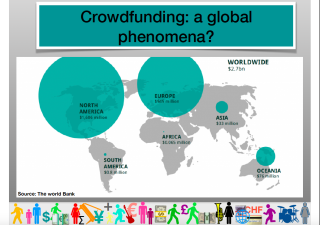
I spoke on the legal regulation of crowdfunding as the National Rapporteur for the United States.  My written contribution to the project, which I am told will be part of a published volume, is on SSRN here.  The entire project consists of eighteen papers from around the world, each of which responded to the same series of prompts conveyed to us by the General Rapporteur for the project (in our case, Caroline Kleiner from the University of Strasbourg).  The General Rapporteur is charged with consolidating the information and observations from the national reports and synthesizing key take-aways.  I do not envy her job!  The importance of the U.S. law and market to the global phenomenon is well illustrated by this slide from Caroline’s summary.

Fukuoka(GlobalCrowdfundingSlide)

The Congress was different from other international crowdfunding events at which I have presented my work.  The diversity of the audience–in terms of the number of countries and legal specialties represented–was significantly greater than in any other international academic forum at which I have presented.  Our panel of National Rapporteurs also was a bit more diverse and different than what I have experienced elsewhere, including panelists hailing from from Argentina, Brazil, Canada, France, Germany, Poland, and Singapore (in addition to me).  At international conferences focusing on the microfinance aspects of crowdfunding, participants from India and Africa are more prominent.  I expect to say more about the individual national reports on crowdfunding in later posts, as the need or desire arises.

A few outtakes on other sessions follow.

SnapchatLogo

One of the business law academy’s power couples, Amy and Bert Westbrook, recently posted an intriguing piece on SSRN that Bert and I have been communicating about a bit this summer.  It is entitled Snapchat’s Gift: Equity Culture in High-Tech Firms, and it is, indeed, a lovely gift–well conceived and packaged.  It is a look at dual class common equity in technology firms–and equity more generally–that confronts and incorporates many perspectives from law, economics, and other social sciences.

Some of you, like me, teach basic corporate finance in a variety of courses.  In those situations, it is important for instructors to have a handle on descriptions of the basic instruments of corporate finance–debt, equity, hybrid, and other.  What is the package of rights each instrument represents that incentivizes investors to supply money or other valuable assets?  In my classes, we ultimately discuss equity as a bundle of rights that includes potentials for financial gain and governance.  Snapchat’s Gift digs into the validity of these perceived rights in relevant part by focusing on recent changes in the primary public offering market for equity securities in the United States–in particular, the advent of highly publicized and fully subscribed initial public offerings of nonvoting common shares.

On Thursday and Friday of last week, I had the honor of attending and presenting at the inaugural conference on Women’s Leadership in Academia at the University of Georgia School of Law.  The conference featured a wide variety of plenary and breakout/workshop sessions over the two days.  My dean and two other colleagues from UT Law also were presenters at the conference; an additional UT Law colleague attended but did not present.

The opening plenary panel featured four women talking about “Me Too and the Legal Academy.”  The panelists offered perspectives from journalism, criminal law, tort law, constitutional law, victim/survivor advocacy, classroom teaching, law school administration, campus Title IX adjudication, and personal experience.  Audience members actively participated in a dialogue with the panelists.  The keynote on the second day was delivered by the interim provost at UGA, Libby Morris, who offered information on women in leadership–data, anecdotes, and observations–and moderated a related audience Q&A.

The remainder of the program included various panels, presentations, and workshops.  Among them was a nifty combined PechaKucha/workshop offered by three of my UT Law colleagues on “Leadership Challenges and Solutions over the Course of a Career” and my breakout session entitled “Outside the Four

This summer, I have met with a few of my pre-law advisees who will start their 1L years in a few weeks. 

While I have blogged on general advice for students before, I decide to memorialize some of my specific advice for 1Ls.

Of course, every student is different, and this advice may be amended a bit, depending on the student’s situation and goals. This advice, for example, assumes a desire to perform well academically. I encourage my co-bloggers to chime in through the comments or in separate posts. My co-blogger Josh Fershee (West Virginia) has already authored two 1L advice posts, which are worth consulting, here and here. It should go without saying that I did not follow all of my own advice, but I wish I had. 

  • Move into your house or apartment a few weeks early. Moving in early may not be possible for every student, but it is worth doing if you can. Getting settled before the work starts to pile up can help you avoid getting behind early.  
  • Live alone or with friends with similar schedules. I had some law school friends who lived with non-law students, usually people they knew from college who

image from www.homesforwoundedwarriors.com

As a legal advisor to both for-profit and not-for-profit ventures for more than 30 years, I have had to learn about the business operations of new clients many, many times.  The facts are so important in these knowledge acquisition processes (which generally take time to complete).  The more experienced one is as a business lawyer, the more adept one is at getting the right facts–and analyzing the legal risks, rights, and responsibilities they represent or signal.

As a law professor, I have had many opportunities to experience joy from the work of my students.  They do such amazing things!  As the careers of my former students lengthen and deepen, my pride in them often exponentially increases.

With all that in mind, I bring you today a podcast featuring one of my beloved former students.  She doesn’t work for a law firm or a major multinational corporation.  She is not a general counsel.  Instead, she works for a relatively small nonprofit organization in a broad-based planning and development role.

The podcast consists of an exposition/interview by that former student, Betty Thurber Rhoades.  In the podcast, Betty explains–from soup to nuts (i.e., application to move-in)–the process of getting disabled veterans into

Seton Hall University School of Law welcomes applications for tenure-track positions to begin July 1, 2019. Candidates should have a J.D. or equivalent degree and a record of academic excellence. Candidates should be able to demonstrate both extraordinary scholarly promise and the ability or potential to be an outstanding teacher who can motivate students while preparing them for the practice of law in the twenty-first century. The School of Law will consider entry-level and junior lateral candidates in a variety of subject areas with particular focus on 1) Law and Technology, including data analytics/AI as it intersects with law and compliance, social media and electronic discovery, and ethics in the intersection of law and technology; 2) Business Law, preferably with a focus on Securities Regulation; and 3) Health Law, preferably with a focus on Healthcare Fraud or Food and Drug Law.

Seton Hall Law School offers a vibrant, energetic academic environment. Located in downtown Newark, New Jersey, approximately 20 minutes from Manhattan, Seton Hall Law is especially well-regarded in the health and life sciences law, intellectual property, cybersecurity, and privacy arenas, and it is in the process of expanding its role in energy, technology and data analytics. The faculty includes

RobinHood

What would the world look like if a public company officer or director, recognizing the value of material nonpublic firm information in his possession and intending to benefit people of limited means, gave this valuable information to those less fortunate without the knowledge or consent of the firm and without any expectation of benefit in return? How, if at all, do we desire to regulate that behavior? The officer or director apparently would be in breach of his or her fiduciary duty absent a valid, binding, and enforceable agreement to the contrary. Does that conduct also, however, violate U.S. federal insider trading rules? Should it? This article, a relatively short piece that I wrote for a “virtual symposium” issue of the Washington University Journal of Law & Policy, offers answers to those questions.

Other symposium authors with insider trading pieces in this volume include:

John Anderson 
Steve Bainbridge
Frank Gevurtz
Zach Gubler
Peter Henning
Roberta Karmel
and
Yesha Yadav

Great reading on this topic, all around.  As we await the next insider trading regulation volley after Salman v. United States, this collection of essays and articles fills a nice gap.  Although the issue is not yet posted to the

I received the following today through the AALS teaching listserv.  It may be of interest to some of you or to folks you may know in the region.

++++++++++++++

Dear Friends:

I am happy to report that the UC Davis School of Law is offering a mandatory skills course for 1Ls starting in Spring 2019. It will include segments on negotiation and client interviewing. If you are in northern California, or plan to be January through March 2019, I hope you will consider applying for one of the six adjunct positions relating to this exciting new course. Information here: https://recruit.ucdavis.edu/apply/JPF02281

Donna Shestowsky, J.D., Ph.D.
Director of Lawyering Skills Education
Professor of Law, UC Davis School of Law
Martin Luther King Jr. Research Scholar
Affiliated Faculty, Department of Psychology, UC Davis
dshest@ucdavis.edu
Phone: (530) 754-5693
My latest research, published in the Harvard Negotiation Law Review, can be found here:
https://ssrn.com/abstract=2945706

The University of California Hastings College of the Law in San Francisco seeks to hire a tenured or tenure-track faculty member. We seek someone who is, or who promises to be, an innovative and productive scholar, an exemplary teacher, and a role model for our students, and who will contribute as a dynamic and engaged institutional citizen. We will accord priority in consideration to candidates who teach and produce scholarship in the areas of state and local government law or contracts/private law. We are particularly interested in recruiting someone who will contribute to our vibrant and diverse community of interdisciplinary scholars. Entry-level and lateral candidates should send a cv, statement of interest, and representative publications in .pdf format to Professor Chimène Keitner, Appointments Committee Chair, keitnerc@uchastings.edu, with the subject heading “Faculty Position.” We will conduct interviews on campus and at the 2018 AALS Faculty Recruitment Conference.

UC Hastings prohibits discrimination against any person employed; seeking employment; or applying for or engaged in a paid or unpaid internship or training program leading to employment with UC Hastings College of the Law on the basis of race, color, national origin, religion, age, sex, gender, sexual orientation, gender expression, gender identity, gender transition status, sex- or