
Photo of Joshua Fershee

Joshua Fershée, JD, became the 11th dean of the Creighton University School of Law on July 1, 2019. Fershée previously served as associate dean for faculty research and development, professor of law, and director of LLM programs at West Virginia University College of Law.

Earning a bachelor’s degree in social science from Michigan State University in 1995, Fershée began his career in public relations and media outreach before attending the Tulane University School of Law, graduating magna cum laude in 2003 and serving as editor in chief of the Tulane Law Review. He worked in private practice at the firms of Davis Polk & Wardell in New York and Hogan & Hartson, LLP, in Washington, D.C., before joining the legal academy. Read More


904B5442-1A94-4757-8105-4386A95FFF4E

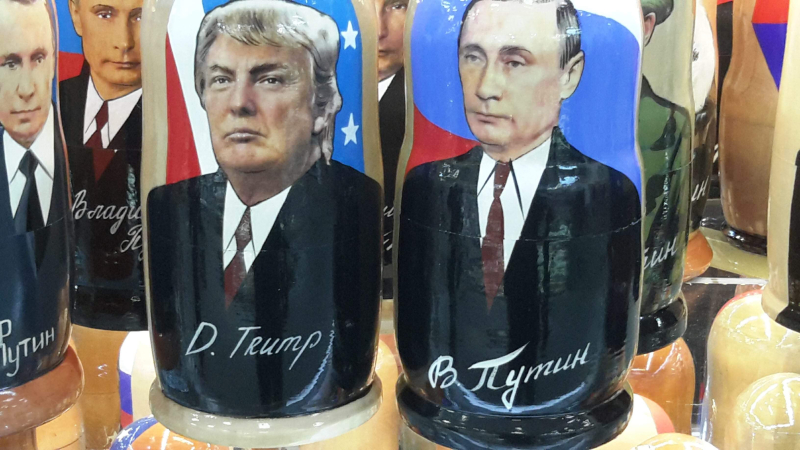
Hello from Russia, a country I swore a few years ago I would not visit for pleasure because of its human rights violations. Not only did I visit St. Petersburg, Russia on a cruise stop, but I bought FIFA World Cup T-shirts. I stopped short of buying the Trump/Putin nesting dolls, but I couldn’t resist a picture. I attended the last World Cup in Brazil, and in between matches met with activists because I was looking at the effect of mega sporting events on human rights. Hundreds of thousands of people were displaced in Brazil to build new facilities and activists protested both the government and corporate sponsors.  Russia and Qatar (a future World Cup destination and another notorious human rights violator) were on my personal no-go lists. Alas, as regular readers of this blog know, I’m a perfect example of most consumers out there- I have some situational ethics when it comes to certain things. At least I’m self aware. 


There are only about 5 cruise ships in port today and the city was packed. On other days during the summer, thirteen cruise ships with 2000-4000 passengers each may be in the city. Thousands of other tourists

In 2015, I and several academics and other experts traveled to Guatemala as part of the Lat-Crit study space. The main goal of the program was to examine the effect of the extractive industries on indigenous peoples and the environment. During our visit, we met with indigenous peoples, government ministers, the chamber of commerce, labor leaders, activists (some who had received multiple death threats), and village elders.

Our labor of love, From Extraction to Emancipation Development Reimagined, edited by Raquel Aldana and Steve Bender, was released this week. My chapter “Corporate Social Responsibility in Latin America: Fact or Fiction” introduces the book. I first blogged about CSR in the region in 2015 in the context of a number of companies that had touted their records but in fact, had been implicated in environmental degradation and even murder. Over the past few years, one of the companies I blogged about, Tahoe Resources, has been sued in Canada for human rights violations, the Norwegian pension fund has divested, and shareholders have filed a class action based on allegations re: the rights of indigenous people.

Although the whole book should be of interest to business law professors and practitioners, chapters of particular interest

Music star/clothing designer Kanye West stirred up controversy on Wednesday when he began tweeting about his support of Donald Trump, calling him his “brother,” discussing their shared “dragon energy,” and showing off his  MAGA hat, autographed by President Trump himself. The President thanked West for the support, and some level of outrage ensued among liberal pundits and many in the black community about West’s actions. A number of marketing experts opined that West’s vocal support had the potential to adversely affect sales of his Yeezy line of clothing and sneakers, which had already suffered a decline of late, even though earlier releases of his product sold out in minutes online. In the past, Yeezy sneakers’ assoication with Adidas helped that company double its stock price.

As fans threatened to get rid of their Yeezy gear, news outlets wondered if West had killed his brand. But a funny thing happened. GQ Magazine reported today that Yeezy sales are actually up and West has even more Twitter followers than ever. The article described the backlash and boycott threats that other sneaker companies faced after their executives supported President Trump. Even Kim Kardashian, West’s wife and marketing, urged him to cease his

Last week, I blogged blogged about lawsuits against chocolate makers alleging unfair and deceptive trade practices for failure to disclose that the companies may have used child slaves to harvest their products. Today, I want to discuss steps that the Business Law Section of the American Bar Association is taking to provide more transparency in supply chain practices.

In 2014, the ABA House of Delegates adopted Model Principles on Labor Trafficking and Child Labor developed by over 50 judges, in-house counsel, outside counsel, academics, and NGOs. The Model Principles address the UN Guiding Principles on Business and Human Rights and other hard and soft law regimes. At last week’s ABA Business Law Spring Meeting, academics David Snyder and Jennifer Martin presented on human rights issues in supply chains alongside practicing lawyers and in-house executives. Many of them (and several others) had formed a Working Group to Draft Human Rights Protections in Supply Contracts. The Group aims to provide contract clauses that are “legally effective” and “operationally likely.”

As a former Deputy GC for a supply chain management company, I can attest that the ABA’s focus is timely as companies answer questions from customers, regulators, shareholders, and other stakeholders. Human rights

Greetings from the ABA Business Law Meeting in sunny Orlando, Florida. Today, I attended an excellent program on Protecting Human Rights in Supply Chains; Moving from Policy to Action. I plan to blog more about the meeting next week, highlighting the work surrounding draft human rights clauses for supplier contracts. The project was spearheaded by David Snyder of American University and corporate lawyer Susan Maslow. In this post, I want to address one of the topics Susan Maslow discussed– the recent spate of lawsuits brought by consumers who allege unfair trade practices based on what companies say (or don’t say) about their human rights records.

I’ve blogged (incessantly for the past five years) and written longer articles about the various ESG disclosure regimes. I’ve argued that in theory, disclosure is a good thing. But without meaningful financial penalties from regulators for violations, many corporations won’t do anything more than the bare minimum for human rights, even with the threat of (often short-lived) consumer boycotts. Further, most consumers suffer from disclosure overload or don’t understand or remember what they read.

The disclosure issue has now reached the courts. In 2015, a law firm filed cases in California under unfair competition and

Within the next few weeks, the Supreme Court will decide a trio of cases about class action waivers, which I wrote about here. The Court will decide whether these waivers in mandatory arbitration agreements violate the National Labor Relations Act (which also applies in the nonunion context) or are permissible under the Federal Arbitration Act

I wonder if the Supreme Court clerks helping to draft the Court’s opinion(s) are reading today’s report by the Economic Policy Institute about the growing use of mandatory arbitration. The author of the report reviewed survey responses from 627 private sector employers with 50 employees or more. The report explained that over fifty-six percent of private sector, nonunion employees or sixty million Americans must go to arbitration to address their workplace rights. Sixty-five percent of employers with more than one thousand employees use arbitration provisions. One-third of employers that require mandatory arbitration include the kind of class action waivers that the Court is looking at now. Significantly, women, low-wage workers, and African-Americans are more likely to work for employers that require arbitration. Businesses in Texas, North Carolina, and California (a pro-worker state) are especially fond of the provisions. In most of the highly populated states, over forty

Keith Paul Bishop, at the California Corporate and Securities Blog, provides an example of a court that actually pays attention to entity type. As he says, “it is nice to see that some judges do recognize that LLCs are not corporations.” It sure is.  In the case he cites, D.R. Mason Constr. Co. v. GBOD, LLC, 2018 U.S. Dist. LEXIS 41236, the court gets a lot right:

[A]lthough Plaintiff’s Complaint does separately mention the term “shareholder,” [*13]  the Court will not draw the inference that this term means Plaintiff was promised traditional “stock.” This inference would not be reasonable in these circumstances because Plaintiff alleges in its Complaint that Defendant GBOD is a limited liability company, not a corporation. (Compl. ¶ 3.) Under California law, LLCs distribute “membership interests,” not shares of stock. See Cal. Corp. Code § 17704.07. Consequently, Plaintiff’s pleading indicates the financial instrument at issue is not traditional stock. Moreover, courts tasked with deciding whether LLC membership interests constitute a security under the Exchange Act generally evaluate whether such interests are “investment contracts,” not “stocks.”

It is nice to see a court that acknowledges the different entity types and frustrating that this is not the norm. As

Within the past 24 hours, I’ve seen at least three news article that led me to reflect on my past blog posts. Rather than write a full post on each article, I’ve decided to note some observations.

The Tweet That Launched A Boycott (And Maybe a Buycott)

I’ve been skeptical in the past about whether boycotts work.  Perhaps times are changing. This week, Parkland shooting survivor David Hogg tweeted that advertisers on Laura Ingraham’s cable show should pull out after she tweeted,  “David Hogg Rejected By Four Colleges To Which He Applied and whines about it. (Dinged by UCLA with a 4.1 GPA…totally predictable given acceptance rates.) https://www.dailywire.com/news/28770/gun-rights-provocateur-david-hogg-rejected-four-joseph-curl ”  On March 28th, the 17-year old activist responded with “Soooo what are your biggest advertisers … Asking for a friend. .” He then provided a list of her top twelve sponsors.

As of 8:00 p.m. tonight, the following companies dumped the Fox show, eleven after the talk show host had apologized, stating “On reflection, in the spirit of Holy Week, I apologize for any upset or hurt my tweet caused him or any of the brave victims of Parkland… For the record, I believe my

Matt Kelly of Radical Compliance has posted on the costs and benefits of regulation. His post is timely considering this week’s rollback of certain Dodd-Frank banking provisions by the Senate. Among other things, Kelly notes that according to a draft OMB report, “across 133 major rules, the average annualized cost (in 2015 dollars) was $92.8 billion, average annualized benefit $554.8 billion. Benefits were six times larger than costs.” He further writes, with some skepticism, that the OMB is seeking comment from “peer reviewers with expertise… in regulatory policy” on its cost-benefit analysis as it finalizes its report. 

He also cited GW public policy professors who looked at over two hundred major rules adopted between 2007-2010 and found that “The design of the rulemaking process can both increase the pace with which rules are promulgated and reduce the level of detail in which they are presented, but only when care is taken to ensure the individuals intimately involved have greater breadth – relative to depth – in the competencies they bring to the endeavor.” As Kelly, observed, ” Teams with more “breadth of competencies” (one subject matter expert, one lawyer, one economic analyst, one regulatory affairs specialist, and so forth) tended

I love teaching courses that develop practical skills. This summer, I am teaching a 2-credit transactional drafting course for the first time. In the past, I have taught 2-credit skills courses that had a drafting element, but the students enrolled in those courses typically had taken business associations, and therefore we could do entity selection exercises, portions of bylaws, operating agreements,  asset purchase agreements, NDAs, and employment agreement clauses. This time, BA will not be a prerequisite, and I am likely to have a number of rising 2Ls enroll.

I have a pile of proposed textbooks that I’m looking to for inspiration (and to select for the course), but I’m specifically seeking tips and best practices for teaching these skills to students who are fresh off of their 1L year. I plan to have a number of practicing lawyers speak to the students about common pitfalls in negotiating and drafting because I have the luxury of one three-hour block of time per week. At a minimum, students will draft, edit, and redline (where appropriate) a retainer letter, time sheets, a nondisclosure agreement, an independent contractor or employment agreement, and a license or settlement agreement. The goal is to have them draft