I tell my students that the participants in securities transactions are “the three Is” or “I3“: issuers, intermediaries, and investors. Tomorrow morning, having covered the definition of a security and the concept of materiality, I offer some foundational words on investors.
What to tell? Of course, I will talk a bit about investment theory, the investor protection policy and mechanisms of federal securities law, the composition/demographics of the typical equity ownership of a public company, etc. But what do I say about GameStop Corp.? Set forth below is a chart summarizing the trading in GameStop common stock for the past five days: (courtesy of Google Finance):
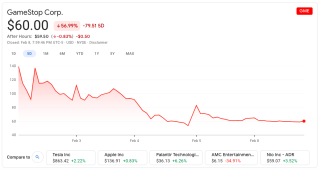
Who are the investors in the market for GameStop common stock, options, and short positions now? Who will they be in a month or six months or a year (assuming a trading market can be sustained)? And what do the changes in GameStop’s investor profile say about the firm itself, about the New York Stock Exchange, and about various related aspects of securities regulation?
There remain few answers to the fundamental question of who owns or is trading in GameStop’s publicly traded common stock. Nevertheless, there are many worthy conversation