
Photo of Joan Heminway

Professor Heminway brought nearly 15 years of corporate practice experience to the University of Tennessee College of Law when she joined the faculty in 2000. She practiced transactional business law (working in the areas of public offerings, private placements, mergers, acquisitions, dispositions, and restructurings) in the Boston office of Skadden, Arps, Slate, Meagher & Flom LLP from 1985 through 2000.

She has served as an expert witness and consultant on business entity and finance and federal and state securities law matters and is a frequent academic and continuing legal education presenter on business law issues. Professor Heminway also has represented pro bono clients on political asylum applications, landlord/tenant appeals, social security/disability cases, and not-for-profit incorporations and related business law issues. Read More

In a recent California appellate opinion disposing of the second appeal of an earlier judgment seems to have the court irritated.  It does appear the appellant was trying to relitigate a decided issue, so perhaps that’s right.  But the court makes its own goof.  After referring repeatedly to the “limited liability company” at issue, the court then goes down a familiar, and disappointing, path.  The court explains: 

In any event, the Supreme Court opinion which Foster contends we disregarded, Essex Ins. Co. v. Five Star Dye House, Inc. (2006) 38 Cal.4th 1252, 1259, has no relevance here. Essex decided whether an assignee of a bad faith claim could also recover attorney fees. (Ibid.) This holding has nothing to do with whether a limited liability corporation may assign its appellate rights in an improper attempt to circumvent the rules requiring corporations to be represented by attorneys.
JENNITA FOSTER, Plaintiff & Appellant, v. OLD REPUBLIC DEFAULT MANAGEMENT SERVICES, Defendant & Respondent., No. B280006, 2018 WL 4075910, at *2 (Cal. Ct. App. Aug. 27, 2018) (emphasis added).  
 
It’s not clear whether Essex Insurance Company is an LLC or a corporation, though it’s a strong bet it is a

Senator Elizabeth Warren last week released her Accountable Capitalism Act. My co-blogger Haskell Murray wrote about that here, as have a number of others, including Professor Bainbridge, who has written at least seven posts on his blogCountless others have weighed in, as well.

There are fans of the idea, others who are agnostic, and still other who thinks it’s a terrible idea. I am not taking a position on any of that, because I am too busy working through all the flaws with regard to entity law itself to even think about the overall Act.

As a critic of how most people view entities, my expectations were low. On the plus side, the bill does not say “limited liability corporation” one time.  So that’s a win. Still, there are a number of entity law flaws that make the bill problematic before you even get to what it’s supposed to do.  The problem: the bill uses “corporation” too often where it means “entity” or “business.”

Let’s start with the Section 2. DEFINITIONS.  This section provides:

 (2) LARGE ENTITY.—

(A) IN GENERAL.—The term ‘‘large entity’’ means an entity that—

(i) is organized under the laws of a State as

According to its website,

The U. S. Securities and Exchange Commission (SEC) has a three-part mission:

  • Protect investors

  • Maintain fair, orderly, and efficient markets

  • Facilitate capital formation

I think it needs to add: “Ensure proper entity identification.” 

Examples abound. Take this recent 10-Q:

On June 27, 2018, the Company formed a joint venture with Downtown Television, Inc., for the purpose of developing, producing and marketing entertainment content relating to deep-sea exploration, historical shipwreck search, artifact recovery, and expounding upon the history of these shipwrecks.  The joint venture is being formed as a new limited liability corporation that will be 50% owned each by EXPL and Downtown, and has been named Megalodon Entertainment, LLC. (“Megalodon”), as is further described in Note B. 

Endurance Exploration Group, Inc., SEC 10-Q, for the quarterly period ended: June 30, 2018 (emphasis added). 

Side note: That 10-Q, I will note, raised some other questionable decisionmaking, as it goes on to report: 

NOTE B – JOINT VENTURE

EXPL Swordfish, LLC

Effective January 9, 2017, the Company, through a newly formed, wholly owned subsidiary, EXPL Swordfish, LLC (“EXPL Swordfish”), entered into a joint-venture agreement (“Agreement”) with Deep Blue Exploration, LLC, d/b/a Marex (“Marex”).  The joint venture between

It’s not just judges and lawyers. Big banks, too, are apparently not committed to clear and accurate language when it comes to LLCs (limited liability companies).  A recent antitrust case provides an excerpt from a Barclays Settlement Agreement that states:

Paragraph 2(cc) of the Barclays Settlement Agreement defines “Person” as: “An individual, corporation, limited liability corporation, professional corporation, limited liability partnership, partnership, limited partnership, association, joint stock company, estate, legal representative, trust, unincorporated association, municipality, state, state agency, any entity that is a creature of any state, any government or any political subdivision, authority, office, bureau or agency of any government, and any business or legal entity, and any spouses, heirs, predecessors, successors, representatives, or assignees of the foregoing.” Barclays Settlement Agreement ¶ 2(cc).

In re LIBOR-Based Fin. Instruments Antitrust Litig., No. 11 CIV. 5450, 2018 WL 3677875, at *20 (S.D.N.Y. Aug. 1, 2018) (emphasis added). 
 
I checked to see if this was the court’s error, but I found a link to what appears to be the settlement agreement, and it, too, includes “limited liability corporation” in paragraph (cc)’s definition.  Given that it is an error in the original, the judge, or at least the

I am probably late to the game on this, but I just realized that Uber promotes their drivers as “driver-partners.”  It’s even in their ads. This seems unwise.  

Uber has a history linked to the question about whether their drivers are employees or independent contractors. But what about the question of whether Uber drivers are partners or independent contractors? That is big, potential liability conundrum.

Now, just because one says they are partners, that does not make it so, at least as to each other. The converse is also true — saying expressly “this agreement does not form a partnership” does not necessarily mean a court won’t find one. See, e.g., Martin v. Peyton, 158 N.E. 77 (NY 1927) (“Statements that no partnership is intended are not conclusive.”).  But, as to third parties, at a minimum, affirmative statements that one is a partner, can create liability for those involved.  The Uniform Partnership Act (1914) § 16. Partner by Estoppel, provides:

(1) When a person, by words spoken or written or by conduct, represents himself, or consents to another representing him to any one, as a partner in an existing partnership or with one or more persons not actual partners,

An Illinois appellate court decision that was just made available on Westlaw provides some revealing insight into Hydra, the longtime source of evil that many recognize from Captain America: The First Avenger

Hydra stated that Hydra’s manager is Ahuva Horowitz, defendant’s wife, and that she owns 100% of the membership interests of Hydra a limited liability corporation.

Xcel Supply LLC v. Horowitz, 2018 IL App (1st) 162986, ¶ 14, 100 N.E.3d 557, 561, reh’g denied (Mar. 9, 2018) (emphasis added). 

First, let’s correct the record: Hydra is listed as an LLC, a limited liability company. It is not a corporation.  

Second, I should also note, after further review, it’s not really THAT Hydra. It is apparently not this one:

In a prehuman time, a cabal of cold-blooded alien reptiles arrived on Earth, planning to start a legacy of evil. They planted the seed that would later gave birth to future evil empires. 

So, instead, the instant Hydra is Hydra Properties, LLC, which came into existence in 2009. That makes more sense, but it’s a lot less interesting.  

Still, either way, and for either Hydra, if it’s Hydra LLC, it’s not a corporation.

Had I not been taking pictures on the beach during a morning walk with dear college friends on the New England shoreline, I would not have seen the incoming call on my silenced cell phone–a call from a business law colleague from UT Law that I figured I ought to answer.  But the call was not, as I expected, a request for help with a research or teaching question.  Instead, this colleague was calling to inform me of an email message from our Dean letting us know that our junior business law colleague, Jonathan Rohr, had died the day before.  (I am linking here to a YouTube video featuring Jonathan, which will tell you much more about the man that he was than any CV or website.)

Jonathan came into my life almost two years ago when he interviewed with UT Law for a permanent, tenure track position after VAP-ing at his law alma mater, Cardozo.  From the start, Jonathan impressed me and others on the Appointments Committee with his intellect, his enthusiasm for the faculty task, and his intensity.  He survived the appointments tournament and came to work with us last summer.  Before his untimely death, he already

I am both a business law professor and an energy law professor, which is sometimes surprising to people. That is, some folks are surprised that have a research focus in two areas that are seemingly very distinct.  In one sense, that’s true, at least in the academic realm.  Most energy law scholars tend to have a focus on more close related disciplines, such as environmental law, administrative law, and property law.  And business law scholars tend to trend toward things like commercial law, bankruptcy, tax, and contracts.  

There is substantial overlap, though, in the energy and business law spaces, as I have noted on this blog before. I am even working on some research that looks specifically at the role laws and regulations have on business and economic development.   My work with the WVU Center for Innovation in Gas Research and Utilization builds on this energy and business nexus. 

I am pleased to share a newly published article I wrote with Amy Stein from the University of Florida’s Levin College of Law. The piece is called Decarbonizing Light-Duty Vehicles, and it appears in the July issue of Environmental Law Reporter. It is available here. This article

Bernard Sharfman has posted Dual Class Share Voting versus the “Empty Voting” of Mutual Fund Advisors’ and it is an interesting read.  He argues: 

Dual class shares (shares with unequal voting rights) arise when the board of directors of a company decides to raise capital through the sale of newly issued shares, but wants one or more insiders, who may be giving up economic control through the issuance of the shares, to retain voting control in the company.  Typically, this occurs in an initial public offering (IPO), but it can also occur before.  In an IPO, a company will usually issue a class of common stock to the public that carries one vote per share (ordinary shares), while reserving a separate class, a super-voting class, that provide insiders with at least 10 votes per share.  However, both types of shares will have equal rights to the cash flow of the company.  The issuance of dual class shares may create a wide gap between voting and cash flow rights over time, especially if the insiders periodically sell a significant amount of their ordinary shares.

But this is the critical point.  A dual class share structure cannot exist without the permission of

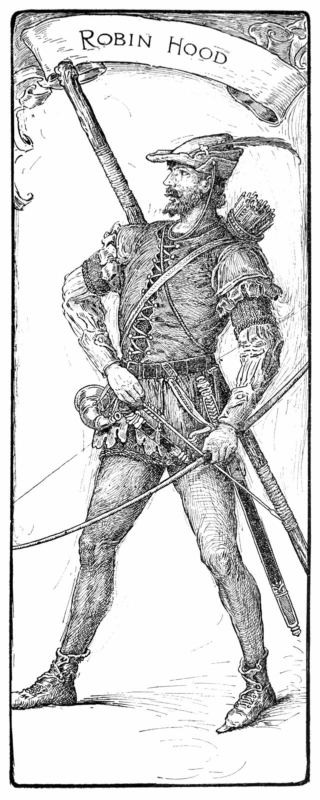
RobinHood

What would the world look like if a public company officer or director, recognizing the value of material nonpublic firm information in his possession and intending to benefit people of limited means, gave this valuable information to those less fortunate without the knowledge or consent of the firm and without any expectation of benefit in return? How, if at all, do we desire to regulate that behavior? The officer or director apparently would be in breach of his or her fiduciary duty absent a valid, binding, and enforceable agreement to the contrary. Does that conduct also, however, violate U.S. federal insider trading rules? Should it? This article, a relatively short piece that I wrote for a “virtual symposium” issue of the Washington University Journal of Law & Policy, offers answers to those questions.

Other symposium authors with insider trading pieces in this volume include:

John Anderson 
Steve Bainbridge
Frank Gevurtz
Zach Gubler
Peter Henning
Roberta Karmel
and
Yesha Yadav

Great reading on this topic, all around.  As we await the next insider trading regulation volley after Salman v. United States, this collection of essays and articles fills a nice gap.  Although the issue is not yet posted to the