


Photo of Stefan J. Padfield

Director of the NCPPR's Free Enterprise Project. Prior experience includes 15+ years as a law professor, two federal judicial clerkships, private practice at Cravath, Swaine & Moore, LLP, and 6 years enlisted active duty (US Army). Immigrant (naturalized).

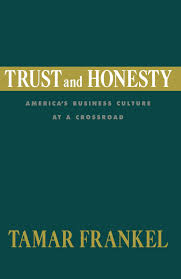
Frankel OConnor Yale

Each summer, I try to read a few books related to work and a few books not related to work.

This summer, I have tagged Tamar Frankel’s Trust and Honesty: America’s Business Culture at a Crossroad and Flannery O’Connor’s Everything That Rises Must Converge.

Open to other reading suggestions in the comments. I have a pretty deep “want to read” list, but am always looking for more additions.

I am also listening to a Yale online course called Philosophy and the Science of Human Nature, taught by Tamar Gendler. I am already more than halfway finished with the course – mostly listening in the car or while doing various chores. While I did not take any Philosophy courses in college, much of the material is more familiar than I would have thought. These open courses have been fun, and I am open to suggestions of other good courses.  

My former research assistant Sam Moultrie and his colleague Andrea Schoch Brooks have authored a short article entitled “Defining a Proper Purpose for Books and Records Actions in Delaware.

The article unpacks two recent Delaware books and records cases: AbbVie and Citigroup. Worthwhile reading for those who wish to stay current on this area of the law. 

Recently, I have seen a fair bit written about states, the federal government, and individual firms raising or potentially raising the minimum wage for the lowest paid workers.

Low pay, however, is only one of many problems facing low-wage earners.

After hearing Charlotte Alexander (Georgia State) present on this co-authored paper – Stabilizing Low-Wage Work: Legal Remedies for Unpredictable Work Hours and Income Instability – I have become convinced that unpredictable work hours is a significant issue. The article is well worth reading. 

Unpredictable work hours can be problematic for many people – attorneys in BigLaw for example – but low-wage earners do not have disposable income to throw at the problem. Childcare and transportation, for example, become even more of a challenge when work hours are not stable and not set in advance.  Unpredictable, inconsistent work hours also hamper economic mobility by making it difficult or impossible to take classes or get a second job.    

For more on this issue, listen to MIT Operations Management Professor Zeynep Ton’s talk at the Aspen Institute. Her discussion of Mercadona, a low-cost supermarket based in Spain (discussion starts at 14:50), and QuickTrip, a convenience store with gas

The following comes to us from Lee Epstein, Ethan A.H. Shepley Distinguished University Professor at Washington University in St. Louis.

The 14th annual workshop on Conducting Empirical Legal Scholarship, co-taught by Lee Epstein and Andrew D. Martin, will run from June 15-June 17 at Washington University in St. Louis. The workshop is for law school faculty, lawyers, political science faculty, and graduate students interested in learning about empirical research and how to evaluate empirical work. It provides the formal training necessary to design, conduct, and assess empirical studies, and to use statistical software (Stata) to analyze and manage data.

Participants need no background or knowledge of statistics to enroll in the workshop. Registration is here. For more information, please contact Lee Epstein.

I attended this workshop a few years ago, and thought it was excellent.