CNM

On May 12, 2015, I will present at a breakout session of the Center for Nonprofit Management’s 8th Annual Bridge to Excellence Nonprofit Conference. My talk will focus on the legal issues facing entities with multiple bottom lines. 

If interested, you can register here.

As you can tell from the conference description, this conference is designed for nonprofit and community leaders. From the conference schedule, it appears that I will be the only professor presenter. While I enjoy academic conferences, and find them useful, I also think it is important for professors to engage with practitioners. Professors should share the knowledge they have uncovered and should also listen to the current, practical concerns. 

I currently teach two classes that are on the bar exam—civil procedure and business associations. Many of my BA students are terrified of numbers and don’t know much about business and therefore likely would not take the course if it were not required. I know this because they admit that they take certain classes only because they are required or because they will be tested on the bar, and not because they genuinely have an interest in learning the subject. I went to Harvard for law school and although I had an outstanding education, I learned almost nothing that helped me for the NY, NJ, or FL bars (hopefully that has changed). I owe all of my bar passages to bar review courses so naturally (naively?), I think that almost any student can learn everything they need to know for the bar in a few short months assuming that they had some basic foundation in law school and have good study habits.

The pressure to ensure that my students pass the bar exam definitely informs the way I teach. Though there has only been one round of civil procedure testing on the multistate, this semester I found myself ensuring that

This coming Monday, I will be presenting – virtually – at the above titled conference. My piece of the presentation will cover my recent research on benefit corporation reporting.

Further information is available here and reproduced below. Personally, I am looking forward to hearing from the many impressive speakers, including Sara Burgess, the Regulator of Community Interest Companies in the UK.

May 11, 2015

08:00 AM – 06:00 PM ET

Morgan Lewis, in conjunction with the Impact Investing Legal Working Group, invites you to join us for an exclusive all-day conference featuring panels of leading lawyers who work in the area of impact investing—in business, academia, government, multilateral development institutions, and nonprofit organizations and foundations.

Topics will include:

How are investors aggregating capital for impact investing?

What are the newest social finance innovations in impact investing?

How can we build a robust legal community of practice in impact investing?

How can we advance the development of regulatory regimes and government policies that promote impact investing?

Details

8:00 – 8:30 AM | Registration

8:30 – 6:00 PM | Program

6:00 PM | Networking reception

View the agenda >>

Credit

CLE credit in CA (1.25 hours),

Monday, I had the privilege of moderating a discussion on structuring merger and acquisition transactions that I had organized as part of a continuing legal education program for the Tennessee Bar Association.  Rather than doing the typical comparison/contrast of different business combination structures (with charts, etc.), I organized the hour-long discussion around the banter that corporate/securities and tax folks have in structuring a transaction.  We used the terms of a proposed transaction (an LLC business being acquired by a public corporation) as a jumping-off point.

The idea for the format came from a water cooler conversation–literally–among me (in the role of a corporate/securities lawyer), one of my property lawyer colleagues, and one of my tax lawyer colleagues.  The conversation started with a question my property law colleague had about the conveyance of assets in a merger.   I told him that mergers are not asset conveyance transactions but, rather, statutory transactions that have the effects provided for in the statute, which include a vesting of assets in the surviving corporation.  I told him that I call this “merger magic.”  I showed him Section 259(a) of the Delaware General Corporation Law:

When any merger or consolidation shall have become effective

Benjamin Means (South Carolina) recently posted a new article to SSRN entitled Wealth Inequality and Family Businesses. The article is forthcoming in the Emory Law Journal.

This article builds on Ben’s previous, extensive and well-regarded research on family businesses. Ben’s analysis of the relationship between family businesses and wealth inequality is carefully done and thought-provoking. The abstract is posted below, and I recommend reading the entire article.

Wealth inequality endangers democratic values and calls for a public response. This Article contends that family businesses merit special scrutiny because they control vast amounts of private wealth and combine two of society’s most important economic institutions: family and business. Accordingly, family businesses implicate concerns regarding both inherited wealth and the concentration of economic power made possible by the corporate form.

Despite their economic significance, little has been done to investigate whether family businesses contribute to wealth inequality. This Article offers the first legal, and one of the only academic, treatments of the topic and shows that family businesses play a double role. On the one hand, family businesses reinforce existing disparities in wealth and opportunity. Heirs, after all, stand to benefit from the hard work of previous generations. On the

Almost three years ago, I helped organize a conference on social enterprise law. (The law review members, especially Rachel Bauer and Sam Moultrie, were responsible for most of the organizing and did an excellent job). 

My co-bloggers Joan Heminway and Marcia Narine were among the speakers.

Also joining us was Michael Pirron of Impact Makers, one of the first certified B corporations in Virginia. While Impact Makers was a certified B corporation at the time of the conference, it was organized as a Virginia nonstock corporation; now Impact Makers is organized as a benefit corporation. Michael did an excellent job serving as a panelist and the keynote speaker.

Recently, I saw Michael back in the news. He transferred ownership of his company (valued at approximately $11.5 million) to two foundations. As Michael mentioned to me over e-mail, this was not a radical departure from his previous business model for Impact Makers. Previously, Impact Makers donated 100% of its profits to area charities, so this move just formalized their previous commitment.  Impact Makers has given away approximately $1 million to date.

At the University of Connecticut social enterprise and entrepreneurship conference I attended and presented at last

OK.  So, Tennessee is not Delaware.  But the Tennessee legislature and Supreme Court have been busy bees this spring on business law matters.   Here’s the brief report.

In the last week of the legislative term, the Tennessee Senate and House adopted the For-Profit Benefit Corporation Act, about which I earlier blogged here, here, and here.  Although I remain skeptical of the legislation, it looks like the governor will sign the bill.  So, we will have benefit corporations in Tennessee.  We’ll see where things go from there . . . .

The Tennessee legislature also passed a technical corrections bill for the Tennessee Business Corporation Act.  The bill was drafted by the Tennessee Bar Association’s Business Entity Study Committee (on which I serve and to which I have referred in the past), a joint project of the Tennessee Bar Association’s Business Law Section and Tax Law Section.  The governor has already signed this bill into law.

Separately, in a bit of a stealth move (!), the Tennessee Supreme Court recently announced the establishment of a business court, an institution many other jurisdictions already have.  The court is being introduced as a pilot project in Davidson County (where Nashville resides)–but only, as I understand it, to iron the kinks out before introducing the court on a permanent basis.  Interestingly, the Tennessee Bar Association Business Law Section Executive Council was not informed about the new court project until its public announcement in the middle of March.  Although we found that a bit odd, the “radio silence” is apparently attributable to the excitement of the Tennessee Supreme Court to get the project started effective as of May 1 and the deemed lack of need for a study on the subject before proceeding.  Regardless, I think it’s safe to say that the bar welcomes the introduction of a court that specializes in business law cases as a matter of principle.  Again, we’ll see where it goes from here.

A few reflections on all this follow.

Last week, the Deal Professor, Steven Davidoff Solomon, wrote an article titled, The Boardroom Strikes Back. In it, he recalls that shareholder activists won a number of surprising victories last year, and more were predicted for this year. That prediction made sense, as activists were able to elect directors 73% of the time in 2014.  This year, though, despite some activist victories, boards are standing their grounds with more success.  

I have no problem with shareholders seeking to impose their will on the board of the companies in which they hold stock.  I don’t see activist shareholder as an inherently bad thing.  I do, however, think  it’s bad when boards succumb to the whims of activist shareholders just to make the problem go away.  Boards are well served to review serious requests of all shareholders, but the board should be deciding how best to direct the company. It’s why we call them directors.  

As the Deal Professor notes, some heavy hitters are questioning the uptick in shareholder activism: 

Some of the big institutional investors are starting to question the shareholder activism boom. Laurence D. Fink, chief executive of BlackRock, the world’s biggest asset manager, with $4 trillion, recently issued a well-publicized letter that criticized some of the strategies pushed by hedge funds, like share buybacks and dividends, as a “short-termist phenomenon.” T. Rowe Price, which has $750 billion under management, has also criticized shareholder activists’ strategies. They carry a big voice.

I am on record being critical of boards letting short-term planning be their primary filter, because I think it can hurt long-term value in many instances.  I don’t, however, think buybacks or dividends are inherently incorrect, either.  Whether the idea comes from an activist shareholder or the board doesn’t really matter to me.  The board just needs to assess the idea and decide how to proceed.  

[Please click below to read more.]

The following guest blog post on my recent article,  Institutional Investing When Shareholders Are Not Supreme, is available at Columbia’s Blue Sky Blog discussing institutional investors’ attitudes towards alternative business forms and similar issues raised by Etsy’s IPO.

-Anne Tucker

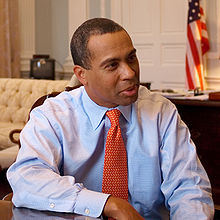
Bain Deval

The New York Times DealB%k recently reported that Deval Patrick, former governor of Massachusetts, will join Bain Capital to head a new social impact fund.

These types of social impact funds seem to becoming more and more common. Social impact funds, however, vary greatly. Some social impact funds appear to be primarily focused on profits (while simply avoiding some “sin stocks“), others focus on serious social enterprises, and others fall somewhere in-between.