Jet lag prevented me from posting this yesterday.  (Yes, I am scheduled to be the BLPB every-Monday blogger going forward.)  But at least I am awake enough now to post a bit more on the 7th International Conference on Innovative Trends Emerging in Microfinance (ITEM 7 Conference) I attended last week in Shanghai, China.  My initial post on Wednesday provided some information on Chinese microfinance and the initial day of the conference.  This week, my post focuses on definitional questions that I have been pondering relating to my participation in this series of conferences.  Specifically, I have been sorting through the relationship between microfinance and crowdfunding.  My understanding continues to evolve as I become more familiar with the literature on and practice of microfinance internationally.

At the conference, one of the participants noted that while microfinance and crowdfunding appear to be mutually reinforcing, they still do not enjoy comfortable relations in scholarship and practice.  After weighing that statement for a moment, I had to agree.  I actually have been personally struggling with the nature of the relationship between the two for a few years now.  (I often wonder whether folks like co-blogger Haskell Murray who commonly work in the social
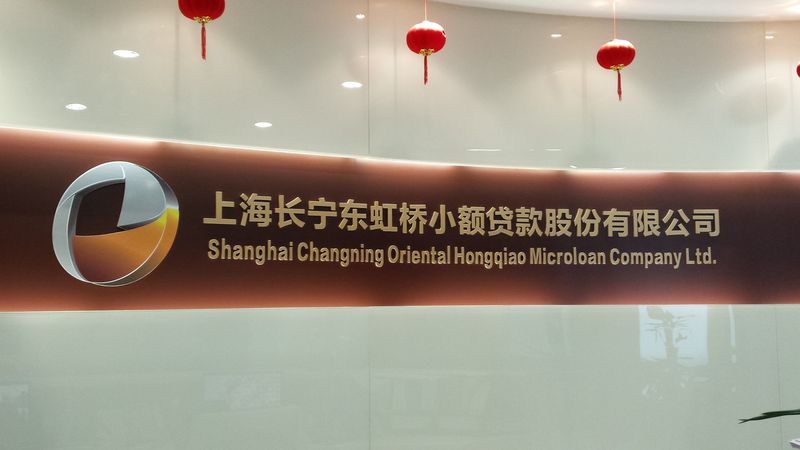
ITEM7(MFIVisit-1)

Between jet lag and the comprehensive conference proceedings and activities here in Shanghai, it’s all I can do to stay awake to finish this post . . . . But I am not complaining. Shanghai is a wonderful city, and the 7th International Conference on Innovative Trends Emerging in Microfinance (ITEM 7 Conference) has been a super experience so far.

Given my sleep-deprived state, I will just share with you here today a few key outtakes from the presentations we had yesterday (at a pre-conference site visit to the largest microfinance lender in Shanghai) and earlier today (at the conference itself) on microfinance in China.  Here goes.

  • Chinese microfinance is not really microfinance, in major part. It is SME (small and medium enterprise) lending. MSE loans are loans up to  30,000,000 Yuan RMB (about $4,600,000), and the average single loan amount for MSE lending is about  5,000,000 Yuan RMB (just under $770,000).
  • Unlike those in archetypal microfinance and those involved in actual micro-credit lending transactions in many other countries, borrowers in Chinese microfinance lending (such as it is) are largely men rather than women.
  • Despite these and other marked differences between Chinese microfinance and global microfinance, Chinese microfinance data does not

It’s fun when students are interested in your scholarship.  Yesterday, one of my students engaged me to talk about my work on limited liability operating agreements as contracts.  (I have mentioned this work in class, and the student also is a regular reader of this blog, where I have referenced this work a number of times, including most prominently here.)  He began the exchange with something akin to the following question: “Why is it that we take two full semesters of contract law during the first year of law school and then all but ignore the connection of contract law to business entities once we get to Business Associations?”

I think I know what he means.  While the segregation of legal doctrine by subject matter in law schools enables instructors to focus students narrowly on a single–often new–body of law, it also tends to obscure the interconnections between and among applicable bodies of law, including connections between contract law and the law of business entities.  Admittedly (and I pointed this out to the student), the typical Business Associations course does typically address contracts at several points.  These junctures include, among others, the course segment in which sole proprietorships are distinguished from statutory forms of business

I am looking forward to presenting at this conference next month. Looks like a great group of academics and practitioners.

—————–

University of Cincinnati College of Law

The 29th Annual Corporate Law Center Symposium – Corporate Social Responsibility and the Modern Enterprise

March 18, 2016

8:45 a.m. – 3:30 p.m.

Hilton Netherland Plaza

Pavilion Ballroom

This event is free. CLE: 5.0 hours, pending approval.

Presented by the University of Cincinnati College of Law’s Corporate Law Center and Law Review.

Symposium materials will be available on March 14 at: law.uc.edu/corporate-law-center/2016-symposium

Please register by contacting Lori Strait: email Lori.Stait@uc.edu; fax 513-556-1236; or phone 513-556-0117

Introduction, 8:45 a.m.

Keynote, 9:00 a.m.

Clare Iery, The Procter & Gamble Company

Social Enterprises and Changing Legal Forms, 9:30 a.m.

Mark Loewenstein, University of Colorado Law School

William H. Clark, Jr., Drinker Biddle & Reath LLP

Haskell Murray, Belmont University College of Business

Russell Menyhart, Taft Stettinius & Hollister LLP

Sourcing Dilemmas in a Globalized World, 11:00 a.m.

Steve Slezak, University of Cincinnati College of Business

Marsha A. Dickson, University of Delaware Department of Fashion & Apparel Studies

Tianlong Hu, Renmin University of China Law School

Anita Ramasastry, University of Washington School of Law

CSR

At the request of Tom Rutledge, chair of the American Bar Association Section of Business Law’s Committee on LLCs, Partnerships and Unincorporated Entities (that sure is a mouthful!),  I am passing on the following:

While the dates are still being resolved, this October, 2016, the Committee of LLCs, Partnerships and Unincorporated Entities will again be sponsoring a two-day LLC Institute in Arlington, Virginia. This program brings together more than 100 high-level practitioners and academics to review a variety of issues involving the law of unincorporated business organizations. In recent years presentations have been made by Joan Heminway, Carter Bishop, Dan Kleinberger, Colin Marks, Michelle Harner and Benjamin Means. I think each will vouch for the quality of the program.

We are actively soliciting proposals for panels. If you are working on something, or if there is something you would like to discuss before an audience that I can guarantee will be “hot”, please let me know.

Thanks.

Tom Rutledge
Thomas.rutledge@skofirm.com

Indeed, I can vouch for the program, at which I have presented twice.  There typically is an opportunity presented to write a short piece for Business Law Today, if you are interested.  My contribution from the

Image013


Development Studies Workshop
Organized by the
Banque Populaire Chair in Microfinance of the Burgundy School of Business (Dijon, France)
In collaboration with
BG Foundation (India)
With Support from
VLCC (India)

Theme: Spirituality, Organization and Development
Dates: 28th and 29th October, 2016
Venue: Gurgaon/Delhi (India)

At a time of terrorism, war, and general confusion on human values, there is increasing concern to develop the world in a more sustainable manner. Harmony with nature, ethics, morality and even spirituality is being sought at an individual level, at an organizational level and at the macro level, while continuing the focus on development and making life worth living for all our fellow human-beings. At this juncture, more and more academics and practitioners are turning towards religion to see if some spiritual lessons can be incorporated for an enhanced work-life. At the very least, understanding the spiritual culture of different persons is important to work in global corporations. It is even more important to understand large waves of immigrants and to mentally prepare for their differences in values. The theme of this workshop is therefore relevant to promote human understanding in a globalized world.

A research workshop’s primary aim is to help each other improve our papers so that we can publish in high ranked international journals and specialized books on a topic. For this, we would like to bring together a large diversity of researchers from different backgrounds to focus on a relevant and interesting theme, which is meaningful to the present moment.

Topics

While papers in any of these individual themes is welcome, papers combining two or more elements of spirituality, organization and economic development will be given preference.

Examples of possible topics combining two themes (not exclusive, not exhaustive) to spark your thoughts:

  1. Spiritual Development
    a. Yoga in the workplace
    b. Gandhism and sustainable development
    c. Organizing Ayurvedic health systems
  2. Organizational Development
    a. Organization Leadership and community development
    b. Corporate transformation through Islamic Finance
    c. Managing Conflicts through the Art of Living
  3. Economic Development
    a. Microfinance and Hinduism
    b. Confucianism and development of intellectual property rights
    c. Economics of Spiritual tourism of Christian holy places

Please send abstracts by April 15, 2016 to microfinancechair@escdijon.eu. 

Guidelines for Abstracts (150 to 300 words)

Title of the paper
Author Information: Names, designations and affiliations, current locations (city, country)
Research purpose
Theoretical Background
Research design/methodology/approach
Key results
Impact (on new research or on new practices, policies)
Value added/ Originality

Note

There will be no parallel sessions. A minimum of six and a maximum of fifteen working papers can be presented.
Abstracts will be selected based on conformity to the theme and diversity of origins.
A few people whose abstract is not accepted can opt for being discussants or participants, subject to place availability.

[more below the fold]

Last week, I threatened that I might have outtakes from the the Association of American Law Schools (“AALS”) panel discussion for the Section on Agency, Partnerships, LLCs and Unincorporated Associations, “Contract is King, But Can It Govern Its Realm?”.  The “conversation” between panelists and among panelists and audience members was rich and far-ranging, although much of it was not “new news” to those of us focused on the many legal questions relating to contracts in the unincorporated business associations space.  Here is my brief additional comment on the panel discussion, ex post.  A recording of the session should later be available, for those interested in listening in.

Although most of the discussion was intentionally not scripted (but, rather, organized by a set of questions shared with the panelists in advance), a few of us did have assignments.  I was charged with two key areas of earmarked participation.  First, I accepted an invitation to identify and categorize non-Delaware state law issues at the intersection of unincorporated business association law, contract law, and legislative drafting.  Second, I was invited to comment on my work on the LLC [operating] agreement as contract (or non-contract).  Although each topic is worthy of

I will miss many of you at AALS this weekend because on Sunday morning I am speaking on a panel on corporate social responsibility in small businesses and startups at a conference for the United States Association for Small Business and Entrepreneurship (USASBE) in San Diego. My co-panelists include: Julian Lange, Governor Craig R. Benson Professor of Entrepreneurship and Public Policy, Associate Professor, Babson College; Megan M. Carpenter, Professor of Law, Co-Director, Center for Law and Intellectual Property, Faculty Director, IP and Technology Law Clinic, Faculty Director, Entrepreneurship Law Clinic, Texas A&M University School of Law; Sandra Malach, Senior Instructor, Entrepreneurship & Innovation, Haskayne School of Business, University of Calgary, Canada, former counsel at the Venture Development Legal Clinic, and previous positions at Stantec Engineering, Bennett Jones Barristers & Solicitors, Enron, and SAIT; and John Tyler, General Counsel and Corporate Secretary, the Ewing Marion Kauffman Foundation. The abstract that we presented to conference organizers stated:

Entrepreneurial and small businesses are increasingly incorporating “people, planet, and profits” into their business models and operations to a degree that goes beyond simply fulfilling the requirements of government regulations. Moreover, it can be argued that expanding a company’s mission to include

The AALS Annual meeting starts today in New York.  The full program is available here, and listed below are two Section meeting announcements of particular interest to business law scholars:

Thursday, January 7th from 1:30 pm – 3:15 pm the SECTION ON AGENCY, PARTNERSHIP, LLC’S AND UNINCORPORATED ASSOCIATIONS, COSPONSORED BY TRANSACTIONAL LAW AND SKILLS will meet in the Murray Hill East, Second Floor, New York Hilton Midtown for a program titled:

“Contract is King, But Can It Govern Its Realm?”  

The program will be moderated by Benjamin Means, University of South Carolina School of Law.  Discussants include:

  • Joan M. Heminway, University of Tennessee College of Law
  • Lyman P.Q. Johnson, Washington and Lee University School of Law
  • Mark J. Loewenstein, University of Colorado School of Law
  • Mohsen Manesh, University of Oregon School of Law
  • Sandra K. Miller, Professor, Widener University School of Business Administration, Chester, PA

BLPB hosted an online micro-symposium in advance of the Contract is King meeting.  The wrap up from this robust discussion is available here.

Friday January 8th, from 1:30 pm – 3:15 pm join the SECTION ON BUSINESS ASSOCIATIONS AND LAW
AND ECONOMICS JOINT PROGRAM at the Sutton South, Second Floor, New York Hilton Midtown for a program titled:

 “The Corporate

On Saturday, January 9, 2016, I will be spending the day at the AALS Section on Socio-Economics Annual Meeting at the Sheraton New York Times Square Hotel.  Among other things, I will be part of a panel discussion from 9:50 – 10:50 AM, Death of the Firm: Vulnerabilities and the Changing Structure of Employment.  My co-panelists will be June Carbone and Katherine Stone (I am very tempted to give up my 15 minutes and just sit back and listen to these two great scholars, but please don’t use the comments section to encourage me to do that).  As I understand it, the gist of the discussion will be that while firms once supported a significant part of the safety net that provided employee health and retirement benefits, they have recently abdicated more and more of these responsibilities.  At the same time, however, what may be described as subsidies granted by the state to firms — particularly corporations — as part of a social contract whereby these firms provided the aforementioned benefits, have not been correspondingly reduced.  In fact, the rights of corporations have been expanded by, for example, cases like Citizens United and Hobby Lobby — suggesting a possible windfall