Jim Park, Chair of the Section on Business Associations of the Association of American Law Schools recently sent section members a reminder message relating to submissions for the section’s program for the 2023 Annual Meeting.  The extended deadline for submissions is Tuesday.  I blogged about the call for papers back in May (the post includes the entire initial call for papers) and am including an excerpted version of Jim’s recent message below for ease of reference.

*****

Dear Members of the AALS Business Associations Section:

I am writing to let you know that the deadline for submitting a paper for presentation at our program in San Diego on January 4, 2023 has been extended to Tuesday, Sept. 6, 2022. The topic of the program is Corporate Governance in a Time of Global Uncertainty. Please send all submissions to Mira Ganor at mganor@law.utexas.edu with the words “AALS – BA- Paper Submission” in the subject line of your submission email. . . .

Thanks, Jim

*****

I hope folks whose research addresses the call will send along their work for consideration.  The annual meeting program often is a great way to jumpstart the new semester and
Another semester teaching business associations law is just around the corner. In fact, our fall semester begins next week.  This post is dedicated to those who, like me, are prepping for and teaching that course this semester.

I was invited to participate in a discussion group entitled “Pressure on and Backlash against Corporations as Political Actors” at the 2022 Southeastern Association of Law Schools (SEALS) annual conference last week.  The description for the session is as follows:

When businesses wade into political issues like abortion, the environment, gun control, LGBTQ rights, Black Lives Matter, and international affairs, they potentially face consumer backlash and even governmental retribution. Remaining silent can also be risky, potentially upsetting other consumers and employees. And silence/inaction is not always an option: either a business remains in Russia after its invasion into Ukraine or closes its operations there, sometimes at considerable expense. This discussion group will analyze these issues from corporate, tax, policy, electoral, and constitutional law perspectives. Should businesses like Nike, McDonalds, Disney, and Ben & Jerry’s take political stances, stay out of politics altogether, focus on profits or something broader, and what are the practical and legal ramifications of these views? More broadly, what is

INSTITUTE FOR LAW & ECONOMICS (ILE)
AT
THE UNIVERSITY OF PENNSYLVANIA CAREY LAW SCHOOL

INAUGURAL JUNIOR FACULTY BUSINESS AND FINANCIAL LAW WORKSHOP

CALL FOR PAPERS

The Institute for Law & Economics (ILE) at The University of Pennsylvania Carey Law School is pleased to announce its inaugural Junior Faculty Business and Financial Law Workshop. The Workshop will be held in person on December 8, 2022 at Penn Law School, unless pandemic protocols require otherwise.

The Workshop supports and recognizes the work of untenured legal scholars in accounting, banking, bankruptcy, corporations, economics, finance and securities regulation and litigation, while promoting interaction among them and selected tenured faculty and practitioners. By providing a forum for the exchange of creative ideas in these areas, ILE also aims to encourage new and innovative scholarship in the business and financial arena.

Approximately 6-8 papers will be chosen from those submitted for presentation at the Workshop pursuant to this Call for Papers. At the Workshop, one or more senior scholars and practitioners will provide comments , followed by a general discussion of each paper among all participants. The Workshop audience will include invited untenured academics, faculty from Penn Law School, Penn’s Wharton School and other institutions, practitioners

Greetings from Cervera, Spain.  As you know from my post last week, I am traveling in the Catalonia region of Spain for a few days this week after the 2022 Law and Society Association Global Meeting on Law and Society, which was held in Lisbon, Portugal this year.  I have the blessing of staying with a friend (whom I met through Zoom mindful yoga practices during the pandemic) in her private home.

I want to offer a quick post this week to reflect on what turned out to be a mini-theme in the presentations I attended at the Global Meeting on Law and Society.  That mini-theme was, perhaps unsurprisingly, corporate stakeholderism.  (And I note with some interest that Stefan has recently written and blogged on an aspect of corporate stakeholderism as well.)  The following programs from the collaborative research network (CRN) to which I belong picked up on this theme, in one way or another:

  • an entire paper panel entitled: “Corporations, Shareholders, and Other Stakeholders,” which featured academic work focusing on corporate governance and finance from a number of different stakeholder perspectives;
  • a roundtable discussion entitled “Corporations & Engendering Public Trust,” billed as a session that “brings together corporate

image from www.lawandsociety.orgLast night, I happily found myself sitting at a café table above the River Douro in Porto, Portugal (see photo below) as part of a two-day hiatus before the Global Meeting on Law and Society in Lisbon.  I look forward to the conference and the rest of my time in this beautiful country.  Viva Portugal!

I am participating in a number of programs over the course of the conference as part of CRN 46 (Corporate and Securities Law in Society), a Law and Society Association collaborative research network that started as a female business law prof group that routinely organized programs at the annual conferences of the Law and Society Association.  I am very proud of this heritage.  The group continues to promote and support the scholarship of women and other underrepresented populations in the business law scholarly realm.

I no doubt will have more to say about the meeting once it has ended and I am back in the United States.  (I also am taking a personal trip to the Catalonia region of Spain before I return to Knoxville.)  But for today, I will offer information about my academic paper presentation at the conference.

On Saturday, July 16, I

This came in from our student editor and faculty friends at Penn Law:

The University of Pennsylvania Law Review will host its annual symposium on Friday, October 7, 2022, in-person. This year’s topic, “Debt Market Complexity: Shadowed Practices and Financial Injustice,” will explore the rise of increasingly complicated debt structures associated with private equity. We are issuing a call for papers for publication in the Law Review’s corresponding symposium issue.

To submit a paper for consideration, please provide an abstract no longer than 750 words to symposium@pennlawreview.com by July 31, 2022. If selected for publication, completed drafts will be due January 1, 2023. 

The complete call for papers, which includes more detail, is available here.

This looks like a great topic for a program!  I know many of you out there work routinely in the debt space from a variety of perspectives.  I hope you will consider submitting.

NBLS2022(OULawPhoto)

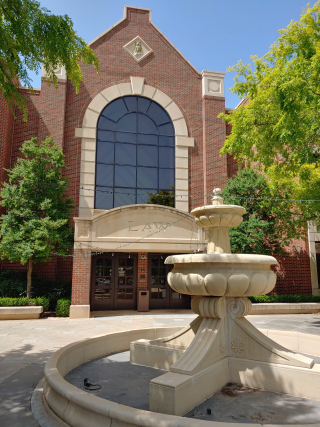
Having just come back from the first in-person National Business Law Scholars Conference since 2019 (at The University of Oklahoma College of Law, pictured here), I have many thoughts swirling through my head.  I always love that conference.  The people, whom I dearly missed, are a big part of that. And Megan Wischmeier Shaner was an awesome planning committee host. But the ideas that were shared . . . .  Wow. So many great research projects were shared by these wonderful law teachers and scholars!  Over time, I hope to share many of them with you.  

But for today, I want to focus on one thing that I heard in a few presentations at the conference: that the shareholder wealth maximization norm is and always has been the be-all and end-all of corporate purpose and board decision making. I am posting on that topic today not only because of my engagement with the conference, but also because the issue is implicated in Ann’s post on Saturday (Bathrooms are About Stakeholders) and by Stefan’s post yesterday (ESG & Communism?). I want to focus on a part of Stefan’s post (and Stefan, you may that issue with

Prior to joining academia, I served as a compliance officer for a Fortune 500 company and I continue to consult on compliance matters today. It’s an ever changing field, which is why I’m glad so many students take my Compliance, Corporate Governance, and Sustainability course in the Fall. I tell them that if they do transactional or commercial litigation work, compliance issues will inevitably arise. Here are some examples: 

  • In M&A deals, someone must look at the target’s  bribery, money laundering, privacy, employment law, environmental, and other risks
  • Companies have to complete several disclosures. How do you navigate the rules that conflict or overlap?
  • What do institutional investors really care about? What’s material when it relates to ESG issues?
  • What training does the board need to ensure that they meet their fiduciary duties?
  • How do you deal with cyberattacks and what are the legal and ethical issues related to paying ransomware?
  • How do geopolitical factors affect the compliance program?
  • Who can be liable for a compliance failure?
  • What happens when people cut corners in a supply chain and how can that affect the company’s legal risk?
  • What does a Biden DOJ/SEC mean compared to the same offices under Trump?
  • Who

Dear Section Members —

On behalf of the Executive Committee for the AALS section on Business Associations, I’m writing with details of our two sessions at the 2023 AALS Annual Meeting, which will be held in San Diego, CA from January 4-7, 2023.

First, our main program is entitled, “Corporate Governance in a Time of Global Uncertainty.” We anticipate selecting up to two papers from this call for papers. To submit, please submit an abstract or a draft of an unpublished paper to Professor Mira Ganor, mganor@law.utexas.edu, on or before Friday, August 19, 2022. Authors should include their name and contact information in their submission email but remove all identifying information from their submission. Please include the words “AALS – BA- Paper Submission” in the subject line of your submission email.

Second, we are excited to announce that we will again hold a “New Voices in Business Law” program, which will bring together junior and senior scholars in the field of business law for the purpose of providing junior scholars with feedback and guidance on their draft articles. Junior scholars who are interested in participating in the program should send a draft or summary of at least five

The Southeastern Association of Law Schools is holding its annual conference in Sandestin, Florida from July 27 through August 3.  The current draft program is available here.  I hope a number of you are planning to come.

In addition to my usual co-moderation (with the inimitable John Anderson) of an insider trading discussion group at the conference, I am looking to moderate the following discussion group:

Elon Musk and the Law

Moderator: Joan Heminway, The University of Tennessee College of Law

Enigmatic entrepreneur Elon Musk has found himself—and his businesses and his family—in the crosshairs of law and regulation. The legal and regulatory issues span a wide range, including First Amendment questions, securities disclosure challenges, legal contests involving the name of his son born in 2020 (with the musician Grimes), and more. This discussion group aims to identify, classify, and analyze these legal and regulatory interactions and interpret their effects on law reform, regulatory entrepreneurship, legal and administrative process, business venturing, and other areas of inquiry. Comparisons to and contrasting views of other public figures and their legal and regulatory tangles may be explored in the process.

Email me if you are interested in participating.

Also, I wish