
Did I lose you with the title to this post? Do you have no idea what a DAO is? In its simplest terms, a DAO is a decentralized autonomous organization, whose decisions are made electronically by a written computer code or through the vote of its members. In theory, it eliminates the need for traditional documentation and people for governance. This post won’t explain any more about DAOs or the infamous hack of the Slock.it DAO in 2016. I chose this provocative title to inspire you to read an article entitled Legal Education in the Blockchain Revolution.

The authors Mark Fenwick, Wulf A. Kaal, and Erik P. M. Vermeulen discuss how technological innovations, including artificial intelligence and blockchain will change how we teach and practice law related to real property, IP, privacy, contracts, and employment law. If you’re a practicing lawyer, you have a duty of competence. You need to know what you don’t know so that you avoid advising on areas outside of your level of expertise. It may be exciting to advise a company on tax, IP, securities law or other legal issues related to cryptocurrency or blockchain, but you could subject yourself to discipline for doing so
We’re a month away from our second annual Business Law Professor Blog CLE, hosted at the University of Tennessee on Friday, September 14, 2018. We’ll discuss our latest research and receive comments from UT faculty and students. I’ve entitled my talk Beyond Bitcoin: Leveraging Blockchain for Corporate Governance, Corporate Social Responsibility, and Enterprise Risk Management, and will blog more about that after I finish the article. This is a really long post, but it’s chock full of helpful links for novices and experts alike and highlights some really interesting work from our colleagues at other law schools.

Two weeks ago, I posted some resources to help familiarize you with blockchain. Here’s a relatively simple definition from John Giordani at Forbes:

Blockchain is a public register in which transactions between two users belonging to the same network are stored in a secure, verifiable and permanent way. The data relating to the exchanges are saved inside cryptographic blocks, connected in a hierarchical manner to each other. This creates an endless chain of data blocks — hence the name blockchain — that allows you to trace and verify all the transactions you have ever made. The primary function of a

Hello to all from Tokyo, Japan (Honshu).  I have been in Japan for almost a week to present at and attend the 20th General Congress of the International Academy of Comparative Law (IACL), which was held last week in Fukuoka, Japan (Kyushu).  By the time you read this, I will be on my way home.

Fukuoka(Me+Sign)

As it turns out, I was at the Congress with old business law friends Hannah Buxbaum (Indiana Maurer Law), Felix Chang (Cincinnati Law), and Frank Gevurtz (McGeorge Law), as well as erstwhile SEALS buddy Eugene Mazo (Rutgers Law).  I also met super new academic friends from all over the world, including several from the United States.  I attended all of the business law programs after my arrival (I missed the first day due to my travel schedule) and a number of sessions on general comparative and cross-border legal matters.  All of that is too much to write about here, but I will give you a slice.

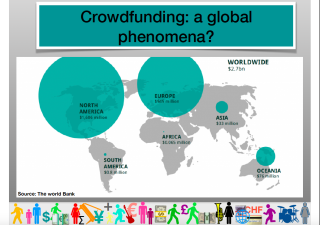
I spoke on the legal regulation of crowdfunding as the National Rapporteur for the United States.  My written contribution to the project, which I am told will be part of a published volume, is on SSRN here.  The entire project consists of eighteen papers from around the world, each of which responded to the same series of prompts conveyed to us by the General Rapporteur for the project (in our case, Caroline Kleiner from the University of Strasbourg).  The General Rapporteur is charged with consolidating the information and observations from the national reports and synthesizing key take-aways.  I do not envy her job!  The importance of the U.S. law and market to the global phenomenon is well illustrated by this slide from Caroline’s summary.

Fukuoka(GlobalCrowdfundingSlide)

The Congress was different from other international crowdfunding events at which I have presented my work.  The diversity of the audience–in terms of the number of countries and legal specialties represented–was significantly greater than in any other international academic forum at which I have presented.  Our panel of National Rapporteurs also was a bit more diverse and different than what I have experienced elsewhere, including panelists hailing from from Argentina, Brazil, Canada, France, Germany, Poland, and Singapore (in addition to me).  At international conferences focusing on the microfinance aspects of crowdfunding, participants from India and Africa are more prominent.  I expect to say more about the individual national reports on crowdfunding in later posts, as the need or desire arises.

A few outtakes on other sessions follow.

Pura vida from Costa Rica. Between recovery from carpal tunnel surgery a few weeks ago and an ATV flip two days ago, I don’t have much mental or physical energy to do a full post. I haven’t mastered dictation so I’m typing this on an iPad with one hand. Next week, I’ll provide more substance as well as a preview on my September talk at our second annual BPLB symposium at the University of Tennessee. Today, I want to pass on some resources for those who don’t know anything about blockchain. 

For those who want to provide resources for students, Walter Effross has put together a great site:

Ten Reasons for Blockchain Law Literacy

The following sources come from Professor Tonya Evans at UNH, who has developed an online curriculum on blockchain:

Use Cases: 

https://medium.com/fluree/blockchain-for-2018-and-beyond-a-growing-list-of-blockchain-use-cases-37db7c19fb99

https://www.mycryptopedia.com/16-promising-blockchain-use-cases/

Education:

https://medium.com/universablockchain/blockchain-in-education-49ad413b9e12

Blockchain + Law:

http://www.abajournal.com/news/article/lawyers_can_contribute_to_the_rise_of_blockchain_by_understanding_it

https://abovethelaw.com/2018/02/blockchain-can-smart-contracts-replace-lawyers/

Bitcoin And Blockchain: What Lawyers Need To Know

Next week, I’ll talk about my research into how blockchain is used in corporate governance, compliance, supply chain management, enterprise risk management, cybersexurity, and human rights. 

Bernard Sharfman has posted Dual Class Share Voting versus the “Empty Voting” of Mutual Fund Advisors’ and it is an interesting read.  He argues: 

Dual class shares (shares with unequal voting rights) arise when the board of directors of a company decides to raise capital through the sale of newly issued shares, but wants one or more insiders, who may be giving up economic control through the issuance of the shares, to retain voting control in the company.  Typically, this occurs in an initial public offering (IPO), but it can also occur before.  In an IPO, a company will usually issue a class of common stock to the public that carries one vote per share (ordinary shares), while reserving a separate class, a super-voting class, that provide insiders with at least 10 votes per share.  However, both types of shares will have equal rights to the cash flow of the company.  The issuance of dual class shares may create a wide gap between voting and cash flow rights over time, especially if the insiders periodically sell a significant amount of their ordinary shares.

But this is the critical point.  A dual class share structure cannot exist without the permission of

Greetings from Atlanta, Georgia, site of the Emory Transactional Law & Skills Conference. After only a few hours of presentations, I’m already inspired to make some changes in my new transactional lawyering class. I will write about some of the lessons learned next week. Today, I want to share some of Tina Stark’s remarks from the conference dinner that ended moments ago. Although she initially teased the audience by stating that she would make “subversive” statements, nothing that she said would scandalize most law students or surprise practicing lawyers.

Her “radical” proposal entailed having transactional skills education be a part of every law student’s curriculum. In support, she cited ABA Standard 301(a), which states:

OBJECTIVES OF PROGRAM OF LEGAL EDUCATION (a) A law school shall maintain a rigorous program of legal education that prepares its students, upon graduation, for admission to the bar and for effective, ethical, and responsible participation as members of the legal profession.

She argued that for the academy to meet this standard, schools must go beyond a narrow reading of ABA rules and provide every student with the foundation to practice transactional law, particularly because half of graduates will practice in that area even if they don’t know

Call for Papers for the

Section on Business Associations Program on

Contractual Governance: the Role of Private Ordering

at the 2019 Association of American Law Schools Annual Meeting

The AALS Section on Business Associations is pleased to announce a Call for Papers from which up to two additional presenters will be selected for the section’s program to be held during the AALS 2019 Annual Meeting in New Orleans on Contractual Governance: the Role of Private Ordering.  The program will explore the use of contracts to define and modify the governance structure of business entities, whether through corporate charters and bylaws, LLC operating agreements, or other private equity agreements.  From venture capital preferred stock provisions, to shareholder involvement in approval procedures, to forum selection and arbitration, is the contract king in establishing the corporate governance contours of firms?  In addition to paper presenters, the program will feature prominent panelists, including SEC Commissioner Hester Peirce and Professor Jill E. Fisch of the University of Pennsylvania Law School.

Our Section is proud to partner with the following co-sponsoring sections: Agency, Partnership, LLC’s and Unincorporated Associations; Contracts; Securities Regulation; and Transactional Law & Skills.

Submission Information:

Please submit an abstract or draft of

Last week, I blogged blogged about lawsuits against chocolate makers alleging unfair and deceptive trade practices for failure to disclose that the companies may have used child slaves to harvest their products. Today, I want to discuss steps that the Business Law Section of the American Bar Association is taking to provide more transparency in supply chain practices.

In 2014, the ABA House of Delegates adopted Model Principles on Labor Trafficking and Child Labor developed by over 50 judges, in-house counsel, outside counsel, academics, and NGOs. The Model Principles address the UN Guiding Principles on Business and Human Rights and other hard and soft law regimes. At last week’s ABA Business Law Spring Meeting, academics David Snyder and Jennifer Martin presented on human rights issues in supply chains alongside practicing lawyers and in-house executives. Many of them (and several others) had formed a Working Group to Draft Human Rights Protections in Supply Contracts. The Group aims to provide contract clauses that are “legally effective” and “operationally likely.”

As a former Deputy GC for a supply chain management company, I can attest that the ABA’s focus is timely as companies answer questions from customers, regulators, shareholders, and other stakeholders. Human rights

I love teaching courses that develop practical skills. This summer, I am teaching a 2-credit transactional drafting course for the first time. In the past, I have taught 2-credit skills courses that had a drafting element, but the students enrolled in those courses typically had taken business associations, and therefore we could do entity selection exercises, portions of bylaws, operating agreements,  asset purchase agreements, NDAs, and employment agreement clauses. This time, BA will not be a prerequisite, and I am likely to have a number of rising 2Ls enroll.

I have a pile of proposed textbooks that I’m looking to for inspiration (and to select for the course), but I’m specifically seeking tips and best practices for teaching these skills to students who are fresh off of their 1L year. I plan to have a number of practicing lawyers speak to the students about common pitfalls in negotiating and drafting because I have the luxury of one three-hour block of time per week. At a minimum, students will draft, edit, and redline (where appropriate) a retainer letter, time sheets, a nondisclosure agreement, an independent contractor or employment agreement, and a license or settlement agreement. The goal is to have them draft

Recently, the International Olympic Committee (IOC) announced that Russia will be banned from the 2018 Winter Games for systemic doping

If you have not watched Icarus (on Netflix) on this topic, I recommend it. The documentary starts slowly, and the story-line is a bit disjointed, but the information uncovered about state-sponsored doping in Russia is fascinating and depressing.  Even if you are not a sports fan, you may be interested in the parts in the documentary related to the alleged involvement of the Russian government. 

It has been a busy semester, but I am working (slowly) on a journal article on morality clauses in sports contracts. Doping is often specifically mentioned in these contracts, and doping is a sad reality in many sports. Doping also betrays, I think, improper prioritization. While we are starting to see more attention paid to courage and compassion in sports, “winning” has often been promoted as the top priority. Hopefully we will see more people (and  countries) who compete with passion, but also with integrity.