Screenshot 2019-07-05 15.51.43

The dark side of entrepreneurial finance

Editors: Arvind Ashta, Olivier Toutain

Theme of the special issue

Whether we are talking about start-ups, more recently “grow up” or more broadly about company creation-takeover, entrepreneurial finance attracts a lot of attention, from the entrepreneurs’ side and from the side of private and public financing organisations and the media. Entrepreneurial finance includes Founder’s equity, Love Money, Business Angel, Venture Capital, LBO Funds, banks, IPOs and various alternative financing treated as shadow banking: micro-credit, loan sharking, leasing, crowdfunding, Initial Coin Offerings, among others (Block, Colombo, Cumming, & Vismara, 2018; Wright, Lumpkin, Zott, & Agarwal, 2016).

Financing is considered as an inherent dimension of the entrepreneurial development process (Panda, 2016; Yunus, 2003). Without financing, there is no investment and, therefore, little chance of starting a business with adequate production tools and an organization capable of absorbing the trials and tribulations of starting and developing entrepreneurial activities. Without funding, the risk of lack of legitimacy is also high: what does it mean in the entrepreneurial ecosystem not to have the support of one or more funding agencies? More so in the start-up world! Is that conceivable? Finally, can the entrepreneur now free himself from financial support, even if he does not really need it to start his business? If the reasoning is pursued further, does the entrepreneur have a choice? In other words, is it possible to create and develop your company without mobilizing the financial resources of the territory? Without entering into a financial system and ecosystem that regulates the creation and takeover of companies in a territory? Or a system that pushes the entrepreneur to finance so much that the system itself collapses by bringing forth a financial crisis (Boddy, 2011; Diamond & Rajan, 2009; Donaldson, 2012; Guérin, Labie, & Servet, 2015; Mishkin, 2011).

Applying for funding today is often considered as a difficult adventure: is it really a fighter’s path given the particularly numerous mechanisms in France? But are they also numerous in Europe? In the world? Is the cost of financing transparent or hidden (Attuel-Mendes & Ashta, 2013)? In any case, to adventure is to walk and remove obstacles while following a guide… often at the funder’s request… which is often called coaching or mentoring. Or following the guide, sometimes – or often, depending on the reader’s appreciation – results in respecting rules, imposed steps, in short, to adopt a good conduct… to such an extent that the entrepreneur can lose track of his North Star, or at least part of his project, modified by “pitching” and integrating the comments, suggestions, strong suggestions of potential funders… In other words, if we push the reflection further, the accompanying logic proposed in the form of good intentions by the funders of an ecosystem, are they not likely, by force, to respond to external constraints, to generate effects opposite to expectations: inhibited entrepreneurs, whose project has lost its originality, vitality and excellence through the coaching or mentoring of initially imagined value creation (Collewaert, 2009)? Isn’t the finance injected into the support systems finally a Dr Jekyll and Mr Hyde of entrepreneurship? In other words, if it constitutes an unprecedented measure of support for entrepreneurial growth in the world, does it not at the same time generate “antipreneurial” effects? Normative and highly biased, do financial actors deserve such a place in the creative process? What is it that basically legitimizes their central place? (Bateman, 2010; Sinclair, 2012) What is the hidden face of entrepreneurial finance (Henderson & Pearson, 2011; Krohmer, Lauterbach, & Calanog, 2009; Toe, Hollandts, & Valiorgue, 2017)?

The purpose of this issue is to extract itself from the normative fields and discourses that highlight, in the vast majority of cases, the important role of finance in the development of entrepreneurship, whether purely economic, social or environmental. In other words, we are asking ourselves here about the secondary, even hidden, effects of finance on the emergence and development of new companies in France and around the world.

The proposals will address, among other things, the following topics:

  • What place does finance occupy today in the feeling of success and accomplishment of an entrepreneurial activity?
  • How do entrepreneurs interact with potential funders?
  • How do funders dialogue with each other?
  • How do funders make their investment decisions? Rationality, Short termism, information asymmetry….
  • How do entrepreneurs and funders negotiate? On which elements of the project or company? Are there any losers? What is lost in the process?
  • How does the relationship between entrepreneurs and funders change over time?
  • Can finance harm the value creation produced by entrepreneurial activity? Can it affect entrepreneurial freedom?
  • Is it possible to free oneself from financing circuits? How?

Finally, what is the dark side of entrepreneurial finance?

Timeline:

Submission of texts: By April 30, 2020 at the latest

Publication: March 2021

[I have omitted here the list of references supporting the text citations.  Please contact me by email if you would like a .pdf copy of the call for papers that includes the list.  There is more information after the jump.]

At the 2019 Law and Society Association Annual Meeting last week, Geeyoung Min presented her paper Governance by Dividends.  In the paper, she focuses attention on stock dividends.  Near the end of her presentation, Geeyoung trod over ground on which so many of us also have trod–relating to judicial standards of review in fiduciary duty actions.  As familiar as the story was, she helped me to see something I had not seen before.  Perhaps many of you already have identified this.  If so, I am sorry to bore you with my new insight.

Essentially, what I came to realize during her talk–and develop with her and members of the audience in the ensuing discussion–was that Delaware’s judiciary may have (and I may be quoting Geeyoung or someone else who was there, since I wrote this down long-form in my contemporaneous notes) muddied the waters by seeking clarity.  What do I mean by that?  Well, by addressing relatively clearly the circumstances in which the business judgment rule, on the one hand, or entire fairness, on the other, govern the judicial review of corporate fiduciary duty allegations, the Delaware judiciary has effectively made the interstitial space between the two–intermediate tier scrutiny–less

I recently received a copy of Citizen Capitalism: How a Universal Fund Can Provide Influence and Income to All from Sergio Gramitto. While I have not yet read the book, I didn’t want to let another blog post go by without passing along at least some of its highlights, as well as why I am particularly interested in its proposals.

In addition to Sergio, the authors of Citizen Capitalism include Tamara Belinfanti and the late Lynn Stout. Suffice it to say that Lynn was one of our true superstars, and I would hate to miss any presentation by either Sergio or Tamara. I’ve had the pleasure of engaging professionally with all of them in some capacity, and I hold them each in the highest regard.

Sergio and Lynn first discussed the idea of a Universal Fund in their article Corporate Governance as Privately-Ordered Public Policy: A Proposal, and then expanded on that idea with Tamara in Citizen Capitalism. The book has been reviewed in numerous places (see, for example, here and here). What follows is a descriptive excerpt from Cornell’s Clarke Program on Corporations & Society.

We offer a utopian-but feasible-proposal to better align

This “just in” from BLPB friends Beate Sjåfjell and Afra Afsharipour:

We are thrilled to co-organise a workshop at UC Davis School of Law on 26 April 2019, with the aim of facilitating an in-depth comparative analysis of the relationship between takeovers and value creation.

We invite submissions on themes concerning takeovers and value creation from any jurisdiction around the world as well as comparative contributions. Themes include but are not limited to:

What are the implications of a takeover on sustainability efforts?

What is the scope for using sustainability arguments as a defense by the target board in a takeover?

What should be the role of the bidder board?

What are the implications of large M&A transactions for building/growing a culture of sustainability at a firm?

Is there a distinct difference between planned mergers and uninvited takeovers?

How could takeovers be regulated to promote sustainable value creation?

We especially encourage female scholars and scholars from diverse backgrounds to submit abstracts. Participation at the workshop will be limited to the presenters, to facilitate in-depth discussions. Deadline for submission of abstracts: 27 March 2019!

Please feel free to send this call for papers on to colleagues who may be

Received today from BLPB friends Beate Sjåfjell and María Jesús Muñoz Torres:

Happy International Women’s Day! We celebrate this day by issuing the call for papers for the 5th international workshop of Daughters of Themis: International Network of Female Business Scholars. The theme is Finance for Sustainability; a highly topical theme! The deadline is 26 March, and we hope that the brief window of opportunity will be large enough for all interested to respond.

We appreciate if you would circulate this call to any interested colleagues identifying as female business scholars, including junior scholars (PhD candidates) as well as colleagues in lower-income countries. Please note that we this year do have some, very limited, funds available so that we can contribute to the funding for one or two participants based on financial hardship.

For those unfamiliar with Daughters of Themis: our annual workshop is the heart of our network, and you can read more here, reporting back from our three last workshops here: 2018, 2017 and 2016.

Please feel free to contact Beate or María Jesús with any questions you might have.

Unfortunately, this workshop overlaps a bit with the Grunin Center’s annual conference (which focuses in

Gregg D. Polsky, University of  Georgia Law, recently posted his paper, Explaining Choice-of-Entity Decisions by Silicon Valley Start-Ups. It is an interesting read and worth a look. H/T Tax Prof Blog.  Following the abstract, I have a few initial thoughts:

Perhaps the most fundamental role of a business lawyer is to recommend the optimal entity choice for nascent business enterprises. Nevertheless, even in 2018, the choice-of-entity analysis remains highly muddled. Most business lawyers across the United States consistently recommend flow-through entities, such as limited liability companies and S corporations, to their clients. In contrast, a discrete group of highly sophisticated business lawyers, those who advise start-ups in Silicon Valley and other hotbeds of start-up activity, prefer C corporations.

Prior commentary has described and tried to explain this paradox without finding an adequate explanation. These commentators have noted a host of superficially plausible explanations, all of which they ultimately conclude are not wholly persuasive. The puzzle therefore remains.

This Article attempts to finally solve the puzzle by examining two factors that have been either vastly underappreciated or completely ignored in the existing literature. First, while previous commentators have briefly noted that flow-through structures are more complex and administratively burdensome, they

From our friend and colleague, Djamchid Assadi at the Burgundy School of Business in Dijon, France:

Lisbon2019_EURAM-banner_1100

SIG 03 – ENT – Entrepreneurship

With our theme Exploring the Future of Management: Facts, Fashion and Fado, we invite you to participate in the debate about how to explore the future of management.

We look forward to receiving your submissions.

T03_08 – Entrepreneurship in the sharing economy: P2P strategies, models, and innovation paradigms

Proponents:

Djamchid Assadi, Burgundy School of Business BSB; Asmae DIANI, Sidi Mohamed Ben Abdellah University, Fez, Morocco; Urvashi Makkar, G.L. Bajaj Institute of Management and Research (GLBIMR), Greater Noida; Julienne Brabet, Université Paris-Est Créteil (UPEC); Arvind ASHTA, Arvind, CEREN, EA 7477, Burgundy School of Business – Université Bourgogne Franche-Comté, France

Short description:

Sharing of funds, files, accommodations, and other utilities and properties has become a vital part of the emerging social life and economy.

The traditional dyadic firm-to-customer transactions has given place to the depositional triadic of P2P platforms game changers which facilitate exchange between peer providers and peer recipients. As these P2P platforms disrupt conventional transactions, for example, P2P home exchange platforms like Airbnb thoroughly disorder the hotel industry, it is crucial that researchers consider conceptual refinement and empirical grounding for providing insights.

This track aims to bring together

Hello to all from Tokyo, Japan (Honshu).  I have been in Japan for almost a week to present at and attend the 20th General Congress of the International Academy of Comparative Law (IACL), which was held last week in Fukuoka, Japan (Kyushu).  By the time you read this, I will be on my way home.

Fukuoka(Me+Sign)

As it turns out, I was at the Congress with old business law friends Hannah Buxbaum (Indiana Maurer Law), Felix Chang (Cincinnati Law), and Frank Gevurtz (McGeorge Law), as well as erstwhile SEALS buddy Eugene Mazo (Rutgers Law).  I also met super new academic friends from all over the world, including several from the United States.  I attended all of the business law programs after my arrival (I missed the first day due to my travel schedule) and a number of sessions on general comparative and cross-border legal matters.  All of that is too much to write about here, but I will give you a slice.

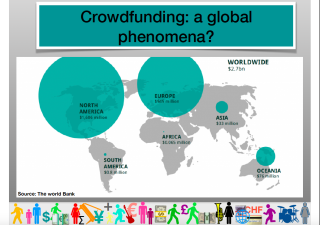
I spoke on the legal regulation of crowdfunding as the National Rapporteur for the United States.  My written contribution to the project, which I am told will be part of a published volume, is on SSRN here.  The entire project consists of eighteen papers from around the world, each of which responded to the same series of prompts conveyed to us by the General Rapporteur for the project (in our case, Caroline Kleiner from the University of Strasbourg).  The General Rapporteur is charged with consolidating the information and observations from the national reports and synthesizing key take-aways.  I do not envy her job!  The importance of the U.S. law and market to the global phenomenon is well illustrated by this slide from Caroline’s summary.

Fukuoka(GlobalCrowdfundingSlide)

The Congress was different from other international crowdfunding events at which I have presented my work.  The diversity of the audience–in terms of the number of countries and legal specialties represented–was significantly greater than in any other international academic forum at which I have presented.  Our panel of National Rapporteurs also was a bit more diverse and different than what I have experienced elsewhere, including panelists hailing from from Argentina, Brazil, Canada, France, Germany, Poland, and Singapore (in addition to me).  At international conferences focusing on the microfinance aspects of crowdfunding, participants from India and Africa are more prominent.  I expect to say more about the individual national reports on crowdfunding in later posts, as the need or desire arises.

A few outtakes on other sessions follow.

SnapchatLogo

One of the business law academy’s power couples, Amy and Bert Westbrook, recently posted an intriguing piece on SSRN that Bert and I have been communicating about a bit this summer.  It is entitled Snapchat’s Gift: Equity Culture in High-Tech Firms, and it is, indeed, a lovely gift–well conceived and packaged.  It is a look at dual class common equity in technology firms–and equity more generally–that confronts and incorporates many perspectives from law, economics, and other social sciences.

Some of you, like me, teach basic corporate finance in a variety of courses.  In those situations, it is important for instructors to have a handle on descriptions of the basic instruments of corporate finance–debt, equity, hybrid, and other.  What is the package of rights each instrument represents that incentivizes investors to supply money or other valuable assets?  In my classes, we ultimately discuss equity as a bundle of rights that includes potentials for financial gain and governance.  Snapchat’s Gift digs into the validity of these perceived rights in relevant part by focusing on recent changes in the primary public offering market for equity securities in the United States–in particular, the advent of highly publicized and fully subscribed initial public offerings of nonvoting common shares.

Bernie Sharfman’s paper, A Private Ordering Defense of a Company’s Right to Use Dual Class Share Structures in IPOs, was just published, and I think he has a point. In fact, as I read his argument, I think it is consistent with arguments I have made about the difference between restrictions or unconventional terms or practices that exist at purchase versus such changes that are added after one becomes a member or shareholder.  Here’s the abstract: 

The shareholder empowerment movement (movement) has renewed its effort to eliminate, restrict or at the very least discourage the use of dual class share structures in initial public offerings (IPOs). This renewed effort was triggered by the recent Snap Inc. IPO that utilized non-voting stock. Such advocacy, if successful, would not be trivial, as many of our most valuable and dynamic companies, including Alphabet (Google) and Facebook, have gone public by offering shares with unequal voting rights.

Unless there are significant sunset provisions, a dual class share structure allows insiders to maintain voting control over a company even when, over time, there is both an ebbing of superior leadership skills and a significant decline in the insiders’ ownership of the company’s common stock.