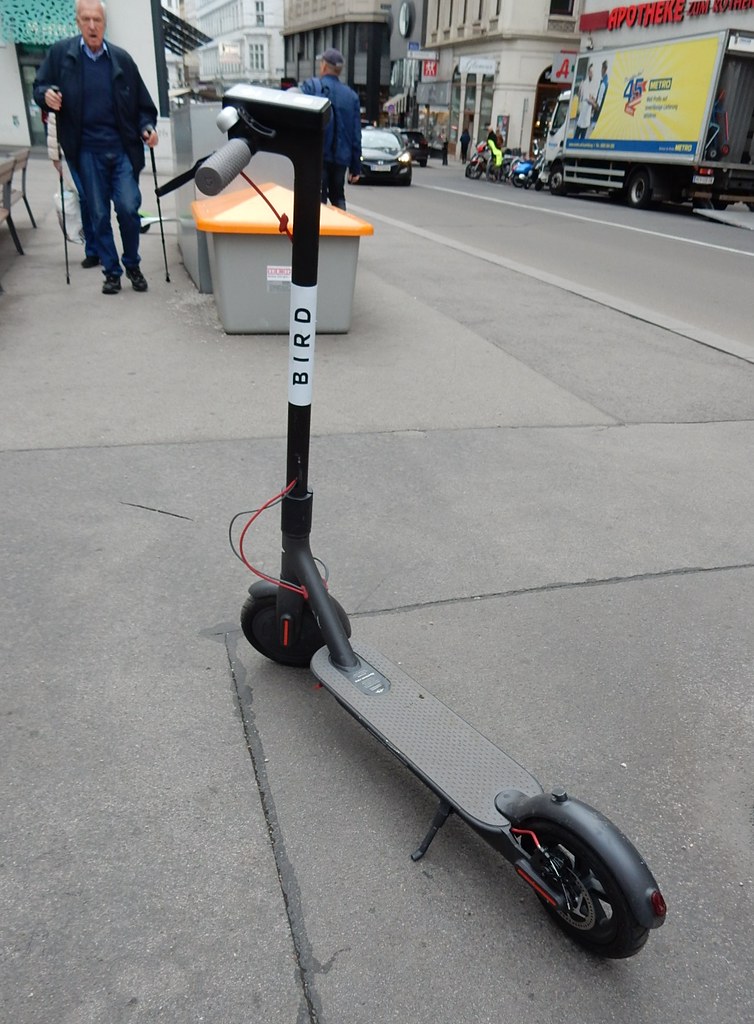
“Bird Scooter” by mikecogh is licensed under CC BY-SA 2.0
Here in Nashville, Mayor David Briley announced that he is seeking to ban scooters. This announcement follows the first scooter-related death in the city.
Currently, I am working on a project that looks at how social value is measured and reported. As I dig deeper, I am becoming even more convinced that measuring social value may be too difficult for us to do well.
Let’s take scooters as an example. How would you measure (and report) the social value of these scooter companies? How many points should a “third-party standard” assign for the jobs created, for the gasoline saved, for the affordable transportation provided, for the fun produced? How many points should you subtract for a death, for injuries, for obstructing sidewalks? In the language of the Model Benefit Corporation Legislation, how do you know if a scooter company is producing “[a] material positive impact on society and the environment, taken as a whole”?
Over the past few weeks, I’ve been diving into the B Impact Assessment, (which is the top third-party standard used by benefit corporations) and, frankly, the points assigned seem somewhat arbitrary