COVID-19’s effects on financings and M&A, as well as contracts more generally (as covered here, here, and here among many other places), the rapid adoption of the Coronavirus Act, Relief, and Economic Security Act, a/k/a the “CARES Act” (key terms summarized briefly here and elsewhere), and the President’s invocation of the Defense Production Act have me feeling like I am drinking business law water out of a fire hose this past week.  Anyone else feeling that way?  Whew!

I am still sorting through it all.  I am sure that I will have more to say on some of this as time passes.  However, earlier today, in the process of reading online resources and watching and listening to others talk about the many legal aspects of the current pandemic, I came across this YouTube video, done by one of my former students, a local attorney who works with entrepreneurs, start-ups, and small businesses.

I have not fact-checked this video.  And he jumps in to correct himself.  But what I like about it is that it represents unvarnished, even humorous, boots-on-the-ground legal public service.  He does not want businesses in the local community to miss out or waste time/money shooting in

Like so many law schools, we’re navigating our way to online and other remote teaching and learning in a rapid and unexpected way.  We started classes yesterday, and it’s gone fairly well.  Our faculty has worked hard, and our students have been incredibly resilient in the face this adversity we all, unfortunately, share. It does, though, impact people in many different ways.  

Some people face additional health risks, financial challenges, childcare problems, technology limitations, learning disabilities, and more, and I have been so impressed with the strength and composure I have seen in our community. I suspect it’s that way a lot of places, and I hope so, but it has been remarkable to see.  

The Harvard Business Review posted a piece yesterday that framed this whole COVID-19 experience in a way I had not considered. The piece is titled, That Discomfort You’re Feeling Is Grief. I would not have framed it the way, but I think it’s an important perspective.  The whole piece is worth a read, but here are some important points worth considering: 

Anticipatory grief is the mind going to the future and imagining the worst. To calm yourself, you want to come into

Image result for olympic trials in the marathon

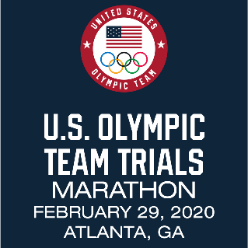
Last year, in a post about personal finance, I mentioned my friend Joey Elaskr, who is completing a PHD/MD program at Vanderbilt University. In late 2019, Joey qualified for the Olympic Trials at the Monumental Marathon in an impressive 2:18:57 (5:18 per mile for 26.2 miles). On February 29th this year, just a couple weeks after successfully defending his dissertation, he competed in the Olympic Trials in Atlanta. You can read a bit about Joey’s running on Lets Run and on Money & Megabytes. While the tie to “business law” is admittedly stretched, I do think our readers can learn a good bit about juggling demanding responsibilities from Joey, and I am glad he agreed to answer a few questions below the break.

I recently had occasion to offer background to, and be interviewed by, a local television reporter about a publicly traded firm that owns several health care facilities in East Tennessee and has been financed significantly through loans from and corporate payments made by a member of its board of directors.  The resulting article and news clip can be found here.  Since the story was published, a Form 8-K was filed reporting that the director has resigned from the board and the firm is negotiating with him to cancel its indebtedness in exchange for preferred stock.

In reviewing published reports on the firm, Rennova Health, Inc., I learned that it had been delisted from NASDAQ back in 2018.  The reason?  The firm engaged in too many stock splits.

I also came across an article reporting that another health care firm, a middle Tennessee skilled nursing provider, Diversicare Healthcare Services, Inc., had been delisted in late 2019.  The same article noted two additional middle Tennessee health care firms also were in danger of being delisted from stock exchanges.  One was subsequently delisted. 

Health care mergers and acquisitions also have been in the news here in Tennessee.  A Tennessee/Virginia

My short essay, “Me, Too and #MeToo: Women in Congress and the Boardroom,” was recently published in the George Washington Law Review.  The abstract follows.

The “Year of the Woman” (1992) and the year of #MeToo (2018) were landmark years for women in federal congressional elections. Both years also represent significant milestones for women’s roles as U.S. public company directors. In each of these two years, social context was interconnected with these political and corporate gender changes. The relevant social context in 2018 is most clearly defined by public revelations of sexual misconduct involving a significant number of men in positions of political and business power. The relevant social context in 1992 similarly involved specific, highly public disclosures and allegations of sexual misconduct.

These parallels beg many questions. In particular, one may ponder whether the correlation between social context and congressional or public company board elections is coincidence or something more. Apropos of the current era, those of us who focus on corporate board diversity may wonder whether looking at the election of women to Congress and corporate boards in the #MeToo era provides any insights or lessons about female corporate board representation.

This brief Essay

MLKClipart

[Image courtesy of Clipart Library, http://clipart-library.com/mlk-cliparts/]

Today, on Martin Luther King Jr. Day, I was in the office preparing for the week+ ahead.  I was not the only one there.  Part of me wanted to be elsewhere, publicly supporting the life and legacy of Dr. Martin Luther King Jr.  I did think about him and his work as I toiled away.

Although most of what I was sorting and sifting through today was business law-related, part of what I focused on was committee work for our celebration tomorrow that honors Dr. King.  I chair a committee at UT Law this year that is responsible for hosting one or more Martin Luther King Jr. events every year.  This year, we will have a luncheon and informal table discussions based on facts about Dr. King and quotes from his public appearances and published work.  As I was going through the facts and quotes, I came upon this quote: “No work is insignificant.  All labor that uplifts humanity has dignity and importance and should be undertaken with painstaking excellence.”  (The quote is apparently from Strength to Love, a 1963 book of Dr. King’s sermons.)  Admittedly, it spurred me on and made me

The following comes to us from Bernard S. Sharfman. It is a copy of the comment letter (without footnotes) that he recently sent to the SEC in support of the Amendments to Exemptions from the Proxy Rules for Proxy Voting Advice.  (The comment letter with footnotes can be found here.)  An introductory excerpt is followed, after the break, by the full letter. Please excuse any formatting errors generated by my poor copy-and-paste skills.

Part I of this letter will describe the collective action problem that is at the heart of shareholder voting. Part II will discuss the problems that this collective action causes for the voting recommendations of proxy advisors, including the creation of a resource constrained business environment. Part III discusses how proxy advisors deal with such a business environment. Part IV will discuss how the market for voting recommendations is an example of a market failure, requiring the SEC to pursue regulatory action to mitigate the harm caused by two significant negative externalities. Part V will discuss how the collective action problem of shareholder voting and the market failure impacts corporate governance. Part VI will discuss the value of the proposed amendments.

Happy holidays! Billions of people around the world are celebrating Christmas or Hanukah right now. Perhaps you’re even reading this post on a brand new Apple Ipad, a Microsoft Surface, or a Dell Computer. Maybe you found this post via a Google search. If you use a product manufactured by any of those companies or drive a Tesla, then this post is for you. Last week, a nonprofit organization filed the first lawsuit against the world’s biggest tech companies alleging that they are complicit in child trafficking and deaths in the cobalt mines of the Democratic Republic of Congo. Dodd-Frank §1502 and the upcoming EU Conflict Minerals Regulation, which goes into effect in 2021, both require companies to disclose the efforts they have made to track and trace “conflict minerals” — tin, tungsten, tantalum, and gold from the DRC and surrounding countries. DRC is one of the poorest nations in the world per capita but has an estimated $25 trillion in mineral reserves (including 65% of the world’s cobalt). Armed militia use rape and violence as a weapon of war in part so that they control the mineral wealth. The EU and US regulators believe that consumers

Have you ever wanted to learn the basics about blockchain? Do you think it’s all hype and a passing fad? Whatever your view, take a look at my new article, Beyond Bitcoin: Leveraging Blockchain to Benefit Business and Society, co-authored with Rachel Epstein, counsel at Hedera Hashgraph.  I became interested in blockchain a year ago because I immediately saw potential use cases in supply chain, compliance, and corporate governance. I met Rachel at a Humanitarian Blockchain Summit and although I had already started the article, her practical experience in the field added balance, perspective, and nuance. 

The abstract is below:

Although many people equate blockchain with bitcoin, cryptocurrency, and smart contracts, the technology also has the potential to transform the way companies look at governance and enterprise risk management, and to assist governments and businesses in mitigating human rights impacts. This Article will discuss how state and non-state actors use the technology outside of the realm of cryptocurrency. Part I will provide an overview of blockchain technology. Part II will briefly describe how public and private actors use blockchain today to track food, address land grabs, protect refugee identity rights, combat bribery and corruption, eliminate voter fraud

I had planned to write about the Statement on the Purpose of a Corporation signed by 200 top CEOs. If you read this blog, you’ve likely read the coverage and the varying opinions. I’m still reading the various blog posts, statements by NGOs, and 10-Ks of some of the largest companies so that I can gather my thoughts. In the meantime, many of these same companies  will be at the UN Forum on Business and Human Rights touting their records. I’ve been to the Forum several times, and it’s worth the trip. If you’re interested in joining over 2,000 people, including representatives from many of the signatories of the Statement, see below. You can register here:

The UN annual Forum on Business and Human Rights is the global platform for stock-taking and lesson-sharing on efforts to move the UN Guiding Principles on Business and Human Rights from paper to practice. As the world’s foremost gathering in this area, it provides a unique space for dialogue between governments, business, civil society, affected groups and international organizations on trends, challenges and good practices in preventing and addressing business-related human rights impacts. The first Forum was held in 2012. It attracts more