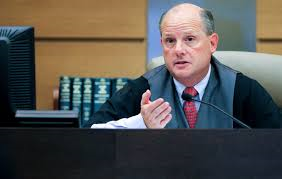
Being near to celebrity, even academic celebrity, can be exciting.  I feel unjustifiable pride and exhilaration in the nomination of George Washington Law School professor Lisa Fairfax to be a SEC commissioner. The White House announced her nomination last October, and the U.S. Senate Committee on Banking, Housing and Urban Affairs held hearings yesterday for Lisa Fairfax (democratic nominee) and Hester Peirce (republican nominee).  Professor Fairfax is being heralded as having “written extensively in favor of shareholder rights, shareholder activism, and gender and racial diversity on corporate boards.”  Her scholarship is available on her SSRN page. Hester Peirce, another academic of sorts, is a senior fellow at the Mercatus Center at George Mason University researching financial markets and an adjunct professor.  The Mercatus Center is a “university-based research center… advanc[ing] knowledge about how markets work to improve people’s lives by training graduate students, conducting research, and applying economics to offer solutions to society’s most pressing problems.” Her writing is available here.

The hearing process was reported by the WSJ as “tough” for both nominees. The confirmation process is by no means a given in the current political climate. A video of the hearing is available for viewing

If you follow sports related news, you know that tennis star Maria Sharapova recently tested positive for a banned performance enhancing drug called Meldonium. Details here and here and here.  According to one source, over 60 athletes have tested positive for Meldonium this year; the drug was just recently added the banned substances list. Sharapova claims she was unaware that she was taking a banned substance. 

A number of Sharapova’s biggest sponsors have suspended or ended their relationship with her and/or delayed planned events. These sponsors include, Nike, Porsche, and TAG Heuer. Head and Evian appear to be sticking with her. Head chairman Johan Eliasch claimed that Sharapova simply made an “honest mistake.”

The companies that have cut ties with Sharapova have likely been able to do so through what is often called a morals clause or a morality clause in the endorsement contract. Some background on morals clauses can be found here and here and here. And here is an interesting contract law question from Eric Goldman that involves morals clauses

Some of our December graduates haven just taken the Florida bar exam. As always, I asked them about the business associations questions. Florida drastically changed its LLC rules in 2014, but still hasn’t asked any questions about LLCs, focusing instead on partnerships and corporations (at least according to the students). From a review of the released questions, the bar didn’t ask about LLCs before the amendments either.

I teach BA again next year and I’m struggling with what to emphasize. Business Associations is not required in many Florida law schools, but it is at St. Thomas, and many students enter the class with trepidation. Most will only take the one required course and won’t go on to advanced classes in securities regulation, corporate taxation, or other drafting courses. I try to focus the required BA class on skills that graduates will need in the workplace in addition to preparing them for the bar by using released test questions. Now I wonder how to balance the tension between the rise of LLCs and the many changes in laws related to securities regulation with the bar’s continued focus on partnerships and traditional corporations.

Yesterday the Obama administration added Miami to the list

Presidential candidate Donald Trump has repeatedly stated that he never plans to eat Oreo cookies again because the Nabisco plant is closing and moving to Mexico. Trump, who has starred in an Oreo commercial in the past, is actually wrong about the nature of Nabisco’s move, and it’s unlikely that he will affect Nabisco’s sales notwithstanding his tremendous popularity among some in the electorate right now. Mr. Trump has also urged a boycott of Apple over how that company has handled the FBI’s request over the San Bernardino terrorist’s cell phone.

Strangely, I haven’t heard a call for a boycott of Apple products following shareholders’ rejection of a proposal to diversify the board last week. I would think that Reverend and former candidate Al Sharpton, who called for the boycott of the Oscars due to lack of diversity would call for a boycott of all things Apple. But alas, for now Trump seems to be the lone voice calling for such a move (and not because of diversity). In fact, I’ve never walked past an Apple Store without thinking that there must be a 50% off sale on the merchandise. There are times when the lines are literally

Next week is our Spring Break and I plan to catch up on some television and movie watching. Many of my former business associations students have raved about the show Billions, described online as follows:

Wealth, influence and corruption collide in this drama set in New York. Shrewd U.S. Attorney Chuck Rhoades is embroiled in a high-stakes game of predator vs. prey with the ambitious hedge-fund king, Bobby Axelrod. To date, Rhoades has never lost an insider trading case — he’s 81-0 — but when criminal evidence turns up against Axelrod, he proceeds cautiously in building the case against Axelrod, who employs Rhoades’ wife, psychiatrist Wendy, as a performance coach for his company. Wendy, who has been in her position longer than Chuck has been in his, refuses to give up her career for her husband’s legal crusade against Axelrod. Both men use their intelligence, power and influence to outmaneuver the other in this battle over billions.

Now that my students are watching it, I feel compelled to do so as well, and not just because Australian papers play up the copious amounts of money and sex depicted in the series. I’m glad that my students are watching any

I was fortunate to hear Angela Walch (St. Mary’s) present on this paper at SEALS last summer. Her article, The Bitcoin Blockchain as Financial Market Infrastructure: A Consideration of Operational Risk, has now been published in the NYU Journal of Legislation and Public Policy and is available on SSRN. The abstract is reproduced below:

—————-

“Blockchain” is the word on the street these days, with every significant financial institution, from Goldman Sachs to Nasdaq, experimenting with this new technology. Many say that this remarkable innovation could radically transform our financial system, eliminating the costs and inefficiencies that plague our existing financial infrastructures, such as payment, settlement, and clearing systems. Venture capital investments are pouring into blockchain startups, which are scrambling to disrupt the “quadrillion” dollar markets represented by existing financial market infrastructures. A debate rages over whether public, “permissionless” blockchains (like Bitcoin’s) or private, “permissioned” blockchains (like those being designed at many large banks) are more desirable.

Amidst this flurry of innovation and investment, this paper enquires into the suitability of the Bitcoin blockchain to serve as the backbone of financial market infrastructure, and evaluates whether it is robust enough to serve as the foundation of major payment, settlement, clearing

Strine

I haven’t seen his name on any of the short lists to replace Justice Scalia, but I would love to see the current Chief Justice of the Delaware Supreme Court, Leo Strine, get the nomination.

The benefits of nominating Chief Justice Strine include:

  • Promise of an entertaining nomination process. With all that he has said and written, there would be a lot of fodder, but he would be sure to hold his own. 
  • A nominee whose wit and writing style could rival Justice Scalia’s.
  • Diversity. Chief Justice Strine went to Penn for law school, not Harvard or Yale. (Granted, he does teach at Harvard).
  • Serious corporate law knowledge, and, at least on this blog, we know the Supreme Court of the United States needs help in this area.
  • Extremely bright, curious, and widely read. He likely has knowledge of and an opinion on most areas of law, well outside of just corporate law.

Anyway, I am sure President Obama will go with a more conventional pick, but I do hope to see a Supreme Court justice with corporate law expertise on the court eventually.

Even though I have never participated in a single Yoga class, I enjoyed my co-editor Joan Heminway’s Yoga Analogy Post from a couple weeks ago. Her post inspired this analogy post about running and the law.

While I am not the most consistent runner among the BLPB editors—that title goes to Josh Fershee—I have been running 3+ times a week consistently for the last 6 months or so, following a few very inconsistent years.

Below the break, I discuss some parallels between running (particular long-distance running) and the practice of law. Due to these parallels, as a hiring partner, I believe I would look favorably on an applicant who was a distance runner.

Also about distance running, is anyone else really excited about watching the Olympic Trials for the Marathon on NBC tomorrow? Not a great spectator sport, to be sure, but I love that so many people with normal jobs are running. Nashville-area elementary school teacher Scott Wietecha qualified for the Trials (though he has chosen not to run, due, at least in part, the some health issues). Scott has details and predictions here; after reading his long post, I can quickly see that he is even much more excited about watching the race than I am. 

This week, Delaware Governor Jack Markell nominated Joseph R. Slights, III for the position held by retiring Vice Chancellor John Noble on the Delaware Court of Chancery.

Judge Slights previously served a 12-year term on the Delaware Superior Court. Immediately prior to his nomination, Judge Slights was a commercial litigation partner at the firm of Morris, James, Hitchens & Williams LLP.

Once Vice Chancellor Noble retires, Vice Chancellor Laster will become the judge with the most experience serving on the Delaware Court of Chancery. Vice Chancellor Laster was sworn into his position in October of 2009. It has been a quick 6+ years; it seems like that was just yesterday.

I outsource the details of Joseph Slights’ nomination below:

My home state in West Virginia is struggling.  The economy is struggling because two of the state’s main industries — coal and natural gas — are facing falling production (coal) and low prices (gas). Severance taxes for the state account for approximately 13% of the budget, and both are down dramatically. Tax revenues for the state were down $9.8 million in January from the prior year and came up $11.5 million short of estimates.  For the year-to-date, the state collected $2.29 billion, which is $169.5 million below estimates. Oddly enough, state sales and income taxes for January both exceeded estimates, but not enough to offset other stagnation in the state.  

The state has long been known as a coal state, and that industry has dominated the legal and political landscape.  West Virginia has been criticized for having a legal system that is “anti-business,” with the United States Chamber of Commerce finding stating that West Virginia is the 50th ranked state in terms of the fairness of its litigation. (See PDF here.) CNBC (with input from the National Association of Manufacturers) also ranked West Virginia last in terms of business competitiveness, so the starting point is not good.  

Now, the West Virginia legislature is considering the