
Last week I posted the first of three posts regarding doing business in Cuba. In my initial post I discussed some concerns that observers have regarding Cuba’s readiness for investors, the lack of infrastructure, and the rule of law issues, particularly as it relates to Cuba’s respect for contracts and debts. Indeed today, Congress heard testimony on the future of property rights in Cuba and the claims for US parties who have had billions in property confiscated by the Castro government- a sticking point for lifting the embargo. (In 1959, Americans and US businesses owned or controlled an estimated 75-80% of Cuban land and resources). Clearly there is quite a bit to be done before US businesses can rush back in, even if the embargo were lifted tomorrow. This evening, PBS speculated about what life would be like post-embargo for both countries. Today I will briefly discuss the Cuban legal system and then focus the potential compliance and ethical challenges for companies considering doing business on the island.

Cuba, like many countries, does not have a jury system. Cuba’s court system has a number of levels but they have both professional judges with legal training, and non-professional judges who are

If you have been following my guest posts regarding white collar crime and how white collar offenders rationalize their conduct, you likely have noticed that the discussion thus far has been largely theoretical. In this post, I’d like to offer some more concrete uses of rationalization theory and discuss how it may (should?) impact lawmakers and business people.  

But before doing that, I have to explain, just for a moment, a bit more theory. One of the most fascinating things about rationalizations, in addition to how they operate, is where they come from. Researchers have concluded that rationalizations are not created in a vacuum; offenders do not invent them in the spur of the moment. Instead, offenders find their “vocabularies of motive” within their own environments. Donald Cressey suggested that rationalizations are “taken over” from “popular ideologies that sanction crime in our culture.” He pointed to commonplace sayings that suggest wrongdoing is acceptable in certain situations: “Honesty is the best policy, but business is business” and “All people steal when they get in a tight spot.”  (Warren Buffett once called the phrase “Everybody else is doing it,” which is a clear rationalization, the five most dangerous words in business

My last post outlined the criminological and behavioral ethics theories that help explain why corporate executives commit unethical and illegal acts.  I’d like to unpack that a bit more by providing some specific rationalizations used by white collar offenders.  This list includes the first five rationalizations to be identified by researches (sometimes called the “famous five”), and then supplements three others that are particularly relevant.  Not surprisingly, there are disagreements as to exactly how many rationalizations there are and precisely how they operate.  But, as one team of researchers put it, what is interesting about rationalization theory is what rationalizations do, “not the flavors they come in.”

Denial of Responsibility.  Called the “master account,” the denial of responsibility rationalization occurs when the offender defines her conduct in a way that relieves her of responsibility, thereby mitigating “both social disproval and a personal sense of failure.”  Generally, offenders deny responsibility by claiming their behavior is accidental or due to forces outside their control.  White collar offenders deny responsibility by pleading ignorance, suggesting they were acting under orders, or contending larger economic conditions caused them to act illegally.

Denial of Injury.  This rationalization focuses on the injury or harm caused

Last week, I looked lovingly at a picture of a Starbucks old-fashioned grilled cheese sandwich. It had 580 calories. I thought about getting the sandwich and then reconsidered and made another more “virtuous” choice. These calorie disclosures, while annoying, are effective for people like me. I see the disclosure, make a choice (sometimes the “wrong” one), and move on.

Regular readers of this blog know that I spend a lot of time thinking about human rights from a corporate governance perspective. I thought about that uneaten sandwich as I consulted with a client last week about the California Transparency in Supply Chains Act. The law went into effect in 2012 and requires retailers, sellers, and manufacturers that exceed $100 million in global revenue that do business in California to publicly disclose the degree to which they verify, audit, and certify their direct suppliers as it relates to human trafficking and slavery. Companies must also disclose whether or not they maintain internal accountability standards, and provide training on the issue in their direct supply chains. The disclosure must appear prominently on a company’s website, but apparently many companies, undeterred by the threat of injunctive action by the state Attorney

My post from last week posed the question of why corporate executives do what they do.  Why do they commit unethical and illegal acts?  If you ask almost anyone this, the answer comes back the same: corporate executives are greedy.  That’s why they lie, cheat, and steal.  Follow that up with the question of what should be done about it, and most people say that more law and more prison time is the solution

I’ve never bought into that thinking (as to the cause or the fix).  Sure, some of us are greedy.  And some small percentage of us are looking to break the law to advance our own interests at every opportunity.  But I’ve seen too many good people do bad things, and vice versa, to think that the cause of illegal corporate behavior (or almost any behavior) is somehow an inherently binary condition—good or bad, right or wrong, greedy or selfless.  The reality is that many of us are both good and bad at the same time.  But how does that actually work?  How can someone like Rajat Gupta, the former managing director of Goldman Sachs, spend his time chairing three international humanitarian organizations and

Thanks to faithful BLPB reader Scott Killingsworth for the tip about this new article appearing in the New Yorker detailing the scholarship and advocacy of renowned Harvard constitutional law professor Laurence Tribe.  The article raises questions about conflicts of interest between scholarship and advocacy.

[I]t would also be foolish to ignore the inherent tension in searching for truth while also working for paying clients. The scholar-warrior may lapse into a far more contemptible figure: the scholar for hire, who sells his name and his title for cash. A subtler danger comes from the well-known and nearly unavoidable tendency lawyers have of identifying with their clients. 

The article also highlights his role in the current debate on corporate constitutional rights.

Tribe has taken a strong view of individual rights; his view of corporate rights is similar, and in this capacity he has at times advanced constitutional arguments that might invalidate great parts of the administrative state, in a manner recalling the Supreme Court’s jurisprudence of the nineteen-twenties and thirties. In that sense, the current condemnation of Tribe can be seen as part of a larger progressive backlash against the use of the Bill of Rights to serve corporate interests.

This

As I begin my guest spot here at Business Law Profs Blog, I’ve really enjoyed reading the recent posts by Ann Lipton (here) and Marcia Narine (here) on corporate whistleblowers.  What has always fascinated me about whistleblowers is the “why” question: why do they do it knowing all the negatives—to their career, their family, their psyche—in store for them? 

While I don’t have any great insights as to the answer (although others do), trying to figure out why corporate executives do what they do—particularly in the realm of business ethics and white collar crime—is something I’ve been focused on for a while, first as a white collar criminal defense attorney and now as an academic.  One way I’ve tried to look at the issue is by pulling together disciplines that provide some understanding of why business people commit bad acts and what our collective response to that should be.  This has led me primarily into the areas of criminology, behavioral ethics, and federal sentencing.  And what emerges from that soup, at least for me, is the concept of rationalization—that very powerful, and very human, way of viewing oneself positively (say, as an upstanding citizen, family

Thaugh_med

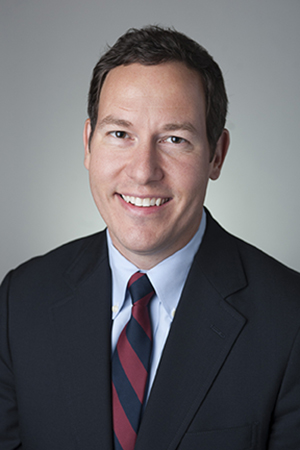
Professor Todd Haugh (Indiana University – Kelley School of Business) will be joining us as a guest blogger for the month of May. Todd is an assistant professor of business law & ethics and has focused his research on white collar crime and sentencing. His most recent work deals with “the financial crisis and how white collar offenders rationalize their conduct.” We welcome Todd to the Business Law Prof Blog and look forward to his posts.   

I’ve been thinking a lot about whistleblowers lately. I serve as a “management” representative to the Department of Labor Whistleblower Protection Advisory Committee and last week we presented the DOL with our recommendations for best practices for employers. We are charged with looking at almost two dozen whistleblower laws. I’ve previously blogged about whistleblower issues here.

Although we spend the bulk of our time on the WPAC discussing the very serious obstacles for those workers who want to report safety violations, at the last meeting we also discussed, among other things, the fact that I and others believed that there could be a rise in SOX claims from attorneys and auditors following the 2014 Lawson decision. In that case, the Supreme Court observed that: “Congress plainly recognized that outside professionals — accountants, law firms, contractors, agents, and the like — were complicit in, if not integral to, the shareholder fraud and subsequent cover-up [Enron] officers … perpetrated.” Thus, the Court ruled, those, including private contractors, who see the wrongdoing but may be too fearful of retaliation to report it should be entitled to SOX whistleblower protection.

We also discussed the SEC’s April KBR decision, which is causing hundreds

SE2-Logo2

At the end of next week, I will be at the University of Connecticut School of Business and the Thomas J. Dodd Research Center for their Social Enterprise and Entrepreneurship Conference.

Further information about the conference is available here, a portion of which is reproduced below:

In October 2014, Connecticut joined a growing number of states that empower for-profit corporations to expand their core missions to expressly include human rights, environmental sustainability, and other social objectives. As a new legal class of businesses, these benefit corporations join a growing range of social entrepreneurship and enterprise models that have the potential to have positive social impacts on communities in Connecticut and around the world. Designed to evaluate and enhance this potential, SE2 will feature a critical examination of the various aspects of social entrepreneurship, as well as practical guidance on the challenges and opportunities presented by the newly adopted Connecticut Benefit Corporation Act and other forms of social enterprise.

Presenters at the academic symposium on April 23 are:

  • Mystica Alexander, Bentley University
  • Norman Bishara, University of Michigan
  • Kate Cooney, Yale University
  • Lucien Dhooge, Georgia Institute of Technology
  • Gwendolyn Gordon, University of Pennsylvania
  • Gil Lan, Ryerson University
  • Diana Leyden, University of