
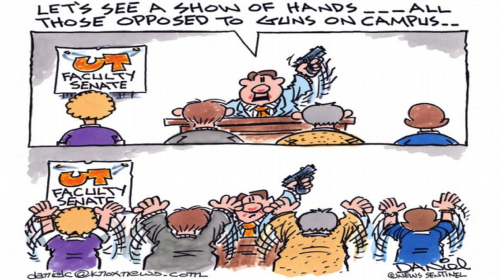
FS(CDanielCartoon)

*          *          *

“A lawyer, as a member of the legal profession, is a representative of clients, an officer of the legal system and a public citizen having special responsibility for the quality of justice.

Am. Bar Assoc., Model Rules of Prof. Conduct Preamble ¶ 1 (emphasis added)

Although we business lawyers do not talk about this much–at least not in forums like this–as licensed attorneys, we have an obligation to speak out publicly on matters of justice.  Paragraph 6 of the Preamble to the Model Rules of Professional Conduct offers details on this role.  Among my favorite parts of this paragraph from the Preamble are the following duties that most commonly impact my work:

  • “As a public citizen, a lawyer should seek improvement of the law, access to the legal system, the administration of justice and the quality of service rendered by the legal profession.”
  • “As a member of a learned profession, a lawyer should cultivate knowledge of the law beyond its use for clients, employ that knowledge in reform of the law and work to strengthen legal education.”
  • “In addition, a lawyer should further the public’s understanding of
Posted by request. Looks like a good event:

—————————————

Law and Ethics of Big Data
Hosted and Sponsored by:
Washington and Lee University School of Law
Lexington, Virginia

Co-Hosted by:
Kenan Institute for Ethics, Duke University; The Virginia Tech Center for Business Intelligence Analytics; The
Department of Business Law and Ethics, Kelley School of Business, Indiana University Bloomington

Wednesday-Thursday, April 24-25, 2019

Abstract Submission Deadline: Friday, March 1, 2019

We are pleased to announce the annual research colloquium, “Law and Ethics of Big Data,” which will be held this
year at Washington and Lee University School of Law in Lexington, Virginia. This year’s colloquium is co-hosted
by Associate Professor Margaret Hu at Washington and Lee University School of Law and Kenan Visiting Professor
at Duke University’s Kenan Institute for Ethics, Associate Professor Angie Raymond of Indiana University, and
Professor Janine Hiller of Virginia Tech.

Due to the success of this multi-year event that now is in its sixth year, the colloquium will be expanded and we seek broad participation from multiple disciplines. Please consider submitting research that is ready for the discussion stage. Each paper will receive detailed constructive critique. We are targeting cross-discipline opportunities for colloquium participants.

Examples of

ComplianceNet2 Conference Invitation Announcement: Early Bird Registration Deadline is THIS FRIDAY, January 25th!

The second-annual ComplianceNet conference will take place on June 3-4, 2019. Villanova University Charles Widger School of Law and its Girard-diCarlo Center for Ethics, Integrity and Compliance will host the conference. Like the highly successful inaugural conference at UC Irvine in 2018, this conference will allow scholars from across disciplines and different legal and regulatory topics to exchange research and explore connections for collaboration.

The timing of this year’s conference is designed to follow on the heels of the Law & Society meeting in nearby Washington, D.C. If you are already headed to Law & Society, Villanova is a short train-ride away and easily accessible by public transportation. Regardless of whether you will be attending Law & Society, Villanova is in a beautiful location right outside Philadelphia, easily serviced by major international airports (Philadelphia (PHL), Newark (EWR), Baltimore (BWI), two more in NYC, and two more in DC); 90 minutes from NYC; and two hours from D.C.

The theme of this year’s conference is “Business Ethics”, although we welcome additional papers discussing compliance across diverse settings. This year’s theme seeks to engage the question of how to

I posted about my summer reading here, and I have decided to write this sort of post each semester, at least for a few semesters. 

This semester was incredibly busy, and I didn’t read as much as I would have liked, but I am glad I finished at least a few books. Nearly all of these books were pretty light

Always looking for interesting books to read – and I am open to reading in most areas – so feel free to leave a comment with suggestions or e-mail me

The Honest Truth About Dishonesty – Dan Ariely (Non-Fiction – Ethics/Behavioral Economics, 2013). Duke University behavioral economist examines the environs/structures that encourage or discourage honesty.

Hannah Coulter – Wendell Berry (Fiction-Novel, 2005). Elderly lady, twice widowed, reflects on her life and the lives of her family members as the world changes after World War II, and as the modern world diverts from rural, farming communities like Port William, KY. Berry’s first novel with a female narrator.

The Most Important Year – Suzanne Bouffard (Non-Fiction – Education, 2017). Discusses the importance of the year before kindergarten. (My oldest child starts kindergarten this coming fall). Biggest takeaway was to engage

ComplianceNetLogo

Friend of the BLPB Josephine Nelson informs us of the following:

The second-annual ComplianceNet conference will take place on June 3-4, 2019. Villanova University Charles Widger School of Law and its Girard-diCarlo Center for Ethics, Integrity and Compliance will host the conference. Like the highly successful inaugural conference at UC Irvine in 2018, this conference will allow scholars from across disciplines and different legal and regulatory topics to exchange research and explore connections for collaboration.

The timing of this year’s conference is designed to follow on the heels of the Law & Society meeting in nearby Washington, D.C. If you are already headed to Law & Society, Villanova is a short train-ride away and easily accessible by public transportation. Regardless of whether you will be attending Law & Society, Villanova is in a beautiful location right outside Philadelphia, easily serviced by major international airports (Philadelphia (PHL), Newark (EWR), Baltimore (BWI), two more in NYC, and two more in DC); 90 minutes from NYC; and two hours from D.C.

The theme of this year’s conference is Business Ethics, although we welcome additional papers discussing compliance across diverse settings. This year’s theme seeks to engage the question of how to run ethical

5th Conference of the French Academy of Legal Studies in Business (Association Française Droit et Management)

June 20 and 21, 2019 – emlyon – Paris Campus

CALL FOR PAPERS 2019 Social Issues in Firms

Social issues and fundamental rights occupy an increasingly important space in the governance of today’s companies. Private enterprises assume an increasingly active role not only in a given economy but also in society as a whole. Firms become themselves citizens. They recognize and support civic engagement by the men and women who work for them. Historically, the role of the modern firm that resulted from the Industrial Revolution has been torn between two opposing viewpoints.

[More information under the break.]

Like my fellow editors here at the BLPB, I enjoyed the first Business Law Prof Blog conference hosted by The University of Tennessee College of Law back in the fall.  They have begun to post their recently published work presented at that event over the past few weeks.  See, e.g., here and here (one of several newly posted Padfield pieces) and here. I am adding mine to the pile: Professional Responsibility in an Age of Alternative Entities, Alternative Finance, and Alternative Facts.  The SSRN abstract reads as follows:

Business lawyers in the United States find little in the way of robust, tailored guidance in most applicable bodies of rules governing their professional conduct. The relative lack of professional responsibility and ethics guidance for these lawyers is particularly troubling in light of two formidable challenges in business law: legal change and complexity. Change and complexity arise from exciting developments in the industry that invite—even entice—the participation of business lawyers.

This essay offers current examples from three different areas of business law practice that involve change and complexity. They are labeled: “Alternative Entities,” “Alternative Finance,” and “Alternative Facts.” Each area is described, together with significant attendant professional responsibility and ethics

Perhaps I’m a cynic, but I have to admit that I was stunned when the news of hotelier  Steve Wynn’s harassment allegations at the end of January caused a double-digit drop in stock price.  What began as an unseemly story of a $7.5 million settlement to a manicurist at one his of his resorts later morphed into a story about his resignation as head of the finance chair of the Republican National Committee. Not only did he lose that job, he also lost at least $412 million (the company at one point lost over $3 billion in value). His actions have also led regulators in two states to scrutinize his business dealings and settlements to determine whether he has violated “suitability standards.”  Nonetheless, Wynn has asked his 25,000 employees to stand by him and think of him as their father. The question is, will the board stand by him as it faces potential liability for breach of fiduciary duty?

The Wynn board members should take a close look at what happened with the Humane Society yesterday. That board chose to retain the CEO after ending an investigation into harassment allegations. A swift backlash ensued. Major donors threatened

At a time when many boards may be thinking of tax planning and possible M & A deals, they may have to start focusing more on the unseemly topic of their executives’ sex lives because the flood of terminations and resignations due to sexual misconduct shows no signs of slowing down. One of the most shocking but underreported terminations in 2017 related to VISA. The CEO, one year into the role, chose to terminate one of his most valuable executives after an anonymous tip about sexual misconduct.  He wanted his employees to know that the corporate culture and values mattered. Board members should look closely at the VISA example.

We will continue to see the rise of the #MeToo movement spurred on in part by the messaging from a star-studded task force  formed to address Hollywood issues and the establishment of a multimillion-dollar legal defense fund to help blue-collar workers. Even Supreme Court Chief Justice Roberts addressed sexual harassment in the court system in his Year-End Report on the Federal Judiciary.  More people than ever may now choose to come forward with claims of harassment or assault. Whether companies choose to terminate wrongdoers or the accused choose to

Two weeks ago, I asked whether companies were wasting time on harassment training given the flood of accusations, resignations, and terminations over the past few weeks. Having served as a defense lawyer on these kinds of claims and conducted hundreds of trainings, I know that most men generally know right from wrong before the training (and some still do wrong). I also know that in many cases, people look the other way when they see or hear about the complaints, particularly if the accused is a superstar or highly ranked employee. Although most men do not have the power and connections to develop an alleged Harvey Weinstein-type “complicity machine” to manage payoffs and silence accusers, some members of management play a similar role when they ignore complaints or rumors of inappropriate or illegal behavior. 

The head in the sand attitude that executives and board members have displayed in the Weinstein matter has led to a lawsuit arguing that Disney knew or should have known of Weinstein’s behavior. We may see more of these lawsuits now that women have less fear of speaking out and Time honored the “Silence Breakers” as the Person of the Year. As I