
Screen Shot 2021-06-29 at 10.53.53 PM

OPEN CALL FOR SUBMISSIONS

The Journal of Law and Political Economy is delighted to announce an open call for submissions to Volumes 2 and 3.

WHO WE ARE

JLPE is an online, peer-reviewed journal published three times yearly, supported by the University of California’s eScholarship platform, https://escholarship.org/uc/lawandpoliticaleconomy. As the “house journal” of the pathbreaking Law and Political Economy movement, our sister organizations include ClassCrits, Inc. (classcrits.org), the Law and Political Economy Project (lpeproject.org), and the Association for the Promotion of Political Economy and Law (APPEAL, politicaleconomylaw.org). Our Editorial and Advisory Boards consist of distinguished, nationally and internationally known scholars drawn widely from law, the social sciences, and the humanities.

With the conviction that conventional Law and Economics is inadequate to the multiple and overlapping crises of our time, JLPE seeks to promote multi- and interdisciplinary analyses of the mutually constitutive interactions among law, society, institutions, and politics. Our central goal is to explore power in all its manifestations (race, class, gender, sexuality, disability, global inequality, etc.) and the relationship of law to power. Accordingly, JLPE aims to provide an academic and practical resource for, and to foster discussion among, scholars, activists, and educators from countries around the world to
The American Business Law Journal (ABLJ) is a triple-blind peer review journal published quarterly “on behalf of the Academy of Legal Studies in Business (ALSB).”  Its articles explore a range of business and corporate law topics, and it is a great resource for academics, industry professionals, and others.  Its “mission is to publish only top quality law review articles that make a scholarly contribution to all areas of law that impact business theory and practice…[and it] search[es] for those articles that articulate a novel research question and make a meaningful contribution directly relevant to scholars and practitioners of business law.”  I’ve previously posted about the journal (here).

The ABLJ has issued an invitation to ALSB members to apply for the position of Articles Editor.  Not currently a member of the ALSB?  No worries, you can easily become a member (here)!  Below is the complete invitation to apply sent from Terence Lau, the ABLJ Managing Editor.  

We invite ALSB members who are interested in serving on the Editorial Board of the American Business Law Journal to apply for the position of Articles Editor. The new Articles Editor will begin serving on the Board in August 2020. Board members

Have you ever wanted to learn the basics about blockchain? Do you think it’s all hype and a passing fad? Whatever your view, take a look at my new article, Beyond Bitcoin: Leveraging Blockchain to Benefit Business and Society, co-authored with Rachel Epstein, counsel at Hedera Hashgraph.  I became interested in blockchain a year ago because I immediately saw potential use cases in supply chain, compliance, and corporate governance. I met Rachel at a Humanitarian Blockchain Summit and although I had already started the article, her practical experience in the field added balance, perspective, and nuance. 

The abstract is below:

Although many people equate blockchain with bitcoin, cryptocurrency, and smart contracts, the technology also has the potential to transform the way companies look at governance and enterprise risk management, and to assist governments and businesses in mitigating human rights impacts. This Article will discuss how state and non-state actors use the technology outside of the realm of cryptocurrency. Part I will provide an overview of blockchain technology. Part II will briefly describe how public and private actors use blockchain today to track food, address land grabs, protect refugee identity rights, combat bribery and corruption, eliminate voter fraud

So, this post is about shameless self-promotion and a cautionary tale.  A while back I was asked to write the West Virginia section of Texas A &M Journal of Property Law’s Oil and Gas Survey.  It’s a short overview of recent developments, and one of the many perils of the law review process is how long such things take to get to print.  

Even worse than a slow timeline, a miscommunication meant that my final round of edits did not make it into the piece, and there are a couple of errors. The editors were appropriately apologetic, and I know it all happened in good faith.  I take some ownership, too, in that I was not at all demanding about knowing the schedule for the next round of edits or the overall timeline.

Ultimately, despite the (nonsubstantive) errors, I hope the piece will be helpful to some folks. There are some interesting oil and gas cases happening in West Virginia (and around the country), and how they turn out could have a significant impact on the oil and gas business.  

Here’s the abstract to my article, which you can find here

This Article summarizes and discusses

I have been told there may be some flexibility on the March 1 deadline.

The UMKC Law Review is pleased to announce a call for submissions relating to the law surrounding distributed ledger (“blockchain”) technology. Selected papers will be published in the Special Topics Symposium, Summer 2019 edition of the UMKC Law Review. This symposium invites proposals for papers that explore the legal and regulatory issues involved in blockchain technology. Today, blockchain technology is used to build tools and infrastructure that help lawyers draft contracts, record commercial transactions, and verify legal documents. In general, investments in blockchain technology has surged over the past year, inviting both legitimate businesses and modern-day scammers. To date, regulatory agencies have yet to determine a consistent approach to the technology that protects the public while not stifling innovation. Issue 1 of UMKC Law Review’s 88th Volume will explore these and related topics with the goal of advancing awareness of blockchain technology and cryptoassets. Articles and essays of all lengths and papers by single authors or multiple authors are invited. Preference will be given to works between 5,000 and 25,000 words. To be accepted for publication in UMKC Law Review, articles must not have been previously

I knew it would be impossible. There was no way to relay my excitement about the potential of blockchain technology in a concise way to lawyers and law students last Friday at the Connecting the Threads symposium at the University of Tennessee School of Law. I didn’t discuss cryptocurrency or Bitcoin other than to say that I wasn’t planning to discuss it. Still, there wasn’t nearly enough time for me to discuss all of the potential use cases. I did try to make it clear that it’s not a fad if IBM has 1500 people working on it, BITA has hundreds of logistics and freight companies signed up to explore possibilities, and the World Bank, OECD, and United Nations have studies and pilot programs devoted to it. As a former supply chain person, compliance officer, and chief privacy officer, I’m giddy with excitement about everything related to distributed ledger technology other than cryptocurrency. You can see why when you read my law review article in a few months in Transactions.

I’ve watched over 100 YouTube videos (many of them crappy) and read dozens of articles. I go to Meetups and actually understand what the coders and developers

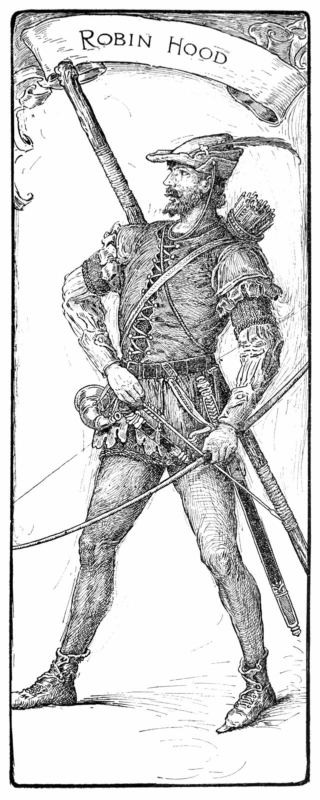
RobinHood

What would the world look like if a public company officer or director, recognizing the value of material nonpublic firm information in his possession and intending to benefit people of limited means, gave this valuable information to those less fortunate without the knowledge or consent of the firm and without any expectation of benefit in return? How, if at all, do we desire to regulate that behavior? The officer or director apparently would be in breach of his or her fiduciary duty absent a valid, binding, and enforceable agreement to the contrary. Does that conduct also, however, violate U.S. federal insider trading rules? Should it? This article, a relatively short piece that I wrote for a “virtual symposium” issue of the Washington University Journal of Law & Policy, offers answers to those questions.

Other symposium authors with insider trading pieces in this volume include:

John Anderson 
Steve Bainbridge
Frank Gevurtz
Zach Gubler
Peter Henning
Roberta Karmel
and
Yesha Yadav

Great reading on this topic, all around.  As we await the next insider trading regulation volley after Salman v. United States, this collection of essays and articles fills a nice gap.  Although the issue is not yet posted to the

Earlier today, I received this call for submissions from the American Business Law Journal (“ABLJ”). I published with the ABLJ in 2017 and had a fabulous experience. The manuscripts are blind/peer-reviewed, something we need more of in the legal academy, in my opinion. I found the substantive comments to be of a much higher quality than one gets from a typical law review, and, unlike the practice of some peer-reviewed journals, the ABLJ published my manuscript in a timely manner. 

———-

The American Business Law Journal is seeking submissions of manuscripts that advance the scholarly literature by comprehensively exploring and analyzing legal and ethical issues affecting businesses within the United States or the world. Manuscripts analyzing international business law topics are welcome but must include a comprehensive comparative analysis, especially with U.S. law.

 As most of you know, the ABLJ is a triple-blind, peer-reviewed law journal published by the Academy. The ABLJ is available on Westlaw and Lexis, and ranks in the top 6% of all publications in the Washington & Lee Submissions and Ranking list by Impact Factor (2016) and in the top 1% of all peer-edited or refereed by Impact Factor (2016).  The Washington & Lee list ranks

Earlier this week, President Trump gave his annual speech on national security. As in the past, he failed to stress human rights (unlike his predecessors) but did allude to cooperation, even with China and Russia, when warranted by geopolitical interests. Over the last several months, he has touted bilateral trade agreements. Coincidentally, my latest law review article on a potential bilateral investment treaty with Cuba came out the same day. As you may recall, Trump recently reversed some Obama-era policies on Cuba over human rights. My article may help his administration reconcile some of the apparent contradictions in his policies. The abstract is below. 

You Say Embargo, I Say Bloqueo—A Policy Recommendation for Promoting Foreign Direct Investment and Safeguarding Human Rights In Cuba

The United States is the only major industrialized nation that restricts
trade with Cuba. Although President Obama issued several executive orders
that have facilitated limited trade (and President Trump has scaled some
back), an embargo remains in place, and by law, Congress cannot lift it until,
among other things, the Cuban government commits to democratization and
human rights reform. Unfortunately, the Cuban and U.S. governments
fundamentally disagree on the definition of “human rights,” and neither side

After my daughter Allie’s first stay at Vanderbilt Children’s hospital, with what we think was a virus that attacked her lungs, Allie seemed to return to normal for a couple weeks before having another episode. This time, we spent 4 days in the hospital. The praise I lavished on Vanderbilt last time was less deserved on this trip, mostly blamed, staff repeatedly claimed, on a new computer system. (Note: In a place like a hospital, don’t you think you should provide adequate training and work out the bugs before launching a new computer system?)

In any event, Allie is back home again, though we are still working with doctors to uncover the precise cause.

Obviously, my daughter’s health is much more important than work, but I do need to continue to work (if for no other reason than health insurance…we would be bankrupt without health insurance). Given that my focus has been diverted, I have had to push on quite a number of deadlines — 4 writing assignments and 2 speaking engagements — and have been slower than normal in returning graded work. Thankfully, students, editors, and colleagues have been quite understanding.

As a professor and a person