
Friend of the Business Law Prof Blog Anat Beck recently posted a draft of her article entitled Unicorn Stock Options – Golden Goose or Trojan Horse? on SSRN.  I heard presentations on earlier versions of this piece, which I personally find quite intricate and interesting.  An excerpt fro the SSRN abstract follows:

This article examines a contemporary puzzle in Silicon Valley – is there a shift in unicorn employees expectations that results in labor contracting renegotiations? It explores the challenges faced by unicorn firms as repeat players in competitive technology markets. It offers the following possible solutions. First, new equity-based compensation contracts, and critiques them. Second, alternatives to the traditional liquidity mechanisms, and critiques them.

It concludes with proposals to remove legal barriers to private ordering, and new mandatory disclosure requirements.

The article has been picked up by the Harvard Law School Forum on Corporate Governance and Financial Regulation and linked to in a Matt Levine column for Bloomberg.  This is a good read, especially for those of you interested in entrepreneurial business law (which is Anat’s speciality).

Last week Dr. Denis Mukwege won the Nobel Peace Prize for his work on gender-based violence in the Democratic Republic of Congo (DRC). This short video interview describes what I saw when I went to DRC in 2011 to research the newly-enacted Dodd-Frank disclosure rule and to do the legwork for a non-profit that teaches midwives ways to deliver babies safely. For those unfamiliar with the legislation, U.S. issuers must disclose the efforts they have made to track and trace tin, tungsten, tantalum, and gold from the DRC and nine surrounding countries. Rebels and warlords control many of the mines by controlling the villages. DRC is one of the poorest nations in the world per capita but has an estimated $25 trillion in mineral reserves (including 65% of the world’s cobalt). Armed militia use rape and violence as a weapon of war in part so that they control the mineral wealth. 

The stated purpose of the Dodd-Frank rule was to help end the violence in DRC and to name and shame companies that do not disclose or that cannot certify that their goods are DRC-conflict free (although that labeling portion of the law was struck down on

BLPB reader Tom N. sent me a link to this article last week by email.  The article covers Elon Musk’s taunting of the U.S Securities and Exchange Commission (SEC) in a post on Twitter.  The post followed on the SEC’s settlement with Musk and Tesla, Inc. of a legal action relating to a prior Twitter post. The title of Tom N.’s message?  “Musk Pokes the Bear in the Eye.”  Exactly what I was thinking (and I told him so) when I had read the same article earlier that day!  This post is dedicated to Tom N. (and the rest of you who have been following the Musk affair).

Last week, I wrote about scienter issues in the securities fraud allegations against Elon Musk, following on Ann Lipton’s earlier post on materiality in the same context.  This week, I want to focus on state corporate law–specifically, fiduciary duty law.  The idea for this post arises from a quotation in the article Tom N. and I read last week.  The quotation relates to an order from the judge in the SEC’s action against Musk and Tesla, Alison Nathan, that the parties jointly explain and justify the fairness and reasonableness of their settlement

I have been so grateful for Ann Lipton’s blog posts (see here and here) and tweets about Elon Musk’s going-private-funding-is-secure tweet affair.  Her post on materiality on Saturday–just before the SEC settlement was announced–was especially interesting (but, of course, that’s one of my favorite areas to work in . . .).  She tweeted about the settlement here:

Screenshot 2018-10-01 10.12.17

[Note: this is a screenshot.]  Ann may have more to say about that in another post; she did add a postscript to her Saturday post reporting the settlement . . . .

But I also find myself wondering about another of the contentious issues in Section 10(b)/Rule 10b-5 litigation: scienter.  This New York Times article made me think a bit on the point.  It tells a tale–apparently relayed to the U.S. Securities and Exchange Commission (SEC) in connection with its inquiry into the tweet incident–of fairly typical back-room discussions between/among business principals.  This part of the article especially stuck with me in that regard:

On an evening in March 2017, . . . Mr. Musk and Tesla’s chief financial officer dined at the Tesla factory in Fremont, Calif., with Larry Ellison, the chairman of Oracle, and Yasir Al Rumayyan, the managing

According to its website,

The U. S. Securities and Exchange Commission (SEC) has a three-part mission:

  • Protect investors

  • Maintain fair, orderly, and efficient markets

  • Facilitate capital formation

I think it needs to add: “Ensure proper entity identification.” 

Examples abound. Take this recent 10-Q:

On June 27, 2018, the Company formed a joint venture with Downtown Television, Inc., for the purpose of developing, producing and marketing entertainment content relating to deep-sea exploration, historical shipwreck search, artifact recovery, and expounding upon the history of these shipwrecks.  The joint venture is being formed as a new limited liability corporation that will be 50% owned each by EXPL and Downtown, and has been named Megalodon Entertainment, LLC. (“Megalodon”), as is further described in Note B. 

Endurance Exploration Group, Inc., SEC 10-Q, for the quarterly period ended: June 30, 2018 (emphasis added). 

Side note: That 10-Q, I will note, raised some other questionable decisionmaking, as it goes on to report: 

NOTE B – JOINT VENTURE

EXPL Swordfish, LLC

Effective January 9, 2017, the Company, through a newly formed, wholly owned subsidiary, EXPL Swordfish, LLC (“EXPL Swordfish”), entered into a joint-venture agreement (“Agreement”) with Deep Blue Exploration, LLC, d/b/a Marex (“Marex”).  The joint venture between

We’re a month away from our second annual Business Law Professor Blog CLE, hosted at the University of Tennessee on Friday, September 14, 2018. We’ll discuss our latest research and receive comments from UT faculty and students. I’ve entitled my talk Beyond Bitcoin: Leveraging Blockchain for Corporate Governance, Corporate Social Responsibility, and Enterprise Risk Management, and will blog more about that after I finish the article. This is a really long post, but it’s chock full of helpful links for novices and experts alike and highlights some really interesting work from our colleagues at other law schools.

Two weeks ago, I posted some resources to help familiarize you with blockchain. Here’s a relatively simple definition from John Giordani at Forbes:

Blockchain is a public register in which transactions between two users belonging to the same network are stored in a secure, verifiable and permanent way. The data relating to the exchanges are saved inside cryptographic blocks, connected in a hierarchical manner to each other. This creates an endless chain of data blocks — hence the name blockchain — that allows you to trace and verify all the transactions you have ever made. The primary function of a

Hello to all from Tokyo, Japan (Honshu).  I have been in Japan for almost a week to present at and attend the 20th General Congress of the International Academy of Comparative Law (IACL), which was held last week in Fukuoka, Japan (Kyushu).  By the time you read this, I will be on my way home.

Fukuoka(Me+Sign)

As it turns out, I was at the Congress with old business law friends Hannah Buxbaum (Indiana Maurer Law), Felix Chang (Cincinnati Law), and Frank Gevurtz (McGeorge Law), as well as erstwhile SEALS buddy Eugene Mazo (Rutgers Law).  I also met super new academic friends from all over the world, including several from the United States.  I attended all of the business law programs after my arrival (I missed the first day due to my travel schedule) and a number of sessions on general comparative and cross-border legal matters.  All of that is too much to write about here, but I will give you a slice.

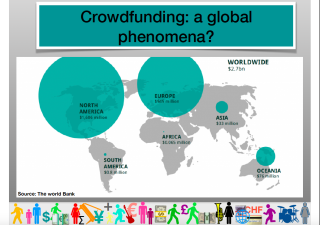
I spoke on the legal regulation of crowdfunding as the National Rapporteur for the United States.  My written contribution to the project, which I am told will be part of a published volume, is on SSRN here.  The entire project consists of eighteen papers from around the world, each of which responded to the same series of prompts conveyed to us by the General Rapporteur for the project (in our case, Caroline Kleiner from the University of Strasbourg).  The General Rapporteur is charged with consolidating the information and observations from the national reports and synthesizing key take-aways.  I do not envy her job!  The importance of the U.S. law and market to the global phenomenon is well illustrated by this slide from Caroline’s summary.

Fukuoka(GlobalCrowdfundingSlide)

The Congress was different from other international crowdfunding events at which I have presented my work.  The diversity of the audience–in terms of the number of countries and legal specialties represented–was significantly greater than in any other international academic forum at which I have presented.  Our panel of National Rapporteurs also was a bit more diverse and different than what I have experienced elsewhere, including panelists hailing from from Argentina, Brazil, Canada, France, Germany, Poland, and Singapore (in addition to me).  At international conferences focusing on the microfinance aspects of crowdfunding, participants from India and Africa are more prominent.  I expect to say more about the individual national reports on crowdfunding in later posts, as the need or desire arises.

A few outtakes on other sessions follow.

SnapchatLogo

One of the business law academy’s power couples, Amy and Bert Westbrook, recently posted an intriguing piece on SSRN that Bert and I have been communicating about a bit this summer.  It is entitled Snapchat’s Gift: Equity Culture in High-Tech Firms, and it is, indeed, a lovely gift–well conceived and packaged.  It is a look at dual class common equity in technology firms–and equity more generally–that confronts and incorporates many perspectives from law, economics, and other social sciences.

Some of you, like me, teach basic corporate finance in a variety of courses.  In those situations, it is important for instructors to have a handle on descriptions of the basic instruments of corporate finance–debt, equity, hybrid, and other.  What is the package of rights each instrument represents that incentivizes investors to supply money or other valuable assets?  In my classes, we ultimately discuss equity as a bundle of rights that includes potentials for financial gain and governance.  Snapchat’s Gift digs into the validity of these perceived rights in relevant part by focusing on recent changes in the primary public offering market for equity securities in the United States–in particular, the advent of highly publicized and fully subscribed initial public offerings of nonvoting common shares.

RobinHood

What would the world look like if a public company officer or director, recognizing the value of material nonpublic firm information in his possession and intending to benefit people of limited means, gave this valuable information to those less fortunate without the knowledge or consent of the firm and without any expectation of benefit in return? How, if at all, do we desire to regulate that behavior? The officer or director apparently would be in breach of his or her fiduciary duty absent a valid, binding, and enforceable agreement to the contrary. Does that conduct also, however, violate U.S. federal insider trading rules? Should it? This article, a relatively short piece that I wrote for a “virtual symposium” issue of the Washington University Journal of Law & Policy, offers answers to those questions.

Other symposium authors with insider trading pieces in this volume include:

John Anderson 
Steve Bainbridge
Frank Gevurtz
Zach Gubler
Peter Henning
Roberta Karmel
and
Yesha Yadav

Great reading on this topic, all around.  As we await the next insider trading regulation volley after Salman v. United States, this collection of essays and articles fills a nice gap.  Although the issue is not yet posted to the

Bernie Sharfman’s paper, A Private Ordering Defense of a Company’s Right to Use Dual Class Share Structures in IPOs, was just published, and I think he has a point. In fact, as I read his argument, I think it is consistent with arguments I have made about the difference between restrictions or unconventional terms or practices that exist at purchase versus such changes that are added after one becomes a member or shareholder.  Here’s the abstract: 

The shareholder empowerment movement (movement) has renewed its effort to eliminate, restrict or at the very least discourage the use of dual class share structures in initial public offerings (IPOs). This renewed effort was triggered by the recent Snap Inc. IPO that utilized non-voting stock. Such advocacy, if successful, would not be trivial, as many of our most valuable and dynamic companies, including Alphabet (Google) and Facebook, have gone public by offering shares with unequal voting rights.

Unless there are significant sunset provisions, a dual class share structure allows insiders to maintain voting control over a company even when, over time, there is both an ebbing of superior leadership skills and a significant decline in the insiders’ ownership of the company’s common stock.