On a previous post about Etsy dropping its B corp. certification, because of the B Lab requirement to convert to a public benefit corporation, I received the following comments:

  • “I simply believe that, in most ways, being a public benefit entity is more about a marketing strategy than a business plan.” (Tom N.)
  • “I had my students read the NY Times articles on Etsy as a part of their last class in my clinic this semester (thanks to my fellow Joe Pileri who alerted me to the article). We represent social enterprises in the clinic so this was a perfect wrap-up. The questions that I posed to my students: what social enterprise isn’t a soft target like Etsy? Won’t they all eventually cave to profit maximization?” (Alicia Plerhopes)
  • “I agree with To[m] N … Also, no theory of CSR actually requires an explicit weighting of the various stakeholders of a firm, so in reality, if the interests of shareholders are receiving the greatest weight, then Milton Friedman was right all along!” (Enrique)

I wanted to respond to these thoughtful comments, briefly, above the line.

Tom, I think the marketing benefits of becoming a PBC, currently, are weak. How many of
The-overnighters

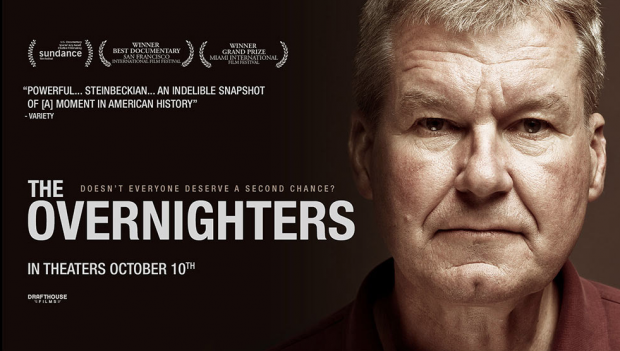
Over the break, I watched the documentary Overnighters on Netflix. 

In short, the documentary chronicles the story of a pastor who opens the church to migrant workers in North Dakota during the energy boom in that state. The pastor faces pushback from his congregation, neighbors, and city officials who do not appreciate having these men – some with criminal records – housed so close. 

In my opinion, the pastor is right, and the congregants are wrong, about the purpose of a church. The church should be in a community to serve, especially its needy neighbors. That said, the logistics of how to serve may be up for debate. Also, it is at least arguable that by serving the migrant workers the church strayed from serving its congregation. It would have been helpful if the church had a clear statement on its purpose and priorities. Many social enterprises have extremely vague purpose statements, which I do not think are very helpful. Benefit corporations are often required by statue to “benefit society and the environment.” A purpose statement like that would not have helped the church in Overnighters much at all. A statement that showed that those in need would be prioritized

I have written about Etsy in at least three past posts: (1) Etsy becoming a certified B Corp, (2) Etsy going public, and (3) Delaware amending it’s public benefit corporation laws (likely, in part, to help Etsy convert to a PBC, which Etsy would need to do to maintain its certification because it incorporated in a non-constituency statute state that does have a benefit corporation statute (Delaware)).

In May, some questioned whether Etsy would keep its social focus after a “management shakeup.” In September, B Lab granted Etsy an extension on converting to a PBC. That article claims that B Lab would reset the deadline for conversion to 2019, if Etsy re-certified as a B Corp by the end of 2017 and would commit to converting to a PBC.

The 2019 date was 4 years from the 2015 Delaware PBC amendments (instead of 4 years from Etsy’s first certification). One of B Lab’s co-founder reportedly said that the statutory amendments were needed because the original 2013 version of the Delaware PBC law was “perfectly fine for private companies and unworkable for public companies.”

Just a few days ago, however, Etsy announced that it would abandon its B

Download

A former student brought this fundraising website to my attention: To the Stars Academy of Arts and Sciences (“TTS Academy). (Image above from a Creative Commons search).

This article describes TTS Academy as follows: “Former Blink-182 singer and guitarist Tom DeLonge is taking his fascination with/conspiracy theories about UFOs to their logical conclusion point: He’s partnering with former government officials on a public benefit corporation studying ‘exotic technologies’ from Unidentified Aerial Phenomenon (UAP) that the consortium says can ‘revolutionize the human experience.'” 

Remember the Blink-182 song Aliens Exist

I couldn’t make this up. And I did spend some time trying to determine if it was a joke, but TTS Academy’s 63-page offering circular suggests that it is no joke. And TTS Academy appears to have already raised over $500,000

According to the organization’s website, Tom DeLonge of Blink-182 fame is in fact the CEO and President. Supposedly, DeLonge has teamed with former Department of Defense official Luis Elizondo who confirmed to HuffPost that the TTS Academy is planning to “provide never before released footage from real US Government systems…not blurry, amateur photos, but real data and real videos.” Rolling Stone reports that “DeLonge has long been 

Earlier this week, my two-year old daughter was in the pediatric ICU with a virus that attacked her lungs. We spent two nights at The Monroe Carell Jr. Children’s Hospital at Vanderbilt (“Vanderbilt Children’s). Thankfully, she was released Wednesday afternoon and is doing well. Unfortunately, many of the children on her floor had been in the hospital for weeks or months and were not afforded such a quick recovery. There cannot be many places more sad than the pediatric ICU.

Since returning home, I confirmed that Vanderbilt Children’s is a nonprofit organization, as I suspected. I do wonder whether the hospital would be operated the same if it were a benefit corporation or as a traditional corporation.

Some of the decisions made at the hospital seems like they would have been indefensible from a shareholder perspective, if the hospital had been for-profit. Vanderbilt Children’s has a captive market, with no serious competitors that I know of in the immediate area. Yet, the hospital doesn’t charge for parking. If they did, I don’t think it would impact anyone’s decision to choose them because, again, there aren’t really other options, and the care is the important part anyway. The food court

Yesterday, I listened to How I Built This‘ podcast on Gary Hirshberg of Stonyfield Yogurt.

I assume most readers are familiar with Stonyfield Yogurt, and perhaps a bit of its story, but I think the podcast goes far beyond what is generally known. 

The main thing that stuck out in the podcast was how many struggles Stonyfield faced. Most of the companies featured on How I Built This struggle for a few months or even a few years, but Stonyfield seemed to face more than its share of challenges for well over a decade. The yogurt seemed pretty popular early on, but production, distribution, and cash flow problems haunted them. Stonyfield also had a tough time sticking with their organic commitment, abandoning organic for a few years when they outsourced production and couldn’t convince the farmers to follow their practices. With friends and family members’ patient investing (including Gary’s mother and mother-in-law), Stonyfield finally found financial success after raising money for its own production facility, readopting organic, and finding broader distribution.

After about 20 years, Stonyfield sold the vast majority of the company to large multinational Group Danone. Gary explained that some investors were looking for liquidity and

My latest paper, The Inclusive Capitalism Shareholder Proposal, 17 U.C. Davis Bus. L.J. 147 (2017), is now available on Westlaw. Here is the abstract:

When it comes to the long-term well being of our society, it is difficult to overstate the importance of addressing poverty and economic inequality. In Capital in the Twenty-First Century, Thomas Piketty famously argued that growing economic inequality is inherent in capitalist systems because the return to capital inevitably exceeds the national growth rate. Proponents of “Inclusive Capitalism” can be understood to respond to this issue by advocating for broadening the distribution of the acquisition of capital with the earnings of capital. This paper advances the relevant discussion by explaining how shareholder proposals may be used to increase understanding of Inclusive Capitalism, and thereby further the likelihood that Inclusive Capitalism will be implemented. In addition, even if the suggested proposals are rejected, the shareholder proposal process can be expected to facilitate a better understanding of the strengths and weaknesses of Inclusive Capitalism, as well as foster useful new lines of communication for addressing both poverty and economic inequality.

My colleague, Joan Heminway, yesterday posted Democratic Norms and the Corporation: The Core Notion of Accountability. She raises some interesting points (as usual), and she argues: “In my view, more work can be done in corporate legal scholarship to push on the importance of accountability as a corporate norm and explore further analogies between political accountability and corporate accountability.”

I have not done a lot of reading in this area, but I am inclined to agree that it seems like an area that warrants more discussion and research.  The post opens with some thought-provoking writing by Daniel Greenwood, including this:  

Most fundamentally, corporate law and our major business corporations treat the people most analogous to the governed, those most concerned with corporate decisions, as mere helots. Employees in the American corporate law system have no political rights at all—not only no vote, but not even virtual representation in the boardroom legislature.
Joan correctly observes, “Whether you agree with Daniel or not on the substance, his views are transparent and his belief and energy are palpable.” Although I admit I have not spent a lot of time with his writing, but my initial take is that I do not

The more I read about social enterprise entities, the less I like about them.  In 2014, my colleague Elaine Wilson and I wrote March of the Benefit Corporation: So Why Bother? Isn’t the Business Judgment Rule Alive and Well?  We observed:

Regardless of jurisdiction, there may be value in having an entity that plainly states the entity’s benefit purpose, but in most instances, it does not seem necessary (and is perhaps even redundant). Furthermore, the existence of the benefit corporation opens the door to further scrutiny of the decisions of corporate directors who take into account public benefit as part of their business planning, which erodes director primacy, which limits director options, which can, ultimately, harm businesses by stifling innovation and creativity.  In other words, this raises the question: does the existence of the benefit corporation as an alternative entity mean that traditional business corporations will be held to an even stricter, profit-maximization standard?

I am more firmly convinced this is the path we are on.  The emergence of social enterprise enabling statutes and the demise of director primacy threaten to greatly, and gravely, limit the scope of business decisions directors can make for traditional for-profit entities, threatening both

A friend who is a member of a university faculty (non-law) some years ago recommended that I read Straight Man, by Richard Russo. I am forever thankful.  The book is a novel set in a small town in Pennsylvania and follows the trials and tribulations of an English-department faculty member at a college besieged by budget challenges, a dysfunctional department, and his own lack of motivation.   

The book is funny — sometimes laugh-out-loud funny — and for anyone on a faculty, I am willing to wager that, despite occasional absurdity, this faculty will feel like it could be yours.  The main character is sympathetic, to a point, but he is also part of the problem.  It is a fast read, and it’s one I come back to every couple years.  Perhaps it is just a guilty pleasure, but the universality of the characters and the bit of hope that emerges are things I find to be comforting in some way. It may be that the book serves as a reminder that we’re not alone in our craziness.  Everyone who has taught for a while knows a Hank, a Finny, a Gracie DuBois, Jacob Rose, a Billy Quigley.