Image result for olivia jade college

The college admissions scandal has been on my mind a good bit since the story broke. (Listen to the podcast “Gangster Capitalism” if you need to catch up on the details of the scandal.)

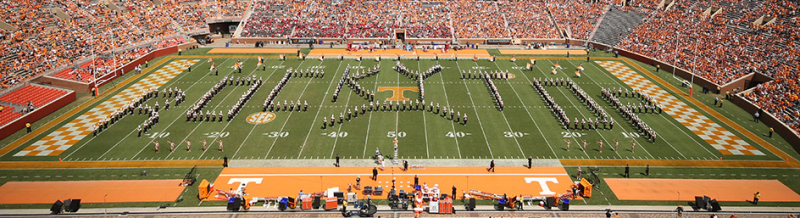
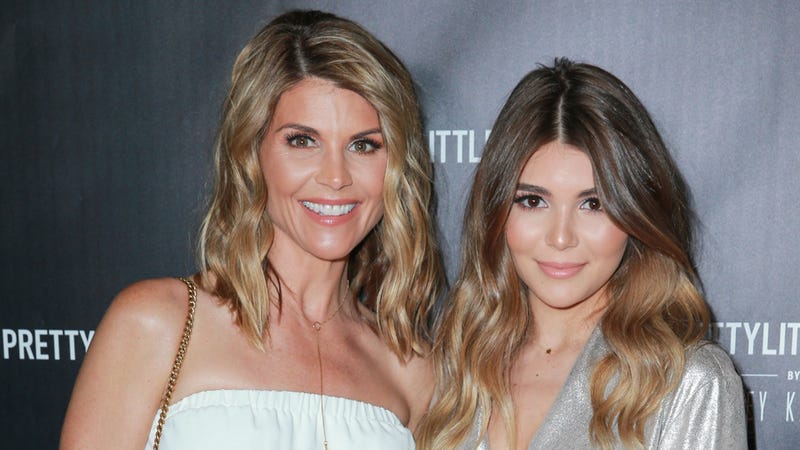
One student, more than any other in the scandal, has been in the media’s crosshairs: Olivia Jade Giannulli. Olivia Jade – a social media influencer (whatever that means) – seems to be getting so much attention because of her famous parents (actress Lori Loughlin and fashion designer Mossimo Giannulli), and because of some unfortunate comments she made about college on YouTube. Olivia Jade said: “I don’t know how much of school I’m going to attend but I’m going to go in and talk to my deans and everyone and hope I can try and balance it all. But I do want the experience of game day and partying, I don’t really care about school. As you guys all know. ” I don’t know much about Olivia Jade, but she comes across as spoiled, arrogant, selfish, entitled, obnoxious, and lacking self-awareness. In many ways, I hope my children and my students grow up to be her opposite. 

In contrast, three runners who I
Rivers

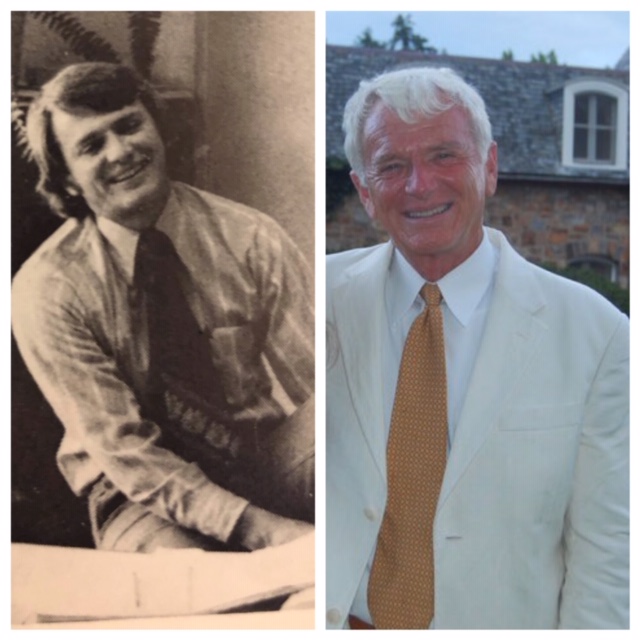
On Sunday morning, Rivers Lynch, a beloved member of my wife’s side of our family, died suddenly of natural causes. Rivers spent his professional life as an educator – over four decades as a teacher, an administrator, a driving instructor, and a coach of various sports. In 2007, he was inducted into the South Carolina Athletics Coaches Association Hall of Fame for his many successful seasons as a tennis coach, including 11 state championships. Even this year, at the age of 72, he continued to coach the Myrtle Beach High School tennis team.  

The outpouring of support on social media has been incredible to witness. Rivers, quite literally, positively affected the lives of thousands of students, colleagues, neighbors, and family members. A few of the countless posts include words like: “I’ve yet to meet anyone so kind and caring.” “Every single person was special to him.” “Truly humble…always greeting me with a smile and making me feel welcome.” “The truest most genuine person I’ve ever had the honor to know.” “A father like figure to all of us.” “A beautiful soul…that smile always brightened my day.” “Touched so many lives.” “Always championed students who were ‘underdogs.’” “My favorite teacher.&rdquo

As a former compliance officer who is now an academic, I’ve been obsessed with the $25 million Varsity Blues college admissions scandal. Compliance officers are always looking for titillating stories for training and illustration purposes, and this one has it all– bribery, Hollywood stars, a BigLaw partner, Instagram influencers, and big name schools. Over fifty people face charges or have already pled guilty, and the fallout will continue for some time. We’ve seen bribery in the university setting before but those cases concerned recruitment of actual athletes. 

Although Operation Varsity Blues concerns elite colleges, it provides a wake up call for all universities and an even better cautionary tale for businesses of all types that think of  bribery as something that happens overseas. As former Justice Department compliance counsel, Hui Chen, wrote, “bribery. . .  is not an act confined by geographies. Like most frauds, it is a product of motive, opportunity, and rationalization. Where there are power and benefits to be traded, there would be bribes.” 

My former colleague and a rising star in the compliance world, AP Capaldo, has some great insights on the scandal in this podcast. I recommend that

Yesterday was International Women’s Day and I was supposed to post but couldn’t think of what to write. I simply had too many choices based on this week’s news. It’s no coincidence that three months before the World Cup and on International Women’s Day, the U.S. Women’s Soccer Team sued U.S. Soccer for gender discrimination based on pay and working conditions, including medical treatment, travel arrangements, and coaching. On the one hand, some argue that the women should not receive the same amount as their male counterparts because they do not draw the same crowds or generate the same revenue. The plaintiffs argue that they cannot draw the same crowds in part because they do not get the same marketing and other financial support. In their defense, the U.S. women have won the World Cup three times and have won gold four times at the Olympics. The men’s team has never won either tournament and didn’t even qualify for the 2018 World Cup. I was in Brazil for the 2014 World Cup and when the men advanced, people were genuinely shocked. No one expected it and I was able to get a ticket to that match 15 minutes before start

I was going to move on to other topics after two recent posts about Nike’s Kaepernick Ad, but I decided I had a little more to say on the topic.  My prior posts, Nike’s Kaepernick Ad Is the Most Business Judgmenty Thing Ever and Delegation of Board Authority: Nike’s Kaepernick Ad Remains the Most Business Judgmenty Thing Ever explain my view that Nike’s decision to run a controversial ad is the essence of the exercise of business judgment.  Some people seem to believe that by merely making a controversial decision, the board should subject to review and required to justify its actions.  I don’t agree. I need more.   

First, I came across a case (an unreported Delaware case) that had language that was simply too good for me to pass up in this context:

The plaintiffs have pleaded no facts to undermine the presumption that the outside directors of the board . . . failed to fully inform itself in deciding how best to proceed . . . . Instead, the complaint essentially states that the plaintiffs would have run things differently. The business judgment rule, however, is not rebutted by Monday morning quarterbacking. In the absence of well

I am teaching Sports Law this semester, which is always fun.  I like to highlight other areas of the law for my students so that they can see that Sports Law is really an amalgamation of other areas: contract law, labor law, antitrust law, and yes, business organizations.  I sometimes cruise the internet for examples to make my point that they really need to have a firm grounding the basics of many areas of law to be a good sports lawyer.  Today, I found a solid example, and not in a good way.  

I found a site providing advice about “How to Start a Sports Agency” at the site https://www.managerskills.org.  This is site is new to me.  Anyway, it starts off okay: 

Ask any successful sports agent: education is the foundation upon which you will build your business. The first step is to earn your bachelor’s degree from an appropriately accredited institution.

. . . .

Once you have obtained your bachelor’s degree, the next step will be to pursue your master’s degree. Alternately, you may choose to pursue a law degree.

While a law degree is not required, the skills you acquire during your studies will be

Recently, the International Olympic Committee (IOC) announced that Russia will be banned from the 2018 Winter Games for systemic doping

If you have not watched Icarus (on Netflix) on this topic, I recommend it. The documentary starts slowly, and the story-line is a bit disjointed, but the information uncovered about state-sponsored doping in Russia is fascinating and depressing.  Even if you are not a sports fan, you may be interested in the parts in the documentary related to the alleged involvement of the Russian government. 

It has been a busy semester, but I am working (slowly) on a journal article on morality clauses in sports contracts. Doping is often specifically mentioned in these contracts, and doping is a sad reality in many sports. Doping also betrays, I think, improper prioritization. While we are starting to see more attention paid to courage and compassion in sports, “winning” has often been promoted as the top priority. Hopefully we will see more people (and  countries) who compete with passion, but also with integrity.  

Quietly, just over two months ago, we got our Lady Vols back.  As you may recall, back in 2014, The University of Tennessee, Knoxville decided to consolidate its athletic branding behind the ubiquitous orange “Power T.” The women’s basketball team was exempted from the brand consolidation and retained the Lady Vol name and old-school logo in honor of our beloved departed coach, Pat Head Summitt. (See here.)

Many can be credited with the revival of the Lady Vols brand (and I do consider it to be an accomplishment), although perhaps these five heroic women are owed the largest debt of gratitude for the achievement.  I guess my earlier envisioned dreams of profiting from the abandonment of the trademarked Lady Vols logo will not soon be realized . . . .

There are lingering lessons in this affair for businesses and their management–and universities (as well as their athletic departments) are, among other things, businesses.  Knoxville’s former Mayor weighed in with comments on the matter in a recent local news column, advising “you need to be sensitive to what the customer likes.” He concludes (bracketed text added by me):

People will speculate for a long time on how UT

You couldn’t pay me enough to be the owner of an NFL team right now. I almost feel sorry for them. Even if you’re not a  fan, by now you’ve heard about the controversy surrounding NFL free agent Colin Kaepernick, and his decision to kneel during the national anthem last year. You’ve also probably heard about the President’s call for NFL owners to fire players who don’t stand while the anthem is played and his prediction of the league’s demise if the protests continue. Surprisingly, last Sunday and Monday, some of the same owners who made a business decision to take a pass on  Kaepernick despite his quarterback stats (citing among other things, the potential reactions of their fans) have now themselves made it a point to show solidarity with their players during the anthem. The owners are locking arms with players, some of whom are now protesting for the first time.

Football is big business, earning $13 billion last year, and the owners are sophisticated businessmen with franchises that are worth on average $2.5 billion dollars each. They care about their fans of course, and I’m sure that they monitor the various boycotts. They are also reading about

 RockyTopPride

A recent Knoxville New Sentinel article (as well as articles and other press coverage, including stories on local television outlets like this one) noted the golden anniversary of The University of Tennessee’s unofficial* fight song (also a Tennessee state song), Rocky Top.  Any of you who have been to Neyland Stadium–or to Thompson-Boling Arena or any other venue at which the Vols are accompanied by the Pride of the Southland Marching Band or one of the pep bands–are familiar with the tune.  Many of our opponents just despise it.  It’s catchy, and it’s country.

And it has led to merch in which The University of Tennessee has an interest.  Rocky Top hats, t-shirts, etc. abound.  Lyrics from the song (especially “Home sweet home to me”) adorn the same.  That little song has become a big (read: commercially successful) deal.

But it also has been involved in some recent intellectual property law controversies involving a town just North of us here in Knoxville–a town formerly known as Lake City, Tennessee and now known as (you guessed it) Rocky Top, Tennessee.  It will take me two posts to cover this without boring you all, but I will start with