
I recently discovered that YouTube hosts a collection of content related to contracts. If you teach this first year course, it is at least worth browsing through the options to see if you can include something in class, a follow-up email to students, or linking through your course website.  These videos are silly and hard to believe that one could devote so much time to a task like “contracts” songs, but bless those who do.  

Collection of Contracts Songs #1: 

Collection of Contracts Songs #2

If you use other content in your first year contracts course, please leave a comment or send me an email. I will update the post with your suggestions.

-AT
Even before I read the book The Happy Lawyer by my former colleagues Nancy Levit and Doug Linder, I loved every legal job I ever had from judicial law clerk to BigLaw associate (twice), to deputy general counsel. I am still a happy lawyer after twenty-two years in the profession. I am clearly an anomaly among my attorney friends, most of whom looked at me with envy when I said that I was leaving practice to pursue academia. One friend, a partner in a South Florida firm quipped, “litigation has to be one of the only professions where your client hates you, your opposing counsel hates you, and the judge probably thinks you’re an idiot. When the outcome is positive, the client loves you until they see the bill.” No wonder lawyers aren’t happy.

But the situation for lawyers is more serious than a few clients grumbling about high bills. Earlier this week CNN reported that lawyers are the 4th most unhappy professionals behind dentists, pharmacists, and physicians, and are 3.6 times more likely to suffer from depression than non-lawyers. According to the article, 40% of law students report that they have suffered from depression before graduation. That acknowledgement

(1) Corporate Disclosures, (2) Indirect Advocacy, (3) Climate Change, and (4) Institutional Investors 

The Union of Concerned Scientists, an alliance of more than 400,000 citizens and scientists, released a report today: Tricks of the Trade: How Companies Influence Climate Policy Through Business and Trade Associations.  The report is based on data collected by CDP, an international not-for-profit that “works with investors, companies and governments to drive environmental disclosure”.  CDP administers an annual climate reporting questionnaire to more than 5,000 companies worldwide with the support of various institutional investors (722 institutional investors with over $87 trillion in capital). The 2013 questionnaire asked companies about climate policy influence, including board membership in trade associations, lobbying, and donations to research organizations.

Tricks of the Trade highlights outsourced political influence through the use of trade associations and interest groups that lobby on behalf of their members rather than the members engaging in these activities in their own name.  The report highlights 3 main issues:  (1) lack of transparency, (2) incongruence with the outsourced message among responding companies, and (3) the continued role that the Citizens United decision has on corporate spending and political discourse.

 Transparency:

  • Of the 5,557 companies that received the

Francis G.X. Pileggi and Kevin F. Brady at Delaware Corporate & Commercial Litigation Blog closely track Chancery and Supreme Court cases out of Delaware.  Their annual Delaware round up, is always a top-notch, quick  and dirty summary of the year. If you haven’t kept up with the major cases, or want a quick reference when thinking about what developments to include in your classes this spring or next fall–then this list is for you.

Here are 2 additional cases that I have found noteworthy for some combination of scholarship, teaching and practice reasons:

1.  Chevron forum selection clause enforceability

Chancellor Strine’s opinion in Boilermakers Local 154 Retirement Fund v. Chevron Corp.,et al, upheld the enforceability of a Delaware forum selection clause unilaterally adopted by corporate boards of directors of Defendants.  Plaintiffs dismissed their appeal, and moved to dismiss their remaining claims in Chancery Court leaving intact Chancellor Strine strong support of forum selection clauses.  Chevron was preceded Chevron was preceded by National Industries Group (Holding) v. Carlyle Investment Managements LLC and TC Group LLC, a 2013 Delaware Supreme Court opinion, which addressed the contractual enforceability of forum selection clauses. 

2.  Huatacu Upholding waiver of dissolution rights when

Alicia Plerhoples is leading an innovative Social Enterprise and Nonprofit Clinic at Georgetown University Law Center.  She presented her “Representing Social Enterprise” article at AALS in 2013, and her article was recently published by the Clinical Law Review.  I recommend the article to all those interested in social enterprise and/or clinical education.  The article will be helpful to the academic, practitioner, and clinician (perhaps because Professor Plerhoples has experience in all three roles).   “Representing Social Enterprise” includes a deep discussion of the models of social enterprise, thoughtful analysis of the corporate governance issues that are likely to arise when representing social enterprises, and interesting insights into Georgetown’s clinic. 

The abstract is reproduced below and the entire article can be found on SSRN here:

“This article explores the representation of social enterprises — i.e., nonprofit and for-profit organizations whose managers strategically and purposefully work to create social, environmental, and economic value or achieve a social good through business techniques — in the Social Enterprise & Nonprofit Law Clinic at Georgetown University Law Center. The choice to represent social enterprise clients facilitates a curriculum that explicitly focuses on the business models, governance tools, and legal mechanisms that these organizations use

Tonight, I will teach my first negotiation class, to a group of Belmont University MBA students.  Over the past months, I have read a number of books on negotiation and reflected upon the negotiation I did in practice and am still doing in my professional life and personal life.  The more I read and think about the subject, the more I am convinced that law students and lawyers (in addition to business students and business people) need more training in negotiation.

In litigation, I have heard that well over 90% of cases settle before trial, requiring negotiation, and in the transactional context, negotiation is ever-present.    

The late-Roger Fisher of Harvard Law School (and co-author of the perennial best seller Getting to Yes) has a short video clip about negotiation v. litigation posted below. My legal training did a good job sharpening my critical thinking, improving my attention to detail, and preparing me to “win” arguments.  However, I cannot remember much time devoted to joint-problem solving, uncovering underlying interests, and dealing with people problems.  While much of what is written in Getting to Yes and its progeny is common sense, it is easy to stray from its guidelines

I am writing this while on a break at the AALS Annual Meeting, having just attended the panel discussion organized by the AALS Section on Agency, Partnership, LLCs, and Unincorporated Associations: Effective Methods for Teaching LLCs and Unincorporated Business Arrangements.  The presentations were excellent, including one by BLPB co-blogger Anne Tucker.  Here are a couple of items I took from Robert Rhee’s presentation that I thought might be of interest to our readers:

1.  Robert J. Rhee, Case Study of the Bank of America and Merrill Lynch Merger

This is a case study of the Bank of America and Merrill Lynch merger. It is based on the article, Fiduciary Exemption for Public Necessity: Shareholder Profit, Public Good, and the Hobson’s Choice during a National Crisis, 17 Geo. Mason L. Rev. 661 (2010). The case study analyzes the controversial events occurring between the merger signing and closing. It reviews in depth the circumstances under the federal government threatened to fire the board and management of Bank of America unless it consummated the Merrill Lynch acquisition. Among other issues, this case study raises the questions: (1) what is the role of a private firm during a public

All the information you need is on the registration page.  Here are some relevant excerpts:

The Society of Socio-Economists (SOS) is a society of law teachers, teachers of economics and other disciplines, and other professionals and interested people who approach economic issues in harmony with the principles articulated in the statement of principles entitled “What Is Socio-Economics.” [Please see excerpt below.]  SOS holds an annual meeting in conjunction with the Annual Meeting of the Association of American Law Schools (AALS) in coordination with the AALS Section on Socio-Economics….

Statement of Socio-Economics Principles

Socio-economics begins with the assumption that economic behavior and phenomena are not wholly governed or described by any one analytical discipline, but are embedded in society, polity, culture, and nature.  Drawing upon economics, sociology, political science, psychology, anthropology, biology and other social and natural sciences, philosophy, history, law, management, and other disciplines, socio-economics regards competitive behavior as a subset of human behavior within a societal and natural context that both enables and constrains competition and cooperation.  Rather than assume that the individual pursuit of self-interest automatically or generally tends toward an optimal allocation of resources, socio-economics assumes that societal sources of order are necessary for people and

Last week I attended the UN Forum on Business and Human Rights in Geneva.  The Forum was designed to discuss barriers and best practices related to the promotion and implementation of the non-binding UN Guiding Principles on Business and Human Rights, which discuss the state’s duty to protect human rights, the corporation’s duty to respect human rights, and the joint duty to provide access to judicial and non-judicial remedies for human rights abuses. This is the second year that nation states, NGOs, businesses, civil society organizations, academics and others have met to discuss multi-stakeholder initiatives, how businesses can better assess their human rights impact, and how to conduct due diligence in the supply chain.

Released in 2011 after unanimous endorsement by the UN Human Rights Council, the Guiding Principles are considered the first globally-accepted set of standards on the relationship between states and business as it relates to human rights. The US State Department and the Department of Labor have designed policies around the Principles, and a number of companies have adopted them in whole or in part, because they provide a relatively detailed framework as to expectations.  Some companies faced shareholder proposals seeking the adoption of the Principles

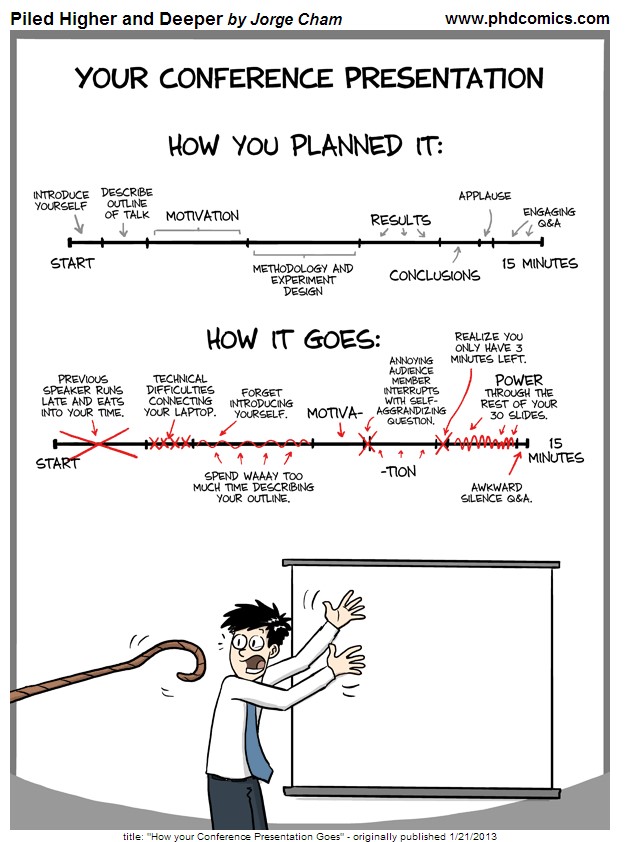
With winter break nearly upon us this means grading, writing projects, and possibly some conference travel with the upcoming AALS annual meeting.  I plan on putting together my AALS talk (on incorporating experiential exercises in teaching LLCs) next week, and have drawn inspiration from the following image:

Conference Image

The Business Law programs are on Saturday, January 4th and are listed below. If you would like to highlight other programs, please respond in the comments, and I will add to the list.

  • The program will explore:  The … topic of effectively teaching LLCs.  
  • 2:00 pm – 3:45 pm Business Associations
    The Value Proposition for Business Associations in Tomorrow’s Legal Education
  • The panel will be exploring: How does business associations teaching and scholarship contribute to the U.S. program of legal education?  How could or should it contribute?  What role does the basic law school course on business associations play in an optimized law school curriculum?  What course content, pedagogy, and teaching tools best support that role?  How does business associations scholarship inform and support that role?    
  • 4:00 pm –