Crowdfunding’s a popular topic here at BLPB, but here’s a use that hadn’t occurred to me.

Apparently, a former SEC lawyer is using Kickstarter to fund an investigation into the fees that CalPERS pays for its private equity investments.   

It all started when CalPERS announced that it didn’t know what it was paying in private equity fees.

This was somewhat surprising.  CalPERS has the money, and is assumed to have the sophistication, to bargain for its interests and at least require firms to make the appropriate disclosures.

Nonetheless, it appeared to be in the dark about its own fee payments.

To be fair, NYC’s Comptroller recently claimed to be shocked by NYC funds’ fees, and the SEC has now begun to aggressively investigate private equity fee and expense disclosure.  It even recently settled a case with KKR alleging that it improperly allocated expenses to fund investors that it should have partially absorbed itself.

 Still, one would have thought that CalPERS, of all funds, could protect itself.

Enter Edward A. H. Siedle, who is seeking public support for his investigation of CalPERS’s fees.  Apparently, he’s done this before: he recently issued a crowd-funded report on Rhode Island’s state

I was traveling to the annual CALI Conference on Law School Computing when this happened, but I thought I would share it, in case you haven’t seen it yet.

Two police officers showed up at the annual meeting of PNE Wind AG, a German company focusing on renewable energy. They sealed the room where votes were tabulated and seized documents, apparently to investigate vote-tampering charges filed by two of PNE Wind’s supervisory board members.

Not surprisingly, the company’s stock price dropped more 13% in the two days following the meeting. It rebounded afterward but, curiously, has dropped another 6% in the week since authorities announced that no further investigation was warranted. But a few other things have been going on in Europe in the last week, so the second drop may not have anything to do with the investigation.

Put this at the top of your list of things that can go wrong at the annual meeting.
______

I was at the CALI meeting to speak on How to Ruin a Presentation with PowerPoint. All the CALI presentations will be posted on YouTube, so I’ll let you know when links are available, if you want to see

Chen Chen, Xiumin Martin, Sugata Roychowdhury, and Xin Wang have posted a paper to SSRN that attempts to identify firms that suffer from poor internal information flow by comparing the relative insider trading profits of high level managers and low level managers.  They find that when lower level managers make higher profits – suggesting that they have better information than higher level officers – the firm’s external financial reporting suffers.

[More under the cut]

Chief Justice John Roberts wrote for himself, Justice Anthony Kennedy and the four liberal justices that:

“Congress passed the Affordable Care Act to improve health insurance markets, not to destroy them… If at all possible, we must interpret the Act in a way that is consistent with the former, and avoids the latter.”

Justice Antonin Scalia wrote the dissent, joined by Clarence Thomas and Samuel Alito, suggesting that the health care reform should be called SCOTUScare because the high court has now intervened twice to save the flawed law.

The opinion is available here: http://www.supremecourt.gov/opinions/14pdf/14-114_qol1.pdf

Recent news brings us two reminders that crowdfunding is an amoral fundraising tool. It can be used for evil as well as for good.

Crowdfunding War

First, the New York Times reports that Russian nationalists are using crowdfunding to fund the rebellion/invasion in eastern Ukraine. One website even allows donors to direct contributions to specific militia units. The Russian separatists claim to have raised millions of dollars. (Of course, they have also claimed there’s no Russian government involvement in the rebellion, so take these claims with a grain of salt.)

Not much can be done about the groups themselves, which are located in Russia. But, as the Times points out, the payment intermediaries who help facilitate these payments are at legal risk.

Crowdfunding Fraud

Second, Inc. magazine reports that the Federal Trade Commission has taken action against a man who raised $122,000 on Kickstarter to produce a board game, then used the money to pay his rent and move. The man, Erick Chevalier, agreed to a settlement that orders him to repay the money, but the judgment has been suspended because he no longer has any money.

A copy of the FTC’s complaint is here. The agreed order is 

I’ve just moved down to New Orleans to join the faculty at Tulane Law School (my bio will be updated  … um, eventually), where I’ll be teaching Business Enterprises and Securities Regulation to start.  As you can imagine, Louisiana is quite a change from both North Carolina and, before that, NYC.  One thing I noticed right off the bat is that most of the banks in Louisiana are local/regional institutions – not many national banks have branches here.  Which means that, as a former plaintiffs’ attorney, for the first time in my adult memory I have a bank account with a financial institution I haven’t sued.

(Sidenote: That was actually kind of an issue when I worked for the law firm then-known as Milberg Weiss.  I was told we had trouble getting firmwide health insurance because we’d sued all the carriers and they didn’t want to do business with us.)

Anyway, as I procrastinate from unpacking….

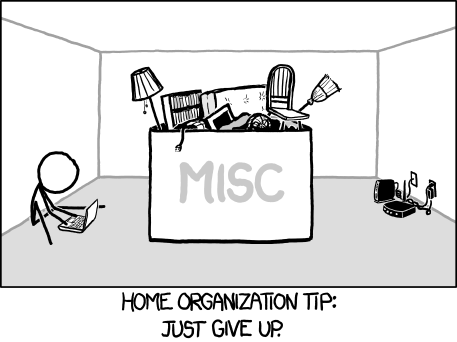
*actual representation of my apartment

….the big news that has my attention is the AIG verdict.  There have already been conflicting views on what it portends for future bailouts, but what fascinates me is how much of the opinion is devoted to the judge’s moral condemnation of the Fed’s actions, and his moral absolution of AIG, even though the relative good or evil of either player was really not relevant to his ultimate holding.

[More under the jump]

It looks like fee-shifting bylaws are going to have a very short life, at least in Delaware.
About a year ago, the Delaware Supreme Court upheld a loser-pays bylaw that required the unsuccessful party in any intracorporate litigation to pay the costs and attorneys’ fees of the prevailing party. The case, ATP Tour, Inc. v. Deutscher Tennis Bund, involved a non-stock corporation, but nothing in the case indicates the result would not apply to ordinary corporations, and the relevant statutory rules make no distinction between non-stock and stock corporations.

However, the Delaware General Assembly has passed, and the Governor is almost certain to sign, a bill that rejects loser-pay provisions in either the bylaws or the certificate of incorporation.

The bill, SB 75, amends Del. § 102 to provide:

(f) The certificate of incorporation may not contain any provision that would impose liability on a stockholder for the attorneys’ fees or expenses of the corporation or any other party in connection with an internal corporate claim, as defined in § 115 of this title.

It adds the following language to Del. § 109(b):

The bylaws may not contain any provision that would impose liability on a stockholder for the attorneys&rsquo