
I recently had the pleasure of hearing my OU colleague Professor Megan Shaner present her interesting and timely new article, Back to the Future? Reclaiming Shareholder Democracy Through Virtual Annual Meetings (with Professor Yaron Nili).  What an important topic, especially in these unusual times!  An abstract is below:

From demanding greater executive accountability to lobbying for social and environmental policies, shareholders today influence how managers run American corporations. In theory, shareholders exert that influence through the annual meeting: a forum where any shareholder, large or small, can speak their mind, engage with the corporation’s directors and managers, and influence each other. But today’s annual meetings, where a widely diffused group of owners often vote by proxy, are largely pro forma: only handful of shareholders attend the meeting and voting results are largely determined prior to the meeting. In many cases, this leaves Main Street investors’ voice unspoken for.

But modern technology has the potential to resurrect the annual meeting as the deliberative convocation and touchstone of shareholder democracy it once was. COVID-19 has forced most American corporations to hold their annual meetings virtually. Virtual meetings allow shareholders to attend meetings at a low cost, holding the promise of re-engaging retail shareholders in corporate governance. If structured properly, virtual meetings can reinvigorate the annual meeting, reviving shareholder democracy while maintaining the efficiency benefits of proxy voting.

The Article makes three key contributions to the existing literature. First, using a comprehensive hand collected dataset of state reactions to COVID-19 and of all annual meetings held between March 11 and June 30, 2020, it offers a detailed empirical account of the impact that COVID-19 and the move to virtual annual meetings had on shareholder voting. Second, it uses the context of COVID-19 to show how modern-day annual meetings have drifted away from its democratic function. Finally, the Article argues that technology can revive the shareholder democracy goals of annual meetings, and underscores how virtual meetings can meet that important goal.
Mark Roe & Roy Shapira have posted The Power of the Narrative in Corporate Lawmaking on SSRN (here).  Here is the abstract:

The notion of stock-market-driven short-termism relentlessly whittling away at the American economy’s foundations is widely accepted and highly salient. Presidential candidates state as much. Senators introduce bills assuming as much. Corporate interests argue as much to the Securities and Exchange Commission and the corporate law courts. Yet the academic evidence as to the problem’s severity is no more than mixed. What explains this gap between widespread belief and weak evidence?

This Article explores the role of narrative power. Some ideas are better at being popular than others. The concept of pernicious stock market short-termism has three strong qualities that make its narrative power formidable: (1) connotation — the words themselves tell us what is good (reliable long-term commitment) and what is not (unreliable short-termism); (2) category confusion — disparate types of corporate misbehavior, such as environmental degradation and employee mistreatment, are mislabeled as being truly and primarily short-termism phenomena emanating from truncated corporate time horizons (when they in fact emanate from other misalignments), thereby making us view short-termism as even more rampant and pernicious than it is; and (3) confirmation — the idea is regularly repeated, because it is easy to communicate, and often boosted by powerful agenda-setters who benefit from its repetition.

The Article then highlights the real-world implications of narrative power — powerful narratives can be more certain than the underlying evidence, thereby leading policymakers astray. For example, a favorite remedy for stock-market-driven short-termism is to insulate executives from stock market pressure. If lawmakers believe that short-termism is a primary cause of environmental degradation, anemic research and development, employee mistreatment, and financial crises — as many do — then they are likely to focus on further insulating corporate executives from stock-market accountability. Doing so may, however, do little to alleviate the underlying problems, which would be better handled by, say, stronger environmental regulation and more astute financial regulation. Powerful narratives can drive out good policymaking.

       Hope everyone is doing ok these days.  I have found that by lowering my expectations for myself, I manage to feel a great deal of accomplishment.  For example, so long as I shower 15 minutes before my 2:30 pm class (yes, pm), I give myself a hearty pat on the back.

       (Just kidding by the way.  I am almost always showered by 2:00 pm.  [Winky-face emoji if I could do it.])

       In working on some presentations with Professor Daniel Kleinberger, I spent some time looking at how statutes and judicial decisions have defined the closely held corporation for purposes of offering oppression-related relief.  I wrote up some of my preliminary findings below, which you may (or may not) find interesting.  This is just a draft, so please excuse any errors:

      The cause of action for oppression is designed to provide relief to minority shareholders in closely held corporations. That said, jurisdictions differ in how they define the corporations that are subject to the oppression action, which in turn creates differences in the shareholders who are eligible for oppression-related protection.

      In jurisdictions with dissolution-for-oppression statutes, some provide no limitation on the types of corporations that fall within the statutory coverage. As literally written, in other words, these statutes extend the protection of the oppression doctrine to shareholders in any corporation—whether closely held or not.[1] In other jurisdictions, the statutory coverage is limited to corporations with shares that are not publicly traded.[2] These statutes seem more directly tailored to the shareholders that the oppression doctrine was designed to protect—i.e., shareholders in corporations that lack a market exit at a fair price.

      Some statutes focus more on the number of shareholders in the company. New Jersey, for example, provides an oppression action only for corporations with 25 or fewer shareholders.[3] Others set forth a more generally applicable oppression action, but then provide additional oppression-related grounds to corporations with less than a specified number of owners.[4] Still other statutes link the oppression action to “statutory close corporations”—i.e., corporations that qualify and elect to use the jurisdiction’s supplemental statutory provisions for closely held corporations.[5] Georgia, for example, provides an oppression action only for statutory close corporations.[6] In other states, the statutes set forth a more generally applicable oppression action, but then provide additional oppression-related grounds (or remedies) for statutory close corporations.[7]

      In jurisdictions following a fiduciary duty approach, there are relatively few decisions that attempt to define a closely held corporation for the purpose of determining whether the oppression doctrine should apply. In Donahue v. Rodd Electrotype Co., the Supreme Judicial Court of Massachusetts imposed a fiduciary duty between shareholders of a “close corporation.”[8] The court also defined “close corporation” as follows:

      In previous opinions, we have alluded to the distinctive nature of the close corporation, but have never defined precisely what is meant by a close corporation. There is no single, generally accepted definition. Some commentators emphasize an “integration of ownership and management,” in which the stockholders occupy most management positions. Others focus on the number of stockholders and the nature of the market for the stock. In this view, close corporations have few stockholders; there is little market for corporate stock. The Supreme Court of Illinois adopted this latter view in Galler v. Galler, 32 Ill.2d 16, 203 N.E.2d 577 (1965): “For our purposes, a close corporation is one in which the stock is held in a few hands, or in a few families, and wherein it is not at all, or only rarely, dealt in by buying or selling.” We accept aspects of both definitions. We deem a close corporation to the typified by: (1) a small number of stockholders; (2) no ready market for the corporate stock; and (3) substantial majority stockholder participation in the management, direction and operations of the corporation.[9]

      While it is true that closely held corporations typically have a small number of shareholders and substantial shareholder participation in management, it is widely believed that the lack of exit rights is the primary cause of the oppression problem and the need for judicial oversight.[10] Thus, most courts that use a shareholder-to-shareholder fiduciary duty to police oppressive conduct would likely consider the lack of a market for the corporation’s shares to be the determinative factor in whether the corporation is subject to the oppression doctrine. As one authority observed:

            . . . [T]he term “close corporation” means a corporation whose shares are not generally traded in the securities markets even if ownership and management do not completely coalesce. This definition seems to be most nearly in accord with the linguistic usages of the legal profession. For instance, lawyers do not commonly exclude a corporation from the category of close corporations solely because some of its shareholders are not active in management.[11]


[1] The Arkansas dissolution-for-oppression statute, for example, states simply that a court “may dissolve a corporation . . . [i]n a proceeding by a shareholder, if it is established that . . . the directors or those in control of the corporation have acted, are acting, or will act in a manner that is . . . oppressive . . . .” Ark. Code § 4-27-1430(2)(ii). The statute does not limit the term “corporation” in any manner. Accord Haw. Rev. Stat. § 414-411(2)(B); Tenn. Code § 48-24-301(2)(B); Utah Code § 16-10a-1430(2)(b).

[2] See, e.g., Mich. Comp. Laws § 450.1489 (providing that “[a] shareholder may bring an action . . . to establish that the acts of the directors or those in control of the corporation are . . . willfully unfair and oppressive to the corporation or to the shareholder,” but stating that “[n]o action under this section shall be brought by a shareholder whose shares are listed on a national securities exchange or regularly traded in a market maintained by 1 or more members of a national or affiliated securities association”); N.Y. Bus. Corp. Law § 1104-a (allowing shareholders who own twenty percent or more of the company and who are entitled to vote for directors to petition for dissolution on the grounds of “oppressive actions” so long as the corporation is not “registered as an investment company” and has “no shares . . . listed on a national securities exchange or regularly quoted in an over-the-counter market by one or more members of a national or an affiliated securities association”); see also La. Rev. Stat. § 12:1-1435 (providing that “[i]f a corporation engages in oppression of a shareholder, the shareholder may withdraw from the corporation and require the corporation to buy all of the shareholder’s shares at their fair value,” but stating that “[t]his Section shall not apply in the case of a corporation that, on the effective date of the withdrawal notice . . . has shares that are covered securities under Section 18(b)(1)(A) or (B) of the Securities Act of 1933, as amended.”).

Before 2006, the dissolution-for-oppression provision of the Model Business Corporation Act provided no limitation on the types of corporations that fell within its statutory coverage. See Model Bus. Corp. Act § 14.30(a)(2) (2005). In 2006, however, the provision was made unavailable to corporations with shares that are:

(i) a covered security under section 18(b)(1)(A) or (B) of the Securities Act of 1933; or

(ii) not a covered security, but are held by at least 300 shareholders and the shares outstanding have a market value of at least $20 million (exclusive of the value of such shares held by the corporation’s subsidiaries, senior executives, directors and beneficial shareholders and voting trust beneficial owners owning more than 10% of such shares).

Id. § 14.30(b) (2006). This 2006 amendment seems designed to limit the oppression action to corporations lacking a market exit at a fair price. Indeed, comment 2 to the present § 14.30 states that “[s]hareholders of corporations that meet the tests of section 14.30(b) may often have the ability to sell their shares if they are dissatisfied with current management.” See also Miss. Code § 79-4-14.30 (substantially the same as the Model Act).

[3] See N.J. Stat. § 14A:12-7(1)(c).

[4] See, e.g., Alaska Stat. § 10.06.628 (allowing “a shareholder or shareholders who hold shares representing not less than 33 ⅓ percent of the total number of outstanding shares” to petition for dissolution on various grounds, including “persistent unfairness toward shareholders” and “liquidation is reasonably necessary for the protection of the rights or interests of the complaining shareholder,” but stating that the latter ground is only available in corporations with 35 or fewer shareholders); Cal. Corp. Code §§ 158, 1800 (substantially the same). 

The Minnesota dissolution-for-oppression statute allows a shareholder to bring an action when “the directors or those in control of the corporation have acted in a manner unfairly prejudicial toward one or more shareholders in their capacities as shareholders or directors of a corporation that is not a publicly held corporation, or as officers or employees of a closely held corporation.” Minn. Stat. § 302A.751. “Publicly held corporation” is defined as “a corporation that has a class of equity securities registered pursuant to section 12, or is subject to section 15(d), of the Securities Exchange Act of 1934.” Id. § 302A.011 subd. 40. Closely held corporation is defined as “a corporation which does not have more than 35 shareholders.” Id. § 302A.011 subd. 6a. Thus, allegations of oppressive conduct against a shareholder in his capacity as a shareholder or director may be asserted in any Minnesota corporation that lacks publicly traded shares. If the allegations of oppressive conduct are against a shareholder in his capacity as an officer or employee, however, the corporation cannot have more than 35 shareholders.

[5] To “qualify,” a corporation generally must have less than the maximum number of shareholders prescribed by the statute, and to “elect,” a corporation typically must include a statement in its articles that designates itself as a close corporation. See, e.g., Del. Code tit. 8, §§ 342-344 (30 or fewer shareholders); Ga. Code § 14-2-902 (failing to provide a limit on the number of shareholders for new companies electing to be statutory close corporations, but providing a 50-shareholder maximum for existing companies electing this status).

[6] See, e.g., Ga. Code § 14-2-940(a)(1).

[7] See, e.g., Wyo. Stat. § 17-16-1430(b) (stating that any corporation may be dissolved on the grounds that “[t]he directors or those in control of the corporation have acted, are acting, or will act in a manner that is . . . oppressive . . .”); id. § 17-17-140(a) (stating that a shareholder of a statutory close corporation may petition the court for dissolution or alternative relief on the grounds that “[t]he directors or those in control of the corporation have acted, are acting, or will act in a manner that is . . . oppressive . . . or unfairly prejudicial to the petitioner, whether in his capacity as shareholder, director or officer of the corporation”). Other states following this pattern include Missouri, Montana, and Wisconsin. See Mo. Stat. §§ 351.494(2)(b), 351.850-.865; Mont. Code §§ 35-1-938(2)(b), 35-9-501 to -504; Wis. Stat. §§ 180.1430(2)(b), 180.1833.

[8] See supra notes XX and accompanying text.

[9] Donahue v. Rodd Electrotype Co., 328 N.E.2d 505, 511 (Mass. 1975) (citations omitted).

[10] See supra note XX.

[11] 1 Close Corporations, supra note XX, § 1:3.

The United States Postal Service (USPS) has been in the news a lot more than usual lately. Amid controversies over the summer appointment of Louis DeJoy (a former corporate executive with no previous experience in the agency) as the Postmaster General, and more recent coverage of the Postal Service’s role in the upcoming election (and their ability to handle the uptick in mail-in voting) this widely-lauded government service has been the target of increasing calls for privatization.  Given President Trump’s open disdain for USPS, the results of the November election may well determine the future trajectory of this agency. Specifically, votes this November will likely determine whether USPS will remain within the ambit of its original intention: as a public trust for the citizens of the United States or become a privatized corporation where a profit making purpose is imposed on the new incarnation of the Postal Service in a way that will likely lead to disaster for all.  In a longer essay, (that will be published in the Texas Law Review Online) we provide an in-depth look into the Postal Service’s history and mission.  Here, we would like to take a moment to truly unpack the implications of placing a corporate veneer on a public service agency.

Continue Reading The Irreconcilable Irrationality in Privatizing the Postal Service (Special Guest Blog with Jena Martin and Matt Titolo)

On Friday night, I finished five days of group oral midterm exam appointments with my Business Associations students.  (I wrote a law review article on these group oral midterms five years ago, in case you are interested in background and general information.)  It is an exhausting week: twenty-one 90-minute meetings with groups of three students based on a specific set of facts.  And this year, of course, the examinations were hosted on Zoom, like everything else.  Especially given social distancing, mask-wearing, and the overall hybrid instructional method for the course (about which I wrote here), I admit that I headed into the week a bit concerned about how it all would go . . . .

The examination is conducted as a simulated meeting of lawyers in the same law office–three junior lawyers assisting in preparing a senior colleague for a meeting with a new client.  The student teams are graded on their identification and use of the applicable substantive law. I was pleased to find that the teams scored at least as well overall and individually as they typically do.  That was a major relief.  I had truly wondered whether students would be less well prepared in light of the mixed class format and the general distractions of the pandemic.  The students were, however, well prepared.  It was clear each student had achieved individual mastery of a good chunk of the course substance.   It also was clear that, in preparing for and taking the examination as a group, the students had expanded their base of knowledge.  Several teams were so well versed that they were able to point out–in a collegial manner–an error in one of my teaching materials, which I since have corrected.

But what really wowed me were the intangibles.  Each team was earnest and focused during the entire examination meeting.  I was awed by the dedication and diligence of my students in executing on a group oral examination in this unusual and stressful pandemic.  Moreover, team members uniformly treated each other with respect, courtesy, patience, and compassion.  In the end, it was one of the best teaching experiences I have had in over twenty years as a law professor.  I could not be more grateful for the work that my students put into studying for and carrying through on the examination, and I am highly motivated to work with them to cover the remaining material in the course (more on corporations!) in the weeks to come.

Although I undoubtedly need additional time to reflect on the exams more deeply (and I am committed to undertake that deeper reflection before I share more comprehensive observations at the Association of American Law Schools Annual Meeting in January), I am extremely pleased with the overall results of these virtual group oral examinations in meeting my teaching and learning objectives for the course.  Icing on the cake?  Two students (on separate examination teams) thanked me for the exam before leaving the examination Zoom meeting, and a third student, in communicating with me on another matter over the weekend, noted in passing: “I actually enjoyed the midterm and thought it worked really well on zoom and was a great format to get to know the material and other students especially with the circumstances this semester!”  If the examination format was able to overcome some of the social and mental isolation so many of us have been feeling over the course of the semester, that certainly is a surprise bonus.  As we all know, we learn from our students every day . . . .

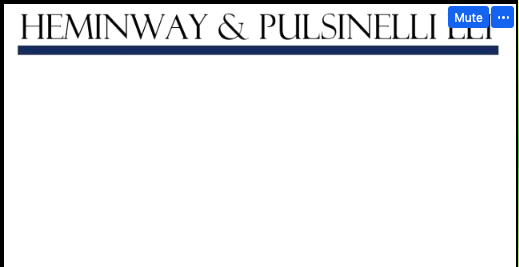
Oh, and I almost forgot to mention that one team went out of its way to show that its members were “in role” for the examination as a simulation exercise.  They created their own custom law firm logo Zoom background (based on the firm name–my name plus that of my intellectual property law colleague, Gary Pulsinelli–set forth at the top of the memo I sent to them that included the facts for use in the examination).  It was a hoot!  I have included a screenshot below.  This definitely put a smile on my face!

Screen Shot 2020-10-05 at 8.44.35 PM

The Ninth Circuit just issued a loss causation opinion in In re BofI Securities Litigation, and it’s so beautiful, it gets so much right, it’s like staring at the sun, or the face of God. Birds sang, angels wept, my sinuses have been cleared, my freezer is defrosted, and all that’s left for me to do before I depart from this Earth is see Wonder Woman 1984 in theaters.

The background is a bit complex. BofI is the subject of two 10(b) securities class actions, covering different time periods.  The first alleges that the Bank lied about its lending practices, and the second alleges that the Bank lied about investigations into those lending practices.  Both cases were heard before the same district court judge, and the court dismissed both sets of claims on loss causation grounds, employing a particularly vigorous – nay, implausible – view of market efficiency. 

I blogged about second of those dismissals here, where I explained that the plaintiffs in that action had alleged that the fraud was revealed when a reporter for the New York Post filed a FOIA request and wrote an article about his findings.  The court rejected plaintiffs’ allegations of loss causation because anyone could have filed a FOIA request and obtained the relevant information; therefore, the court would assume that information obtained by the FOIA was already impounded in stock prices.

At the time, I called this “judicial magical thinking”:

Let’s take a moment to unpack the factual inferences here that the court is willing to draw at the 12(b)(6) stage: that unspecified investors made a FOIA request, that they got their response faster than the reporter’s own inquiry, and that they used that information to trade in sufficient quantities to completely offset the effects of the initial lie.  And that despite the fact that markets, apparently, can be expected to behave in this manner, these investors believed, ex ante, it would be cost-efficient to justify the time and expense of making the FOIA request in the first place so that they could exploit the information that the request – might! – reveal.

And, it should be noted, in drawing these inferences, the court remained untroubled by the fact that the stock did, in fact, drop upon publication of the Post article.

Forgive me if I have a little trouble accepting – without any additional evidence – that markets are imbued with this kind of near-mystical perfection. 

So I was not happy, in other words.

The district court pulled a similar move with respect to the other BofI class action.  There, the plaintiffs alleged the truth was revealed through a series of blog posts on Seeking Alpha, and through a whistleblower complaint filed by an ex employee named Erhart.  The district court reasoned that because the Seeking Alpha blog posts merely reanalyzed public data, they could not constitute corrective disclosures; further, the court held that because a whistleblower complaint only involves uncorroborated allegations, it, too, cannot reveal fraud and cause losses as a result.

Both cases were appealed to the Ninth Circuit, and this week, the Ninth Circuit issued its first opinion on the subject, holding that the whistleblower Erhart’s allegations were sufficient to establish loss causation. In so doing, the court used reasoning that, in my view, corrects the errors the district court made in both cases.

So, what’s good here?

First, the Ninth Circuit rejected the argument that the Seeking Alpha blog posts could not have revealed the fraud because they merely reanalyzed publicly available data.  Instead, the court held:

To rely on a corrective disclosure that is based on publicly available information, a plaintiff must plead with particularity facts plausibly explaining why the information was not yet reflected in the company’s stock price. The district court interpreted this requirement to mean that the shareholders had to allege facts explaining why “other market participants could not have done the same analysis and reached the same conclusion” as the authors of the blog posts. (Emphasis added.) We think that sets the bar too high. For pleading purposes, the shareholders needed to allege particular facts plausibly suggesting that other market participants had not done the same analysis, rather than “could not.” If other market participants had not done the same analysis, then it is plausible that the blog posts disclosed new information that the market had not yet incorporated into BofI’s stock price.

This reasoning implicitly rejects the district court’s holding in the case involving the NY Post article.  I.e., the mere fact that someone was able to do the analysis doesn’t create a presumption that someone else must have done the analysis earlier, let alone that these results were already reflected in the stock price.  Time is not a flat circle, things can happen at Time Two that haven’t already occurred at Time One.  The “modest” presumption that public information is reflected in market prices does not extend to all possible conclusions that could be drawn from that public information, let alone conclusions that require special effort, expertise, and investigation.

As for the whistleblower issue, the Ninth Circuit rejected the district court’s conclusion that an unconfirmed allegation cannot reveal fraud, and used particularly nice language in doing so:

To plead loss causation here, the shareholders did not have to establish that the allegations in Erhart’s lawsuit are in fact true. Falsity and loss causation are separate elements of a Rule 10b-5 claim. The shareholders adequately alleged that BofI’s misstatements were false through the allegations attributed to confidential witnesses. In analyzing loss causation, we therefore begin with the premise that BofI’s misstatements were false and ask whether the market at some point learned of their falsity—through whatever means. Viewed through that prism, the relevant question for loss causation purposes is whether the market reasonably perceived Erhart’s allegations as true and acted upon them accordingly. … If the market recalibrated BofI’s stock price on the assumption that Erhart’s allegations are true—and thus that BofI’s prior misstatements were false—then the drop in BofI’s stock price represented dissipation of inflation rather than a reaction to other non-fraud-related news.

This is a great quote; too often, courts allow concerns about the falsity of defendants’ statements to bleed into their analysis of the loss causation element.  I previously blogged about this problem, where I pointed out that courts (including, ahem, the Ninth Circuit in an earlier case) have sometimes held that mere allegations of fraud (or investigations, or what-have-you) cannot “reveal” the fraud to the market unless later events show those accusations to have been merited.  This does not make sense; it suggests a stock price drop occurring at Time One – upon publication of the allegations – is not a “real” loss unless there’s a corroboration of those allegations that emerges later at Time Two.  But the losses at Time One are the losses; shareholders will have experienced that pain regardless of whether subsequent revelations establish the reliability of the earlier disclosures.

Obviously, what’s going on with respect to these demands for corroboration at Time Two – long after the losses are felt – is that courts are suspicious that there was any falsity to be revealed in the first place.  Rather than say that, though, courts direct their skepticism toward loss causation, and demand especial proof that the corrective event really is revealing an underlying fraud.  But if a court is skeptical of the original falsity pleading, it should explain why the original falsity pleading was insufficient – and if the standard for pleading falsity was met, there shouldn’t be a second gamut where falsity is again tested with respect to the pleading of loss causation.

I further addressed this problem in my essay, Fact or Fiction: Flawed Approaches to Evaluating Market Behavior in Securities Litigation:

a number of courts have declared that announcements of investigations or lawsuits—whether instituted by the government, or internal inquiries—cannot, standing alone, cause losses for Section 10(b) purposes because an investigation or a complaint is merely an allegation rather than a confirmation of wrongdoing. This, of course, is a non sequitur; if a stock price represents traders’ view of the potential cash flows of the business, adjusted for risk, a credible possibility of fraud will cause them to reassess those risks and reprice the stock accordingly. Assuming the investigation was, in fact, caused by an underlying fraud—that is, if the plaintiffs are able to demonstrate the other elements of a Section 10(b) claim and show a causal chain between the investigation and the fraud they’ve alleged—there is no reason to treat stock price drops due to market distrust of the subject company as any less “caused” by the fraud as other kinds of price drops. An investigation is hardly an intervening event, and presumably, if there was fraud, and it is ultimately revealed—either with a full admission, or simply with disclosure of the underlying financial condition that it concealed—the stock will drop even further, to account for the fact that what was once an uncertainty has now become definite.

So I’m delighted with the Ninth Circuit’s analysis here.

I am, however, disappointed with Judge Lee, who dissented on this point.  Judge Lee put his concerns thusly:

But what if it turns out that Erhart’s allegations in his lawsuit are bunk? What if he is mistaken?

If that’s the case, per my Fact or Fiction piece, yes, it breaks the chain of causation between the underlying fraud and the public revelations, such that the losses were not proximately caused by the fraud.  Think of it this way: If the whistleblower is making it all up out of a dream he had, and by purest happenstance managed to identify a real fraud at the company, presumably that whistleblower would have lodged his allegations even if there had been no underlying fraud to be found.  If that is the case, the losses would have happened whether or not the firm was tainted, the losses were not caused by the fraud, and the case should be dismissed. QED.

But subsequent corroboration is not how we address that kind of causation problem.  Rather we ask — typically in discovery — whether there is reason to think the whistleblower allegations and the subsequent price drop were inspired by events entirely unrelated to the fraud.  At the pleading stage, there is no reason to think the whistleblower is an intervening cause; if a fraud is adequately alleged, and a whistle is blown by someone who appears to have knowledge of it, an inference is created that the two events are connected.  If later facts establish that not to be the case, fine, but the chain of causation hardly needs further examination on a motion to dismiss.

Anyway, that’s the good part of the Ninth Circuit’s opinion.  But every rose has its thorns, and, well, in this case, those appear in the Ninth Circuit’s analysis of the blog posts.  Though the court rejected the district court’s conclusion that analysis based on public information can never constitute a corrective disclosure, it also held that the blog posts here were not sufficiently credible for the market to have relied upon them, and thus they could not have revealed the fraud. As the Ninth Circuit put it:

The posts were authored by anonymous short-sellers who had a financial incentive to convince others to sell, and the posts included disclaimers from the authors stating that they made “no representation as to the accuracy or completeness of the information set forth in this article.” A reasonable investor reading these posts would likely have taken their contents with a healthy grain of salt.

Therefore, the shareholders have not plausibly alleged that any of the Seeking Alpha blog posts constituted a corrective disclosure.

That’s a helluva thing to conclude on the pleadings, especially since Joshua Mitts has demonstrated that traders do in fact rely on pseudonymous blog posts, and also make judgments about the posters’ credibility based on their track records.  Indeed, in this case, the plaintiffs alleged that the stock price dropped in reaction to the blog posts, which – for pleading purposes – suggests that traders did take them seriously, regardless of the Ninth Circuit’s post hoc assessments of what a reasonable investor would do.  It reminds me of that time the Ninth Circuit held that a statement was immaterial puffery despite the fact that the market moved in response to it.  See Police Ret. Sys. v. Intuitive Surgical, Inc., 759 F.3d 1051, 1060 (9th Cir. 2014).  Apparently, materiality judgments are for courts now, not traders.

Now, it’s true – as Judge Lee’s dissent notes, and as Joshua Mitts has documented – we have a short-trader market manipulation problem.  Sometimes, pseudonymous bloggers post false accusations in order to cash in on the resulting price drop.  But that issue is hardly solved by holding that analyses which really do identify underlying misconduct (which, again, we’re assuming for pleading purposes) cannot constitute corrective disclosures for the shareholders who bought at an earlier time point.  Indeed, the Ninth Circuit’s reasoning leads to the perverse conclusion that the blog posts of the bad actor manipulative short-sellers – the ones who manufacture accusations in order to force a stock price drop – are also immaterial, have no effect on stock prices, have caused no harm, and therefore the posters are immune from punishment.  That is the opposite of what we should be doing.

Well.  Nobody’s perfect.

How are you doing? I’m exhausted between teaching, grading, consulting, writing, and living through a pandemic. I actually wasn’t planning to post today because I post every other Friday, as a way to maintain some balance. I may not post next Friday because I’ll be participating in  Connecting the Threads, IV, our business law professor blog annual conference. It’s virtual and you may get up to 8 CLE credits, including an ethics credit. If you love our posts, you’ll get to see us up close and personal, and you won’t even need a mask.

I decided to do this short post today because it may help some of you, whether you’re professors or practitioners. Several years ago, Haskell Murray wrote that he does a mid-semester survey. He asks his students what they like and don’t like. I love this idea … in theory. How many of us really want to know how we’re doing? I’ve done it a couple of times when I knew that the class was going great, but I don’t do it consistently. I decided to do it this year because we are piloting a new program modeled after Emory’s Transactional Law Program. I used to teach one or two sections of transactional drafting every semester by myself, but now I do the lecture portion (asynchronously) and six adjuncts teach the skills portion in live classes via Zoom (for now). In some ways, it was easier to teach by myself. Five of the six adjuncts are teaching for the first time, and online at that. It’s not easy. I also do pre-recorded videos with questions embedded via Feedback Fruits that students must answer. Each week, I review the answers for each of the classes, look for trends and gaps in knowledge, debrief with the adjuncts, hold office hours with the students, and try to find current events related to what we are doing. I also teach two sections of legal writing to 1Ls. My  life is a constant stream of conferences and marking up drafts.

Students tell me they love the transactional drafting class, but what about those who don’t say anything? So, I bit the bullet and sent out an anonymous survey to the seventy students enrolled. So far less than 1/3 have responded, but I’ve already gleaned valuable insight. I sent the survey out two days ago and I’ve already changed the structure of my videos and am holding a mid-semester review. The students validated my concerns about one of our books. Some students were just glad to be asked. Most important, I won’t have to wait until the evaluations at the end of the semester. 

Ironically, when I consult with companies on employee relations or corporate culture issues, I recommend that they do a Start, Stop, Continue or Do More, Do Not Change, Do Less exercise with the employees. I’ve even led focus groups on this, and employees love it because they feel engaged. As long as the company actually commits to making changes as appropriate, it’s a powerful tool.

I challenge you to ask your students or your employees how you’re doing, especially in these trying times. You may be surprised. If you have other novel recommendation for getting feedback from students or employees, let us know in the comments.

I hope to see you next week at the Connecting the Threads Conference.


I just did a quick read through ISDA’s new whitepaper, Collaboration and Standardization Opportunities in Derivatives and SFT Markets.  “SFT” stands for securities financing transactions.  I encourage anyone studying these markets to at least review its Executive Summary.  As it states “This paper explains and illustrates how and why two large, important and interconnected markets – derivatives and securities financing transactions (SFTs) – could collaborate to achieve greater standardization and improved efficiency.” (p. 3)    

It’s divided into two parts: 1) an overview of the relevant markets (repo, stock loan, and derivatives), their interconnectedness, and possibilities for and benefits of greater transactional efficiencies, and 2) a proposal for implementing these objectives.  

Much of the paper focuses on market interconnections, which strongly argue for the possibility of improved transactional efficiencies.  I kept thinking about interconnections from a systemic risk/financial stability perspective, and how (if at all) promoting greater transactional efficiencies (which, at least at first glance, seems like a good idea) might impact such considerations. 

I encourage more of us in the banking and financial institutions area to give additional thought to systemic risk and financial stability issues related to securities lending, including due to its interconnections with derivatives markets.  For example, while there has been much written about AIG’s CDS problems in the 2007-08 financial crisis, comparatively little work has addressed the securities lending issues it had (for example, see Securities Lending and the Untold Story in the Collapse of AIG).  Nevertheless, “Participants in the SFT and derivatives markets have traditionally overlapped.  Banks (including investment banks, commercial banks and central banks), prime brokers, funds (including hedge funds, pension funds and sovereign wealth funds) and market infrastructures (such as clearing houses) are among the biggest players in both the derivatives and SFT markets.” (p. 12) 

Well, once I finish my article on NCWOL claims for clearinghouse shareholders for the upcoming BLPB Virtual Symposium, maybe I’ll turn my attention to clearinghouses and securities lending.  I’d also love to see more work in this area by BLPB readers, and if you’ve an article related to these topics, please do send it my way!

BLPB Readers,

Exciting news!  On the morning of October 14, 2020, the Systemic Risk Council is offering a webinar on Ensuring Financial Stability: Relaunching the Reform Debate After Pandemic Dislocation.  The Agenda looks fantastic! A brief summary of the program is below:

The stimulus response to the global pandemic has surfaced new debates and highlighted lingering questions about the role of central banks, accountability, reform, and the roles of levered markets and shadow banking.  This Systemic Risk Council program brings together leading voices to explore how the financial industry, regulators, and policy makers can address key issues around bank stability, resolution, and the mounting leverage in the global economic system.

ConnectingThreadsIV-1024x683

The fourth annual Business Law Prof Blog symposium, Connecting the Threads, is happening, despite the pandemic.  We are proceeding in a virtual format, hosted on Zoom on Friday, October 16.  More information is available here.

The line-up includes an impressive majority of our bloggers speaking on a wide range of topics from shareholder proposals to social enterprise, opting out of partnership, and much more.  Most papers will have a faculty and student discussant.  My submission, “Business Law and Lawyering in the Wake of COVID-19,” is coauthored with two students and carries one hour of Tennessee ethics credit.  While I wish we could host everyone in person in Knoxville, it always is an amazing day when we all get together.  I look forward to learning more about what everyone is working on and hearing what everyone has to say.