
For some time, FINRA has allowed stockbrokers to suppress complaints from their record through an expungement process.  I’ve written about this here before and about how recent research shows that brokers who have procured expungements may be more likely to attract more complaints than other brokers.  Another relatively recent report revealed that the pace at which brokers now procure expungements has accelerated, moving from brokers seeking to expunge just 102 complaints in 2015 to attempting to suppress 1,036 complaints in 2018.  Remarkably, brokers succeed over 80% in their attempts to suppress and expunge complaints from the public record.

Yet we do not have a robust understanding about why brokers tend to win at such high rates in the FINRA forum.  One reason might be problems with how customers receive notice about an attempt to expunge their complaint.  Consider one recent news report.  Ron Carson, a former stockbroker currently affiliated with Cetera Advisor Networks secured the expungement of a customer dispute in an arbitration award released last week.  Carson filed an arbitration proceeding against his former firm on February 28, 2019.  Over nine months later, on or about  December 11, 2019, Carson “submitted a copy of the letter sent to the customer related to [the Customer complaint], providing the Customer with a copy of the Statement of Claim, the expungement hearing date and time, and notice of the opportunity to participate in the expungement hearing. Claimant also submitted proof of FedEx delivery for the aforementioned letter.”  The hearing was held on January 6, 2020.  Neither the customer nor the respondent, Carson’s former firm, participated in the hearing.  The arbitrator ultimately granted the expungement request.

The arbitration award does not make clear exactly how much time the customer had to obtain counsel and decide whether or not to participate in this expungement hearing.  If the letter giving notice was sent around the time it was submitted to the arbitrator, it would have given the customer less than thirty days to get ready and show up at this hearing.  Commenting on the lack of opposition, Lisa Bragança explained that she did not “have confidence in this [award] because nobody showed up to oppose it.”

From personal experience, I’ve seen letters go out advising former customers about their right to show up and oppose an expungement request.  They have been sent out with less than thirty days before the hearing–leaving very little time for customers to find assistance or to prepare.  A short notice period over the winter holidays seems particularly likely to reduce the odds that a customer would actually show up in one of these hearings. Many people travel over that period, making it even less likely that they will be in a position to respond.

One-sided expungement hearings raise significant concerns.  Arbitrators deciding these matters make decisions affecting the public’s interest without a complete record before them.  BrokerCheck ultimately draws its information from the CRD Database–a public records repository jointly owned by FINRA and the States. When expungements result in the removal of information from the database, it effectively removes the institutional memory of state regulators.

If we want this system to function effectively to preserve important information, we need to take a much closer look at how the expungement process operates.

You might detect a theme.

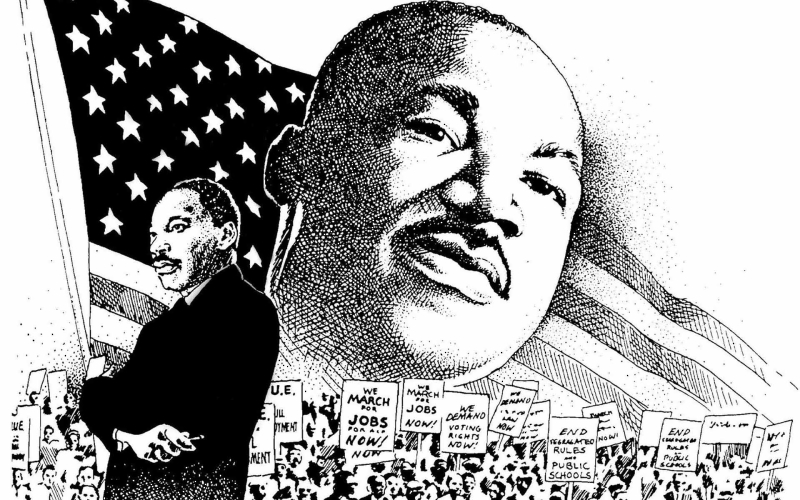
MLKClipart

[Image courtesy of Clipart Library, http://clipart-library.com/mlk-cliparts/]

Today, on Martin Luther King Jr. Day, I was in the office preparing for the week+ ahead.  I was not the only one there.  Part of me wanted to be elsewhere, publicly supporting the life and legacy of Dr. Martin Luther King Jr.  I did think about him and his work as I toiled away.

Although most of what I was sorting and sifting through today was business law-related, part of what I focused on was committee work for our celebration tomorrow that honors Dr. King.  I chair a committee at UT Law this year that is responsible for hosting one or more Martin Luther King Jr. events every year.  This year, we will have a luncheon and informal table discussions based on facts about Dr. King and quotes from his public appearances and published work.  As I was going through the facts and quotes, I came upon this quote: “No work is insignificant.  All labor that uplifts humanity has dignity and importance and should be undertaken with painstaking excellence.”  (The quote is apparently from Strength to Love, a 1963 book of Dr. King’s sermons.)  Admittedly, it spurred me on and made me feel more than a bit better about devoting much of my day to somewhat menial tasks. 

As I continued to read through the quotes, I kept finding more and more that interested me.  I observed that, among other things, Dr. King’s speeches and writings address leadership in many ways.  One of my favorites along these lines: “Change does not roll in on the wheels of inevitability but comes through continuous struggle.”  Yes!  And another: “An individual has not started living until he can rise above the narrow confines of his individualistic concerns to the broader concerns of all humanity.”  Right!  And inspiring, too, for those of us who are concerned about our students.

As I think about teaching materiality (in Securities Regulation), public company charter and bylaw issues (in Advanced Business Associations), and closely held corporation bylaw drafting (in Representing Enterprises) tomorrow, I plan to carry Dr. King’s courage, perseverance, and energy into my day.  And I hope that my students are ready to respond to my teaching with enthusiasm, trust, and confidence at this early stage of the semester. “Faith,” Dr. King said, “is taking the first step, even when you don’t see the whole staircase.”  I may read that in class tomorrow . . . .

As part of what is apparently my continuing series on developments concerning the use of corporate bylaws and charter provisions to limit federal securities claims….

Earlier this month, the Delaware Supreme Court heard oral argument on whether corporations may include provisions in their charters and bylaws requiring that federal Section 11 claims be heard only in federal court (video of oral argument here; prior posts on this issue here and here and here and here… you get the idea)

Running parallel with that, Professor Hal Scott of Harvard Law School submitted a proposal under 14a-8 requesting that Johnson & Johnson adopt a bylaw requiring that all federal securities claims against the company be arbitrated on an individualized basis. As I blogged at the time, the SEC granted J&J’s request to exclude the proposal on the ground that it appeared that NJ, the state of incorporation – following what it believed to be Delaware law – did not permit federal claims to be governed by corporate charter/bylaw provisions.  Scott filed a federal lawsuit over that, and the action was voluntarily stayed pending the Delaware Supreme Court’s ruling.

But Scott has not let the crusade rest.  As I learned from Alison Frankel’s reporting, Intuit shareholders will vote on one of Scott’s securities arbitration proposals at their January 23 meeting.  (I note that in this version of the proposal, Scott has corrected the text to acknowledge Canada’s existence – which he, ahem, previously overlooked)

Unlike J&J, Intuit did not seek to exclude the proposal from its ballot, but it does recommend that shareholders vote against.  Intuit says:

we are not aware of any other U.S. public company that has adopted the bylaw sought by the proposal and the proponent’s pursuit of the adoption of an identical bylaw by another company is currently the subject of litigation. As a result, there is significant uncertainty as to whether the adoption of such a bylaw is prudent at this time. Given this continued uncertainty, we believe that the adoption of such a bylaw likely would expose Intuit to unnecessary litigation or other actions challenging the bylaw and its consequences. Such challenges would not only be economically costly, but also would divert management’s time and focus away from Intuit’s business.

So, several things.

First, another public company did have such a bylaw, sort of, as I discuss in my Manufactured Consent paper – that company was Commonwealth REIT.   The bylaw did not bar class actions, though it did cover federal claims.

Second, Intuit’s objection is largely rooted in the uncertainty surrounding its legality.  Which is probably why Scott recently filed a comment letter with the SEC regarding its proposed amendments to Rule 14a-8, in which he asks the Commission to permit resubmission of failed proposals “if legal or regulatory circumstances relevant to the proposal have materially changed since its last submission.”  I assume he’s anticipating some losses, and wants to make sure he can resubmit these proposals if the Delaware Supreme Court – or anyone else (hint, hint) – rules his way.

Third, this is not the first time shareholders have had the opportunity to vote on arbitration bylaws.  Back in 2012, Professor Adam Pritchard at Michigan assisted shareholders at Gannett, Pfizer, Google, and Frontier Communications in filing their own proposed arbitration bylaws.  Pfizer and Gannett sought and received no-action relief to exclude the proposals, but Frontier and Google included them in their proxy statements (see here and here, respectively), though in both cases the companies recommended that shareholders vote against.  And in both cases, the bylaws were defeated (see here and here, respectively – I mean, Google has controlling shareholders, it was sort of fait accompli, but even the A shares voted against, so.)

All of which is to say – I’m betting the bylaw fails at Intuit, but (1) I’m terrible at predictions and (2) that will not be the end.  But for now, I guess, all eyes on January 23.

Edit: The proposal was defeated, on the following vote:

Votes


The following comes to us from Bernard S. Sharfman. It is a copy of the comment letter (without footnotes) that he recently sent to the SEC in support of the Amendments to Exemptions from the Proxy Rules for Proxy Voting Advice.  (The comment letter with footnotes can be found here.)  An introductory excerpt is followed, after the break, by the full letter. Please excuse any formatting errors generated by my poor copy-and-paste skills.

Part I of this letter will describe the collective action problem that is at the heart of shareholder voting. Part II will discuss the problems that this collective action causes for the voting recommendations of proxy advisors, including the creation of a resource constrained business environment. Part III discusses how proxy advisors deal with such a business environment. Part IV will discuss how the market for voting recommendations is an example of a market failure, requiring the SEC to pursue regulatory action to mitigate the harm caused by two significant negative externalities. Part V will discuss how the collective action problem of shareholder voting and the market failure impacts corporate governance. Part VI will discuss the value of the proposed amendments.

Continue Reading Sharfman on Exemptions from the Proxy Rules for Proxy Voting Advice

Wharton Assistant Professor Peter Conti-Brown recently posted another important work about the Federal Reserve System: Restoring the Promise of Federal Reserve Governance (here).  I highly recommend it to all BLPB readers, especially those wanting to quickly learn a lot about the U.S. central bank, one of the most important of U.S. institutions.  Here’s the abstract:  

The US Federal Reserve System (Fed) is famous for its organizational complexity. Overlooked in debates about the costs and benefits of this complexity for the Fed’s legitimacy, independence, and accountability is the congressional vision of what the Fed should be. The central bank is governed by a highly accountable seven-person Board of Governors to manage the rest of the system. Time and experience have eroded this authority as a matter of practice but not as a matter of law. The Fed governors are supposed to supervise the system, a legal aspiration that has increasingly been enervated by institutional drift. Using empirical and historical tools, this paper discusses the erosion of the Board of Governors over the Fed’s century-long history, including the substantial reduction in real compensation for the governors, their diminished participation in Federal Open Market Committee (FOMC) meetings, and the increased vacancies that recently have been driven by the political process. To address these problems, the paper suggests reforms across three divides: cultural, regulatory, and legislative. Remedies include changing norms of FOMC meeting participation to place nonvoting members of the FOMC as “observers”; clarifying the role of the Fed’s Board of Governors in supervising the Federal Reserve Banks, particularly with respect to the presidential search process; increasing attention to vacancies and promoting bipartisan interest in credible candidates; and increasing governor salaries to match those of their colleagues at the 12 Federal Reserve Banks, consistent with legislative intent from 1913.

A belated Happy New Year to everyone! 

I’ve been meaning to blog for quite some time on a partnership puzzle that Elizabeth Pollman brought to my attention.  Assume that Jack, Jill, and Jen have an at-will general partnership.  Jack gives notice to the partnership that he is withdrawing, and he demands the liquidation of the partnership business.  (Assume that there is no partnership agreement governing this dispute.)

Is Jack correct?  Does he have the ability under the default rules to compel dissolution of the partnership if Jill and Jen wish to continue the business?

Under RUPA (1997), the answer is “yes.” Jack dissociated by express will under RUPA § 601(1).  It is an at-will partnership, so the dissociation is not wrongful.  RUPA § 602.  Under RUPA § 801(1), the partnership “is” dissolved and “its business must be wound up.”

Under RUPA § 802(b), however, the winding up of the partnership can be avoided if the partners agree.  Who must agree?  Section 802(b) says clearly that it is “all of the partners, including any dissociating partner other than a wrongfully dissociating partner.”  So Jack’s consent is necessary to avoid winding up.  Let’s assume he is not going to consent; thus, the partnership must be dissolved.

This result, by the way, is a well-known principle of partnership law.  At-will partnerships are unstable because any partner can dissociate by express will and compel dissolution.  See RUPA § 801 cmt. 3 (“Section 801 continues two basic rules from the UPA.  First, it continues the rule that any member of an at-will partnership has the right to force a liquidation.”).

RUPA, however, was amended in 2011 and 2013.  And the amendments appear to have reversed this well-known principle of partnership law.  Under the amended statute, Jack again dissociated by express will under § 601(1).  It is an at-will partnership, so the dissociation is not wrongful.  RUPA (2013) § 602.  Under RUPA (2013) § 801(1), the partnership “is” dissolved and “its business must be wound up.”

Under RUPA (2013) § 803, however, a partnership may “rescind its dissolution” if it gets the “affirmative vote or consent of each partner.”  RUPA (2013) § 803(b)(1).  But here is the rub:  RUPA (2013) § 102(10) defines “partner” as someone who “has not dissociated as a partner under Section 601.”  So Jack’s consent is NOT necessary under the 2013 version because Jack, after dissociating, is no longer a partner.  It appears that Jill and Jen can rescind dissolution and continue the business.  RUPA (1997) has no definition of partner at all, and as mentioned above, it explicitly requires the dissociating partner’s consent to rescind dissolution under § 802(b).

So bottom line:  the 2013 version has made a major change.  It does not discuss this in the comments at all, and I personally think that it is an unintended consequence of the 2011/2013 harmonization effort.  The 1997 version requires Jack to consent if the partnership is going to continue.  The 2013 version does not seem to require Jack to consent because he is no longer a partner upon dissociation.

Believe it or not, the Uniform Bar Examination tested on this issue last year. I don’t think they realized that the application of RUPA (1997) versus RUPA (2013) might produce a different result. To be fair, in that question, an argument could be made that a partnership agreement existed that would lead to the same result under either version of the statute, but I for one was surprised to see the issue in play.

Does anyone out there have any insight on this issue?  If so, please feel free to share in the comments.

Each time I teach Advanced Business Associations, I try to engage students on the first day in an exercise that leverages their existing knowledge of business associations law but also introduces new angles and nomenclature.  I assign a reading (this year, on shareholder wealth maximization) and ask each student to write up a brief definition of the concepts of “policy” and “theory” as they may apply to and operate in business associations law. I then ask them to relate their definitions to the reading.

So, the core question before the house in that course on the first day of classes last week effectively was the following: is shareholder wealth maximization legal doctrine, policy, theory, or something else?  We had a wide-ranging discussion on the question, working off three propositions I put on the board.  The class session enabled me to review some concepts from the foundational Business Associations course while also discussing the role of theory and policy in law and lawyering, getting some creative mental juices flowing, and teaching a bit of the new vocabulary they will need for the course.

I decided that it could be beneficial to share with my students the views of others on our effective core question from class last week.  So, today, I ask you:

Shareholder wealth maximization: doctrine, theory, policy, or something else?

Offer your answers in the comments or send me a private message.  You can pick more than one category, of course, in classifying shareholder wealth maximization.  In other words, the categories are not intended to be mutually exclusive. A brief explanation for your response would be helpful.  I will not attribute the answers I pass on, unless you want me to.  I hope this post will stimulate some interesting responses, but I also know that law professors are busy with the start of the new semester.  It may go without saying, but (especially in these circumstances) a short response is appreciated as much as a long one.

Hey, everyone.  Two very quick hits today.  First, as any follower of this blog knows, I have been avidly following the Salzberg v. Sciabacucchi litigation (see prior posts here and here and here, etc), not because I care very much about whether corporations can select a federal forum for Section 11 claims, but because I think if corporations can use their charters and bylaws to select a federal forum for Section 11 claims, the next step is using charters and bylaws to adopt provisions requiring individualized arbitration of federal securities claims, and that opens up a whole new can of worms.  (For newcomers, my article on the subject of arbitration clauses in corporate charters and bylaws is here).

In any event, on Wednesday, the Delaware Supreme Court heard oral argument on federal forum provision issue. I don’t really have any insights about it – although the justices asked several questions at the beginning of each advocate’s presentation, they were, for the most part, quiet – but if you want to see for yourself, the video is here.

Additionally, last week I had the opportunity to speak on a panel with Sean Griffith and Adriana Robertson, moderated by Jeremy Kidd, about the role of mutual funds in corporate governance.  I’ll straight up admit that I don’t think I personally said anything you haven’t already heard from me in this space – either in a post or a plugged article (like, ahem, my Family Loyalty essay on conflicts among mutual funds within a single complex) – but the video is worth watching if only to hear the views of my co-panelists.  Sean describes his theory of when mutual funds should vote, and when they should abstain, or pass through their votes to retail shareholders (articulated in more detail in his paper, here), while Adriana discusses her research about how indexes don’t really differ all that much from active management.  It’s definitely a treat to hear them describe their work (and to hear Adriana talk about her upcoming project at the very end.)

Briefing continues in litigation aimed at overturning the SEC’s Regulation Best Interest.

After the parties filed their briefs on December 27, the amicus front heated up.  The Public Investors Arbitration Bar Association filed an amicus brief citing some academic works by Rutger’s Arthur Laby, and St. John’s Christine Lazaro.  Better Markets and the Consumer Federation also filed an amicus brief–also citing influential work by Arthur Laby.  Even former members of congress–notably Dodd and Frank have weighed in arguing that the SEC misread Dodd-Frank.

It’s worth following the case as it continues to develop.